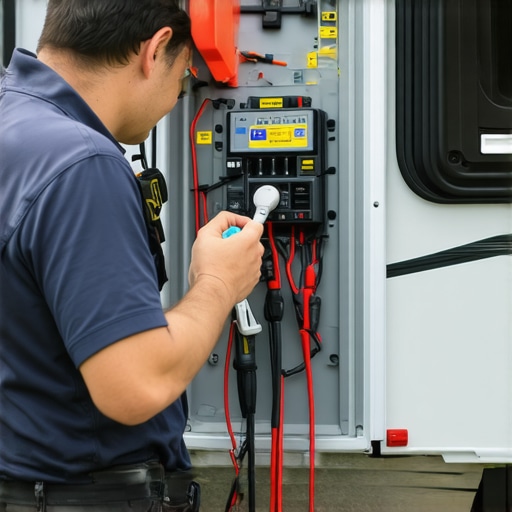
The Rolling Earthquake: Why Your RV Panel is a Time Bomb
I’ve spent thirty-five years chasing ghosts in electrical systems, and nothing makes my skin crawl quite like a mobile power distribution center. Most homeowners think their electrical panel is a ‘set it and forget it’ box, but a camper isn’t a house. It’s a rolling earthquake. Every mile you drive down a potholed interstate, your electrical connections are subjected to vibration, harmonic resonance, and thermal shock. I’ve seen 50-amp rigs where the main lug was so loose it was literally humming a tune before it melted the plastic bus bar support. If you’re prepping for a 2026 cross-country haul, you need to treat your electrical system with more than just a passing glance. You need a forensic inspection. This isn’t about checking if the lights turn on; it’s about ensuring you don’t wake up to the acrid, metallic stench of an electrical fire while parked in a remote national forest where the nearest after hours electrical repair is three states away.
The Old Timer’s Lesson: The Danger of the Nicked Conductor
My journeyman used to smack my hand if I stripped a wire with a knife. ‘You nick the copper, you create a hot spot,’ he’d scream. He was right. In a stationary building, a tiny nick in a 10-gauge wire might never cause an issue. But in a camper, that nick becomes a point of concentrated mechanical stress. As the trailer bounces, the wire flexes at that weakened point. Eventually, the copper work-hardens and snaps, or worse, it creates a high-resistance bridge that glows like a toaster element. I’ve pulled apart panels where the Rough-in was so sloppy that the vibrations had snapped three out of four strands on the main neutral. That’s how you lose your electronics—or your life. When we talk about a lifetime workmanship guarantee, we’re talking about the discipline to use the right tools so the wire stays intact for the long haul.
“A connection that is not tight can result in excessive heating and potential fire, even if the current does not exceed the rating of the circuit breaker.” – NFPA 70: National Electrical Code
1. The Lug Torque Audit: Combating ‘Cold Creep’
The first thing you do is kill the shore power and pull the dead front off the panel. Take your Wiggy or a reliable multimeter and verify there’s zero potential between the lugs and the ground. Now, let’s talk physics. Copper and aluminum conductors suffer from something called ‘Cold Creep’ or ‘Cold Flow.’ Under the constant pressure of a set screw, the metal actually moves—it deforms and flows out from under the pressure point. Combine this with the thermal expansion of high-amperage draws (like running two A/C units in the July heat) and the constant vibration of the road, and you have a recipe for disaster. I’ve seen lugs that were torqued to spec at the factory that I could turn with my fingers two years later. A loose lug creates resistance. Resistance creates heat. Heat causes the metal to expand further, which loosens the screw even more. It’s a death spiral. You need to use a torque screwdriver to hit the manufacturer’s specifications, usually marked on the inside of the panel door. Don’t just ‘snug it up’ with a flathead; that’s how handymen burn houses down. This isn’t a warehouse lighting retrofit where things stay still; this is high-stakes mobile engineering.
2. The ‘Green Death’ Inspection: Managing Galvanic Corrosion
In thirty-five years, I’ve seen more panels ruined by humidity than by actual overloads. If you’ve been towing near the coast or even just through salted winter roads, your panel is breathing in corrosive particles. This leads to the ‘Green Death’—copper oxide. When you open that panel, look at the bus bars. They should be clean, bright metal. If you see white crust or green fuzz, you have a galvanic reaction occurring. This often happens where different metals meet, like an aluminum bus bar and a copper wire. In restaurant kitchen electrical systems, we deal with grease and steam, but in a camper, you’re dealing with road spray and condensation cycles. If that corrosion builds up, it acts as an insulator. Now your breaker isn’t making full contact with the bus bar. It starts arcing. That arc is hotter than the surface of the sun for a fraction of a second, pitting the metal and making the connection even worse. I’ve had to perform a full 100 amp service upgrade on rigs just because the bus bars were so pitted from salt air that they couldn’t safely hold a breaker anymore. If you find corrosion, don’t just spray it with WD-40. You need to clean it with a dedicated electrical contact cleaner and potentially apply a thin layer of Monkey Shit (duct seal) or specialized dielectric grease if the manufacturer allows it.
“Aluminum wire connections can overheat and cause a fire without tripping the circuit breaker.” – CPSC Safety Alert 516
3. Overcurrent Device Fatigue: Breakers Are Not Switches
People treat breakers like light switches, flipping them on and off every time they plug in at a new campsite. Breakers have internal springs and bimetallic strips that are calibrated to a hair’s breadth. Repeatedly switching them under load causes micro-arcing on the internal contacts. Over time, the internal mechanism can weaken or, worse, weld shut. I’ve seen ‘Widow Makers’—breakers that look like they’re in the OFF position but are internally welded in the ON position. Use your Tick Tracer to verify the load side is actually dead when the breaker is flipped. Furthermore, road vibration can cause the internal ‘trip’ mechanism to shift. A breaker that’s been bounced over 50,000 miles of highway might trip at 12 amps instead of 20, or it might not trip at all. If you’re seeing any discoloration on the breaker casing, it’s toast. It’s cheaper to replace a $15 breaker than to deal with the aftermath of a fire. This is as critical as maintaining your electric gate opener or your bathroom exhaust fan at home; it’s basic safety. If you’re unsure how to diagnose these components, checking out a step-by-step electrician guide can give you a feel for the professional standard of care required.
The Hidden Danger: The Neutral-Ground Bond
In a standard house, your neutral and ground wires are bonded together at the main service entrance. In a camper, they MUST be kept separate unless you are running on an on-board generator. If you have a ‘bootleg ground’ or a stray bond while plugged into shore power, you can end up with ‘hot skin’ syndrome. This is where the entire metal frame of your camper becomes electrified. I once saw a dog get killed just by touching the metal stairs of a trailer because of a faulty neutral-ground bond in the panel. This is why annual maintenance contracts for fleet vehicles and trailers are so vital. We check for these ‘phantom’ voltages that a DIYer would never see. We use specialized testers to ensure that your parking lot lighting at the campsite isn’t feeding back into your chassis. Whether you’re doing a warehouse lighting retrofit or just deck lighting services, the grounding path is your only safety net. Don’t cut corners on it.
Why Forensic Inspection Beats a ‘Quick Look’
Most people wait until something fails to call for help. They wait for the after hours electrical repair callout fee. But electricity doesn’t give many warnings. It just waits for the moment of highest resistance and highest heat. When I’m inspecting a panel, I’m looking for ‘the story’—the slight discolored ring around a wire’s insulation that tells me it’s been running hot, or the fine metallic dust at the bottom of the enclosure that tells me the bus bar is vibrating against the housing. This level of detail is what keeps you safe. If you’ve recently added high-draw appliances, you might even need to consider if your current setup can handle it. For those moving into the future of transport, ensuring safe and efficient EV charging station setup is a similar discipline—you can’t just slap a new load onto an old system without consequences. If you find yourself in over your head, don’t hesitate to contact us. Electricity isn’t a hobby; it’s a force of nature that we’ve tricked into staying inside copper pipes. Treat it with the respect it deserves, or it will remind you why it’s the boss. Sleep better on your 2026 road trip by knowing your panel is torqued, clean, and calibrated. It’s the difference between a memory and a tragedy.