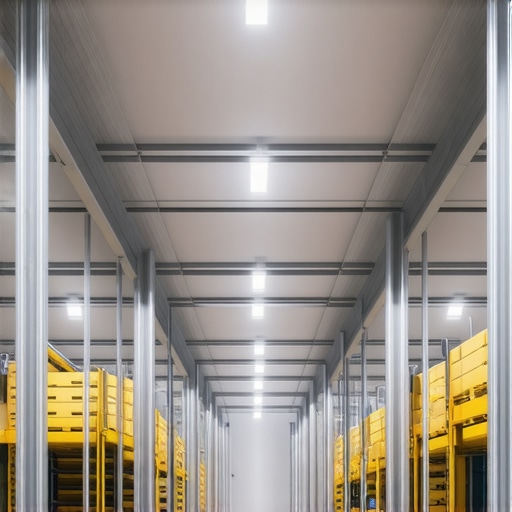
The Smell of a Ticking Clock
Walk into any warehouse built before the turn of the century and you’ll smell it before you see it. It’s that sharp, metallic tang of ozone mixed with the dusty, burnt-sugar scent of a 400-watt metal halide ballast cooking itself to death. For thirty-five years, I’ve been the guy climbing the 40-foot scissor lift to find out why a whole bay went dark, and let me tell you, the old ways are costing you more than just a high utility bill. They are a liability waiting for a spark. Most facility managers view lighting as a static expense, but after three decades of forensic inspections, I see it as a high-pressure system under constant thermal stress. In 2026, we aren’t just swapping bulbs; we’re performing a structural overhaul of your energy infrastructure.
The Flipper Special: A Lesson in Forensic Reality
I once walked into a ‘fully renovated’ distribution center where the previous owners had cut corners so deep they were practically circular. The kitchen and breakroom area looked modern, but my tick tracer was screaming before I even touched the light switches. The flipper had buried three live junction boxes behind a beautiful new tile backsplash. I found them by tracing the thermal signature bleeding through the grout. It’s the same story in the warehouse—guys burying home run splices inside Monkey Shit (duct seal) rather than using a proper 4-square box. This kind of ‘handyman’ logic is why I treat every retrofit as a forensic audit. If you don’t know what’s behind the drywall or inside the conduit, you’re just waiting for a structural fire. This is why how electricians tackle troubleshooting for lighting installations is about more than just checking continuity; it’s about hunting for the ‘widow makers’ left behind by the last guy.
“Aluminum wire connections can overheat and cause a fire without tripping the circuit breaker.” – CPSC Safety Alert 516
1. AI Fault Detection: The End of the Ghost in the Machine
In the old days, we used a Wiggy to check for voltage and hoped the breaker would trip before the wire melted. In 2026, we utilize AI fault detection that monitors the harmonic distortion of your entire electrical system. Every motor, every LED driver, and every structured wiring panel has a specific electrical signature. When a capacitor in a high-bay driver starts to leak or a connection begins to experience ‘Cold Creep’—the physical deformation of conductors under thermal cycles—the AI identifies the arc-fault pattern before it becomes a ‘glow bar’ situation. We aren’t just fixing lights; we’re preventing fire damage wiring restoration by killing the problem in the cradle. This level of precision is why priority service membership is becoming the standard for industrial operations; you want the AI to call me before the fire department has to.
2. Drone Thermography Scans: Seeing the Heat Before the Fire
Component zooming isn’t just a buzzword; it’s a diagnostic necessity. When we perform drone thermography scans on a 100,000-square-foot warehouse ceiling, we aren’t just looking for lights that are out. We are looking for I2R losses—the heat generated by resistance. Physics doesn’t lie: Power (Watts) equals Current (Amps) squared times Resistance (Ohms). If a lug in your distribution panel is torqued incorrectly, it creates a hot spot. A drone can spot a 5-degree temperature differential from 30 feet away. We’ve found security camera wiring that was overheating because it was draped over steam pipes, and emergency exit lighting batteries that were reaching thermal runaway temperatures. By identifying these ‘hot zones,’ we slash overhead by preventing catastrophic equipment failure and reducing the load on your HVAC system. A warehouse full of old metal halides is basically a giant space heater you didn’t ask for.
3. Solar Panel Electrical Hookup and Micro-Grids
If you’re still pulling 100% of your power from the grid, you’re a hostage to peak pricing. Part of a modern retrofit involves a solar panel electrical hookup directly into your lighting sub-panels. But here’s the kicker most ‘salesmen’ won’t tell you: you can’t just slap panels on a roof and call it a day. You need a virtual consultation wiring audit to ensure your bus bars can handle the backfeed. We look at the rough-in phase of the solar integration to ensure that the DC-to-AC inverters aren’t dumping ‘dirty power’ (harmonics) back into your structured wiring panels. This clean energy integration, combined with smart sensors, can drop your lighting overhead by 80% in a single fiscal year. It’s about building a system that treats electricity with the paranoia it deserves.
“The authority having jurisdiction shall have the authority to require an inspection of any installation of electrical equipment.” – NFPA 70: National Electrical Code (NEC)
4. Structured Wiring Panels and Security Integration
Modern lighting isn’t just about photons; it’s about data. A 2026 retrofit includes security camera wiring and PoE (Power over Ethernet) lighting that runs through centralized structured wiring panels. When we do a trim-out on these systems, we’re using dikes to cleanly manage Cat6e cables that control everything from occupancy sensors to emergency egress. This consolidation means fewer home run pulls to the main panel and less copper waste. If you’re considering an upgrade, checking out lighting installations made easy can give you a baseline, but industrial-scale work requires a Master’s eye for load balancing. We ensure your electrical wiring services are robust enough to handle the next twenty years of tech, not just next week’s needs. Whether it’s emergency exit lighting or virtual consultation wiring, the goal is a system that is torqued to spec and tested under load. Don’t let a ‘handyman’ touch your 480V three-phase system; it’s the fastest way to turn a warehouse into a forensic crime scene. Contact the pros at Reliable Electric Pro to get it done right the first time. “,