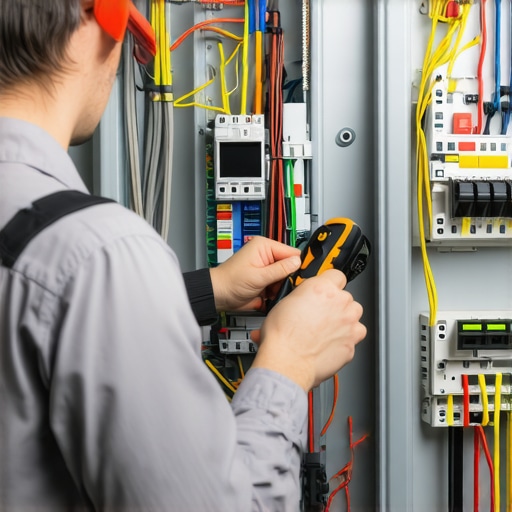
The Ghost of 1968: Why Your Home Is a Ticking Clock
I remember my journeyman, a man who smelled like stale coffee and electrical tape, smacking my hand with a pair of dikes the first time I used a pocket knife to strip a wire. ‘You nick that copper, you create a hot spot,’ he’d scream over the roar of a generator. ‘Electricity is lazy, but it’s mean. It’ll find that weak point and eat the house around it.’ He was right, but he was talking about copper. When you’re dealing with the aluminum wiring common in homes built between 1965 and 1973, that ‘hot spot’ isn’t just a possibility; it’s an inevitability. If you are looking at a 2026 home inspection, the inspectors aren’t playing games anymore. They’ve seen the insurance claim electrical work pile up, and they know that aluminum is the industry’s great ‘silent’ threat.
The problem isn’t the wire itself—it’s the chemistry. Aluminum has a significantly higher coefficient of thermal expansion than copper. Every time you turn on a space heater or a vacuum, the wire heats up and expands. When you turn it off, it contracts. This ‘cold creep’ eventually loosens the screws on your outlets and switches. Once that connection is loose, you get micro-arcing. That arc creates a layer of aluminum oxide—a nasty, non-conductive crust that builds resistance. Resistance creates heat. Heat creates fire. This isn’t just theory; it’s physics. To pass an inspection in the modern era, especially if you’re looking for warranty backed repairs to satisfy a skeptical underwriter, you need to move beyond ‘handyman’ fixes and embrace forensic-level remediation.
“Aluminum wire connections can overheat and cause a fire without tripping the circuit breaker.” – CPSC Safety Alert 516
1. The COPALUM Crimp: The Only Permanent Forensic Fix
If you want to pass an inspection without the inspector even blinking, the COPALUM crimp is the gold standard. This isn’t your standard crimp tool you find at a big-box store. This is a high-pressure cold-weld system. We take the aluminum wire and a copper ‘pigtail’ and fuse them together under thousands of pounds of pressure. This creates an oxygen-free bond that prevents the dreaded oxidation layer from forming. I’ve been called into data center power setup environments where they use similar tech for massive bus bars; bringing that level of precision to your bedroom outlets is the only way to sleep at night. Inspectors look for that specific crimp sleeve. If they see a purple wire nut—which I’ve seen fail a hundred times—they’re going to flag it for insurance claim electrical work risks. We often see these issues when people try to DIY security camera wiring into old aluminum circuits, unknowingly creating a high-resistance junction in the attic that my tick tracer can pick up from three feet away.
2. AlumiConn Connectors: The Mechanical Solution
For those who can’t access the proprietary COPALUM tool, the AlumiConn lug is the next best thing. This is a three-port mechanical connector where each wire is secured under its own lug screw. We use a torque screwdriver—because ‘hand tight’ is a lie told by lazy electricians—to ensure the pressure is exactly where the manufacturer specifies. This is critical for ADU electrical services or when adding a new home run to an older structure. The lugs are coated with a dielectric grease that inhibits oxidation. When I’m doing a forensic sweep, I’m looking for these connectors in every junction box. If I find Romex shoved into an old aluminum-rated push-in terminal, I know I’m looking at a future fire. I’ve spent my weekends providing weekend electrician services just fixing ‘renovated’ kitchens where a flipper used copper-only outlets on aluminum wire. That’s a recipe for disaster.
3. The Panel Purge: Ending the Federal Pacific and Zinsco Era
You can fix every outlet in the house, but if your home run goes back to a Federal Pacific Stab-Lok or a Zinsco panel, you’re failing that 2026 inspection. These panels are the ‘Widow Makers’ of the industry. The breakers are known to jam, meaning they won’t trip even when the wire is literally melting. In dock electrical services, where moisture is a factor, these panels fail even faster. A proper 2026-ready repair involves a full panel change-out to a modern SQ-D or Eaton system with AFCI (Arc-Fault Circuit Interrupter) protection. AFCIs are like smart computers for your wires; they can sense the signature of a micro-arc—the kind caused by aluminum cold creep—and shut the power down before a flame starts. If you’re planning an ADU electrical services expansion, this upgrade isn’t optional; it’s the foundation of the entire system. Don’t forget to check your load calculations for EV charging, as adding a Level 2 charger to an old 100-amp aluminum-fed panel is a disaster waiting to happen.
“Overheated connections are the primary cause of fires in residential aluminum wiring systems.” – NFPA 70 Research Report
4. Spa and Dock Grounding: The Salt and Moisture Factor
If your property includes a pool or a dock, your aluminum wiring issues are magnified by a factor of ten. Aluminum and salt air are mortal enemies. I’ve seen aluminum conductors in coastal areas turn into white powder inside the conduit. For spa grounding services and dock electrical services, we must ensure that all bonding is done with copper, using proper transition lugs. I often use augmented reality troubleshooting tools to map out the grounding grid in older estates to find where the corrosion has severed the safety path. If your grounding rod is just a rusted piece of rebar from 1972, you don’t have a ground; you have a lightning rod. When performing insurance claim electrical work, the first thing adjusters look for is whether the equipment was properly bonded to current 2023 NEC standards. If you are experiencing flickering near the water, you might need to troubleshoot your lighting installations immediately before a stray current hits the water.
5. Total Device Replacement with CO/ALR Rated Hardware
Lastly, every single switch and outlet in an aluminum-wired home must be replaced with CO/ALR (Copper/Aluminum Revised) rated devices. You cannot use a standard $0.50 outlet. These CO/ALR devices use a special tin-plated brass terminal that is designed to play nice with aluminum’s expansion rate. Even then, I prefer the pigtailing method with AlumiConn. During a same day service appointment, I often find that homeowners have swapped out old ‘ugly’ almond switches for modern white ones, but they used copper-only Decora switches. That’s a major violation. I’ve had to write forensic reports for insurance claim electrical work where a house fire was traced back to a single $1.00 dimmer switch that wasn’t rated for aluminum. If you’re unsure what you have, you should contact a professional electrician for a full circuit audit. We use a Wiggy to check for voltage drops that indicate a failing connection deep inside the walls. Passing a 2026 inspection is about proving you’ve mitigated the risk of the ‘Time Bomb’ wiring. Whether it’s through warranty backed repairs or a total rewire, the goal is to ensure your home doesn’t become another statistic in a CPSC safety bulletin.
This article highlights how critical it is to not overlook the condition of aluminum wiring before passing a 2026 inspection. I’ve had some personal experience with older homes where amateur alterations, like replacing outlets with non-ALR rated devices, almost caused safety issues. The emphasis on the COPALUM crimp and AlumiConn connectors is well-founded; these methods seem to be the gold standard for long-term, safe repairs. I’m curious, though—has anyone here had practical experience with the newer AFCI panels detecting micro-arcs earlier than traditional ones? It seems like a game-changer for preventing fires caused by cold creep in aluminum wiring. Also, I wonder what some homeowners do to manage salt and moisture exposure near docks or pools, especially in coastal areas where the environment accelerates corrosion. Would love to hear some tips or experiences on effective grounding solutions in such challenging environments.