The Tripping Breaker and the False Sense of Security
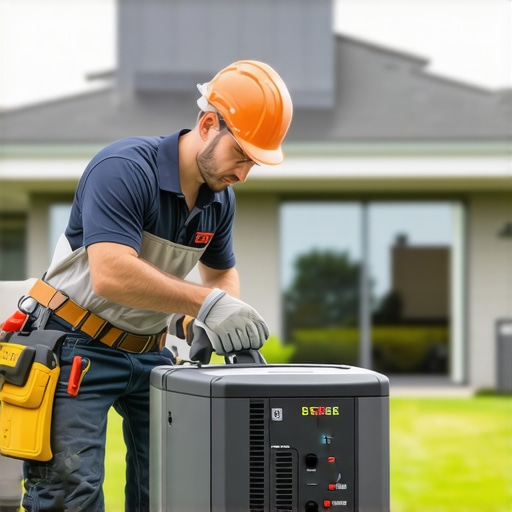
You’re standing in your garage, the smell of burnt dust and ozone clinging to the air, wondering why the hell your brand-new backup generator just died the second the grid went down. You spent ten grand on a machine that’s supposed to be your lifeline, but right now, it’s just an expensive lawn ornament. Most homeowners—and frankly, too many ‘weekend warrior’ installers—treat a generator like a plug-and-play appliance. It isn’t. In the world of high-demand modern living, where we’re balancing EV charger installation needs with microgrid integration, a generator is a complex piece of infrastructure that demands respect for physics and the National Electrical Code.
I’ve been in this game for 35 years. I’ve seen the aftermath of ‘good enough’ wiring, and it usually involves a thermal imaging inspection showing a main lug at 300 degrees Fahrenheit. I remember one ‘renovated’ property where a flipper had buried three live junction boxes behind a kitchen backsplash to make room for a new kitchen range hood wiring setup. I found them with my tick tracer only because the homeowner complained about a ‘clicking’ sound in the wall. If I hadn’t traced that home run back to the panel, that house was six months away from a fire damage wiring restoration claim. Generators bring that same level of risk if you don’t respect the load.
“Improperly installed generators can backfeed into the utility lines, creating a ‘death trap’ for utility workers trying to restore power.” — CPSC Safety Alert 516
Mistake 1: The Load Calculation Ghost
The biggest mistake I see heading into 2026 is the refusal to do a proper load calculation. Your old 100-amp service was never designed to handle a 48-amp EV charger, a smart data closet organization rack, and a 20kW standby generator simultaneously. When you add a generator without calculating the starting load (inrush current) of your HVAC and your EV station, you’re asking for a brownout that will fry your sensitive electronics. You need to understand Ohm’s Law: Voltage equals Current times Resistance. If your temporary power services can’t handle the ‘kick’ of a compressor, the voltage drops, the amperage spikes, and your wires start sweating. Before you buy the unit, talk to someone who knows how to perform a demand response system analysis to see how your house actually breathes.
[IMAGE_PLACEHOLDER]
Mistake 2: The Floating Neutral Nightmare
In many mid-century homes built between 1960 and 1980, we’re dealing with the legacy of aluminum wiring and Federal Pacific (FPE) panels. These panels are notorious; the breakers jam and don’t trip when they should. When you integrate a generator into these systems without a properly bonded neutral, you create a ‘floating neutral.’ This is where things get visceral. Without a solid path back to the ground, the electrical potential looks for any way out—sometimes that’s through your cable lines, your gas piping, or you. I’ve seen remote electrical diagnostics reports where the harmonic distortion was so high it was literally humming through the copper pipes. If you’re still running an FPE or Zinsco panel, you need to look into financing electrical upgrades before you even think about a generator. It’s not an ‘upsell’; it’s an insurance policy against your house becoming a Roman candle.
Mistake 3: Neglecting Microgrid and EV Integration
We are moving toward a world of microgrid integration. In 2026, your generator shouldn’t just be a dumb engine; it needs to talk to your solar array and your battery backup. A common mistake is installing a transfer switch that doesn’t account for ensuring safe and efficient EV charging station setup at home. If the generator kicks on while your Tesla is pulling 11.5kW, and the transfer switch isn’t smart enough to shed that load, the generator’s governor will hunt, the frequency will oscillate, and you’ll destroy the inverter in the car. You need a load-management controller that prioritizes your well pump and fridge over your car charger. Check out these EV charger maintenance tips to see why clean power matters.
Mistake 4: The ‘Handyman’ Grounding Job
I can’t tell you how many times I’ve pulled up to a job and seen a generator grounded to a rusted garden stake. That isn’t a ground; that’s a prayer. Proper grounding requires driving eight-foot copper-clad rods and ensuring the impedance is low enough to actually clear a fault. In older homes, we often find ‘bootleg grounds’ where someone jumped the neutral to the ground screw. When you put a generator on that circuit, you risk energizing the entire metal chassis of your appliances. If you’ve had issues, you might need to see how electricians tackle troubleshooting to understand how we find these hidden killers using remote electrical diagnostics and specialized meters.
“A backup generator must be installed with a transfer switch that prevents the accidental connection of the generator to the utility’s power lines.” — NFPA 70: National Electrical Code
Mistake 5: Failing the ‘Cold Creep’ Test
If your home has aluminum branch wiring, you’re dealing with the physics of Cold Creep. Aluminum expands and contracts at a different rate than the steel screws on a standard breaker or outlet. Over time, the connection loosens. This creates resistance. Resistance creates heat. Heat creates fire. When you add the heavy, sustained load of a generator, those loose connections are the first to go. I use monkey shit (duct seal) to keep moisture out of the exterior conduits, but inside the panel, every terminal needs to be torqued to specific inch-pounds. If your installer didn’t pull out a torque wrench, they didn’t finish the job. If you’re smelling something ‘fishy’—that’s the smell of plastic insulation melting. Shut it down and contact us immediately.
The Final Torque
Don’t treat your home’s electrical system like a DIY hobby. Between data closet organization for your home office and the complexities of fire damage wiring restoration, the stakes are too high. Whether it’s a temporary power service for a construction site or a permanent standby unit for your family, the math has to be right. Use thermal imaging inspections to verify the integrity of your connections after the first 24 hours of run-time. You’ll sleep better knowing your home run isn’t glowing cherry red in the attic. If you’re struggling with an existing setup, read our guide on troubleshooting complex electrical issues. Electricity doesn’t give second chances; it just finds the weakest link.