The Ghost in the Copper: Why Your Modern Home is Starving for Data
I remember my journeyman back in 1988 smacking my hand with a pair of dikes because I was stripping Romex too fast. ‘You nick that copper, you create a hot spot,’ he’d scream over the sound of a jobsite radio. ‘The resistance builds, the heat follows, and eventually, the fire department shows up.’ He was right then, and he’s right now. But today, it’s not just about a 15-amp light circuit; it’s about the massive data throughput and electrical loads of a 2026-ready home. Most people think their Wi-Fi is slow because of the provider, but I’ve spent 35 years seeing the truth: it’s the garbage wiring behind your drywall. When you try to push 10 gigabits through a cable that was pulled around a sharp corner or stapled too tight, you’re not just losing speed—you’re creating a digital bottleneck that no reboot will ever fix.
1. The Centralized Hub: Moving Beyond the ‘Spiderweb’ Attic
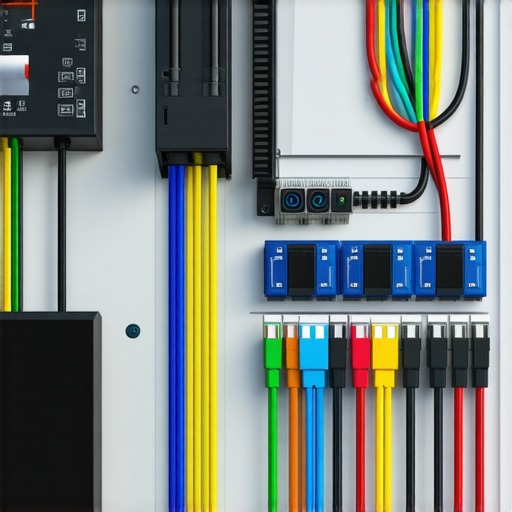
The first win for any structured wiring panel is organization that actually follows the physics of data. In the old days, we just threw a hub in the closet and hoped for the best. For 2026, you need a dedicated media enclosure that separates high-voltage power from low-voltage data. If your network cable installation is running parallel to your kitchen’s 20-amp appliance circuits for more than a few feet, you’re dealing with electromagnetic interference (EMI). That ‘noise’ forces your equipment to resend packets, killing your latency. A proper panel allows for ‘Home Run’ wiring—where every single outlet in the house has a direct, uninterrupted line back to the source. This isn’t just for Netflix; it’s for the stability of your entire infrastructure.
“Aluminum wire connections can overheat and cause a fire without tripping the circuit breaker.” – CPSC Safety Alert 516
While that quote usually refers to old branch circuits, the principle of thermal management applies to modern data hubs too. Power over Ethernet (PoE) for cameras and smart lighting installation generates real heat. If you’ve got forty Cat6 cables bundled tight with zip-ties in a non-ventilated box, you’re building a slow-cooker. We use ‘hook and loop’ fasteners to prevent crushing the twisted pairs inside the jacket, which maintains the cable’s geometry and ensures you’re actually getting the speed you paid for.
2. The EV Charger Integration: Calculating the True Load
You can’t talk about 2026 home data without talking about the garage. A level 2 EV charger is the biggest ‘straw’ in your home’s electrical drink. I’ve walked into brand new homes where the owner plugged in their Tesla and the whole network crashed because of the massive voltage drop on the service. A structured panel isn’t just for data; it’s the brain that monitors these loads. Before we even think about ensuring safe and efficient EV charging station setup at home, we have to look at the total load calculation. If your panel is a 100-amp relic from the 70s, adding a 48-amp charger is like trying to shove a firehose through a straw. We look for ‘Cold Creep’ in the main lugs—where the metal expands and contracts under heavy EV load until the screws go loose. If I see that with my Tick Tracer or a Wiggy, we’re doing a heavy-up before a single data cable gets punched down.
3. Smart Lighting and AFCI: The Safety Synergy
Modern smart lighting installation often requires a neutral wire at every switch, something old-timers used to skip to save copper. In 2026, that neutral is your data return path for smart dimmers. But here’s where it gets dangerous: the ‘Handyman Special.’ I’ve seen guys ‘bootleg’ a ground to a neutral just to make a smart switch turn on. That’s a death trap. Every one of these circuits needs to be protected by AFCI breaker services. An Arc-Fault Circuit Interrupter isn’t like a standard breaker that trips when you plug in too many toasters. It’s a microchip that listens for the specific ‘signature’ of an electrical arc—the sound of electricity jumping a gap.
“Arc-fault circuit-interrupters shall be installed in a readily accessible location.” – NEC 210.12
When you have dozens of smart nodes in a structured system, the risk of a loose termination increases. Using how electricians tackle troubleshooting for lighting installations often involves checking these AFCI breakers for ‘nuisance tripping,’ which is usually just the breaker doing its job and telling you that a wire is arcing behind a wall. It’s the difference between a minor annoyance and a house fire.
4. Drone Thermography Scans: Finding the Invisible Heat
In 2026, we don’t just guess where the problem is. We use drone thermography scans for larger estates or complex trenching electrical conduit runs to find hotspots before they become failures. If you have a restaurant kitchen electrical setup or a large home with extensive up lighting services, a thermal scan can reveal a high-resistance connection in a split second. Resistance is the enemy of both data and power. When I see a breaker glowing purple on a thermal screen, I know that the bus bar is likely pitted or the spring tension in the breaker has failed. This forensic approach ensures that your high-speed data isn’t being degraded by ‘dirty power’ coming from a failing main lug. It’s about more than just speed; it’s about the longevity of every device plugged into your walls.
5. Future-Proofing with Trenching and Emergency Exit Lighting
The final win is the physical path. If you’re doing a renovation, don’t just throw Romex in the walls. We recommend trenching electrical conduit for outdoor data runs to detached offices or ADUs. Why? Because the soil is acidic, and direct-burial cable eventually rots. I’ve dug up ‘waterproof’ wire that looked like Swiss cheese because of galvanic reaction with the local groundwater. By using schedule 40 or 80 PVC conduit, you can pull new fiber optics in 2030 without digging up your yard again. This infrastructure also supports emergency exit lighting for larger homes or home businesses, ensuring that when the power fails, the paths stay clear. If you’re unsure where to start, getting free electrical estimates from a master who knows the code is the only way to avoid the ‘Time Bomb’ of outdated wiring. Don’t trust a guy who doesn’t own a torque wrench; if the connections aren’t torqued to spec, they’re going to fail. Period.