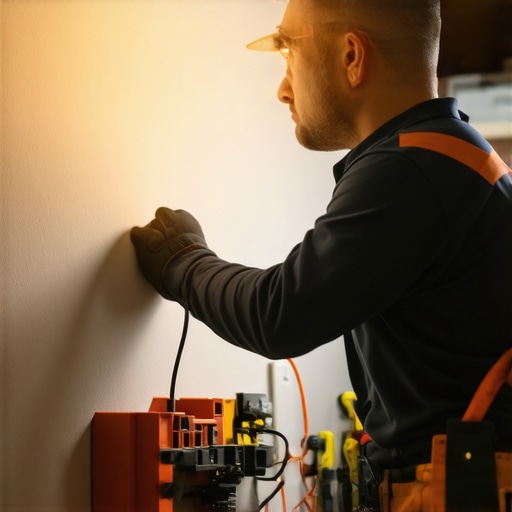
My Journey into Safer Homes: The Power of Lighting
Last year, I found myself frustrated with flickering lights and unreliable switches in my living room. As someone passionate about home safety, I realized that proper lighting installation and troubleshooting are crucial for creating a secure environment. That experience sparked my deep dive into professional electrical solutions, and I want to share my insights with you today.
Why Proper Lighting Installation Matters More Than Ever
In 2025, home safety has become more important than ever, especially with the rise of smart homes and energy-efficient lighting systems. I learned that professional lighting installation ensures not only aesthetic appeal but also safety and efficiency. When I hired a certified electrician, I was amazed at how they seamlessly integrated modern lighting with existing circuits, reducing fire hazards and improving energy consumption. For reliable guidance, I often refer to trusted sources like expert lighting installation tips.
What Are Common Troubleshooting Challenges in Home Lighting?
During my initial DIY attempts, I encountered several issues: dimming lights, inconsistent switches, and occasional power outages. These problems are quite common and can be caused by faulty wiring, overloaded circuits, or outdated fixtures. I found that understanding basic troubleshooting steps is essential. For example, checking circuit breakers, replacing faulty switches, or inspecting wiring connections can often resolve these issues without needing a full overhaul. However, for complex problems, I always recommend consulting a professional electrician to ensure safety.
How Do Electricians Tackle Troubleshooting for Lighting and Safety?
Electricians approach troubleshooting with a systematic process: diagnosing the root cause, testing circuits, and replacing faulty components. I learned that their expertise is vital in preventing electrical fires and ensuring compliance with safety standards. They use specialized tools to detect wiring issues or electrical faults, which might be invisible to the untrained eye. For instance, I read that experts often recommend routine maintenance to prevent problems before they escalate, like top electrician tips.
What Should I Consider When Planning Home Lighting for Safety?
When planning lighting systems, I consider factors like fixture placement, circuit capacity, and the use of surge protectors. Installing proper lighting controls can also enhance security, especially with motion sensors and timers. I suggest consulting professional guides such as the lighting installation troubleshooting tips for modern homes. These resources provide invaluable insights into creating a safe, efficient, and aesthetically pleasing lighting environment.
If you’re curious about improving your home’s safety through professional lighting solutions or troubleshooting, I encourage you to share your experiences or ask questions in the comments below. Remember, investing in proper installation and maintenance not only boosts safety but also enhances the comfort of your living space.
Unraveling Hidden Challenges in Home Lighting: How to Spot and Solve Common Issues
As a seasoned electrician and home safety advocate, I often encounter homeowners puzzled by persistent lighting problems such as flickering bulbs, dimming lights, or switches that refuse to cooperate. These issues are more than mere inconveniences; they can indicate underlying electrical faults that, if left unaddressed, pose safety risks. Understanding how to diagnose these problems is crucial. Sometimes, simple fixes like replacing a faulty switch or tightening loose connections suffice. Other times, more complex issues—like overloaded circuits or faulty wiring—require professional intervention. To explore these troubleshooting strategies comprehensively, visit lighting troubleshooting tips.
How Do Expert Electricians Approach Troubleshooting for Safer, Smarter Lighting?
Electricians employ a systematic approach: they begin with a thorough inspection of the circuit, testing voltage levels, and examining wiring integrity. Tools like circuit testers and thermal cameras help identify hidden faults, such as overheating wires or loose connections. Routine maintenance, including inspecting circuit breakers and cleaning switches, helps prevent future issues. These proactive measures not only ensure safety but also extend the lifespan of your lighting fixtures. For in-depth guidance on professional troubleshooting, I recommend reading top electrician tips.
What Should You Consider When Designing a Safe and Efficient Home Lighting System?
Designing a lighting system that is both safe and efficient involves strategic planning. Proper fixture placement minimizes the risk of accidental contact or fire hazards, especially in high-traffic areas. Circuit capacity should be assessed to prevent overloads, which can lead to tripped breakers or electrical fires. Incorporating surge protectors guards against voltage spikes that damage fixtures and electronics. Moreover, smart controls like motion sensors, timers, and dimmers enhance security and energy efficiency. For comprehensive planning, consult professional resources such as lighting installation tips to learn about best practices in modern home lighting design.
If you’re interested in elevating your home’s lighting safety and efficiency, I encourage you to share your experiences or ask questions in the comments below. Remember, a well-designed and maintained lighting system not only illuminates your space but also safeguards your loved ones and property.
Unveiling the Hidden Depths of Lighting Troubleshooting: My Personal Revelations
Over the years, I’ve come to realize that troubleshooting home lighting isn’t just about fixing flickering bulbs or dead switches; it’s a nuanced craft that requires both technical expertise and an intuitive understanding of a home’s electrical heartbeat. Each problem I encounter tells a story—sometimes straightforward, often layered with hidden complexities. I recall a particular case where a seemingly simple flickering in a living room light was actually caused by a subtle wiring fault behind the wall, invisible to the naked eye but detectable with a thermal camera—a tool I now never leave home without. Such experiences have deepened my appreciation for the meticulous approach electricians take, diagnosing issues with patience and precision.
The Intricate Art of Professional Troubleshooting: Beyond the Obvious
When I first started exploring professional troubleshooting, I was struck by how methodical and detailed the process is. Electricians don’t just replace parts—they analyze circuits, test voltage levels, and examine wiring integrity with specialized equipment. I remember reading that thermal imaging can reveal overheating connections that could potentially spark fires if left unchecked (lighting troubleshooting tips). This level of scrutiny is what separates amateur fixes from expert interventions. Each troubleshooting session reinforces my belief that safety isn’t an afterthought—it’s woven into every diagnostic step. I often wonder, how many hazards could be prevented if homeowners understood even basic troubleshooting principles? That’s why I encourage sharing experiences and questions—learning from each other makes us all safer.
What Deepens Our Understanding of Lighting Safety and Efficiency?
How Can Advanced Troubleshooting Methods Transform Our Home Safety Practices?
Advanced troubleshooting techniques, like using circuit analyzers or thermal cameras, provide insights that traditional methods might miss. These tools help identify issues such as loose connections, overloaded circuits, or faulty wiring—problems that silently threaten safety but often go unnoticed until a serious incident occurs. I’ve integrated some of these techniques into my routine, especially when dealing with older homes where wiring may have deteriorated over decades. The key is to view troubleshooting as proactive maintenance rather than reactive repair. Routine inspections, powered by modern diagnostic tools, can prevent electrical fires and extend the lifespan of fixtures. For homeowners eager to get started, I recommend consulting comprehensive guides like lighting installation troubleshooting tips for expert advice.
Thinking ahead, I often ask myself—how can smart technology further enhance safety? Smart lighting controls, integrated with sensors and automation, not only improve convenience but also serve as early warning systems if irregularities occur. For example, motion-activated lights coupled with diagnostic alerts can notify homeowners of potential wiring issues before they escalate. As we embrace these innovations, the line between troubleshooting and prevention blurs, making our homes safer and smarter.
Inviting Personal Experiences and Future Explorations
If you’ve faced your own lighting dilemmas or are curious about integrating smarter safety solutions, I welcome your stories and questions. Sharing insights helps us build a community that prioritizes safety without sacrificing comfort or aesthetics. Remember, a well-maintained lighting system is more than illumination—it’s a safeguard for your loved ones. For those ready to deepen their understanding, exploring professional resources like expert troubleshooting tips can be a game-changer. As I continue to learn and experiment, I look forward to discovering new ways to make our homes not only brighter but safer and more resilient against electrical hazards.
Leveraging Cutting-Edge Diagnostic Tools to Preempt Electrical Hazards
Over the years, I’ve integrated advanced diagnostic equipment into my troubleshooting arsenal, transforming how I approach complex lighting issues. Devices such as thermal imaging cameras and circuit analyzers have become indispensable, enabling me to detect hidden faults like overheating wiring or subtle overloads before they manifest into dangerous failures. These tools provide a detailed thermal map of electrical components, revealing hotspots that escape conventional inspections. For homeowners committed to proactive safety, investing in such technology can be a game-changer. By routinely scanning your electrical system, you can identify potential fire hazards early and plan targeted repairs, significantly reducing risk.
How Do Experts Decode Complex Wiring Anomalies?
Deciphering intricate wiring problems requires a methodical approach grounded in a deep understanding of electrical systems. I often employ techniques like circuit tracing and impedance testing, which help isolate problematic segments within the circuit. For instance, when encountering mysterious flickering or intermittent outages, I follow the wiring path meticulously, checking for loose terminals or damaged insulation. Moreover, consulting detailed schematics and leveraging software diagnostics can streamline this process. According to industry standards outlined by the National Electrical Code, ensuring proper wiring integrity is fundamental to safety. This meticulous approach not only resolves issues efficiently but also fortifies your home against future faults.
What are the benefits of integrating smart diagnostic systems into home lighting networks?
Smart diagnostic systems are revolutionizing home safety by providing real-time alerts and remote monitoring capabilities. These systems, integrated with IoT-enabled lighting fixtures, can detect irregularities such as voltage fluctuations or wiring degradation, notifying homeowners instantly via smartphone apps. This proactive alert mechanism allows for swift intervention, preventing potential electrical fires or equipment damage. Additionally, smart systems facilitate routine maintenance scheduling, extending the lifespan of fixtures and wiring. For those interested in elevating their home’s safety infrastructure, exploring solutions like smart circuit breakers or sensor-based diagnostics is highly recommended. For a comprehensive overview, see smart electrical troubleshooting tips that detail integration strategies.
If you’re eager to deepen your understanding of advanced troubleshooting techniques or share your experiences with innovative safety solutions, I invite you to join the conversation. Your insights could inspire new approaches to maintaining safer, smarter homes.
Things I Wish I Knew Earlier (or You Might Find Surprising)
The Hidden Depths of Wiring
One thing I’ve learned from my journey into home lighting is that seemingly simple flickers can hide complex wiring issues. Early on, I underestimated how much effort goes into diagnosing these problems, often thinking a quick bulb change would suffice. Now, I realize that behind every flicker is a story of wiring connections, circuit loads, or insulation health — details that only experienced electricians can truly interpret.
The Power of Routine Checks
It surprised me how routine inspections of switches and fixtures can prevent major hazards. I used to ignore small signs like dimming or switches that felt loose, but these are often red flags for deeper electrical faults. Regular maintenance has saved me from costly repairs and potential fire risks, reinforcing that safety is a proactive game.
Smart Technology as a Safety Net
Integrating smart diagnostics into my home lighting system has been a game-changer. Devices that monitor voltage fluctuations or detect overheating provide peace of mind and early warnings, which are invaluable. It’s like having a safety assistant that constantly watches over your wiring, alerting you before trouble arises.
Understanding the Role of Professional Electricians
Initially, I thought DIY fixes were enough, but I’ve come to appreciate how critical professional electricians are. Their systematic troubleshooting—using thermal cameras, impedance testers, and detailed schematics—ensures safety and compliance. Their expertise has made me realize that some problems are best left to the pros, especially when safety is involved.
The Future of Home Lighting Safety
Looking forward, I believe that advancements like IoT-enabled lighting and remote diagnostics will further enhance safety. Imagine receiving an instant alert on your phone if wiring issues occur or if a fixture overheats. This proactive approach could revolutionize how we maintain safe, efficient homes.
Resources I’ve Come to Trust Over Time
- National Electrical Code (NEC): Essential for understanding safety standards and wiring practices. I refer to this regularly to ensure my home meets safety regulations.
- Lighting Troubleshooting Tips by Reliable Electric: Offers practical advice for diagnosing common issues. It’s a resource I recommend for homeowners wanting to understand their lighting systems better.
- Smart Home Electrician Guides: These provide insights into integrating smart diagnostics and automation for enhanced safety and convenience. They helped me explore new safety tech options.
Parting Thoughts from My Perspective
Reflecting on my experience, I realize that home lighting troubleshooting is as much about understanding your home’s electrical heartbeat as it is about fixing bulbs or switches. Safety and efficiency go hand in hand, and investing in regular checks, professional help, and smart technology can make all the difference. If this resonated with you, I’d love to hear your thoughts. Sharing our stories helps us all build safer, smarter homes. Feel free to drop your experiences or questions in the comments—together, we can illuminate the path toward better home safety.
Reading this post really resonated with my experience last year when I faced flickering lights in my basement. Initially, I thought it was just a bulb issue, but after some troubleshooting, I discovered loose wiring connections behind the wall. Getting a professional involved was a game-changer; they used thermal imaging to spot that overheating wire before it could cause a fire hazard. It made me realize how crucial it is to not overlook small signs like flickering or inconsistent switches, as those are often indicators of deeper electrical issues. Have any of you used thermal cameras or other advanced tools for troubleshooting in your homes? I believe investing in learning some basic diagnostic skills could help homeowners catch potential problems early before they become serious safety risks. It would be interesting to hear how others are incorporating smart diagnostics or regular maintenance into their home safety routines.
Your insights rightfully emphasize the importance of professional installation and regular troubleshooting checks. I completely agree that beyond just the safety benefits, high-quality lighting installation enhances the overall value and aesthetic of a home, especially as smart lighting becomes more integral in our daily lives. From my experience, proactive measures like installing smart circuit breakers and using thermal cameras for routine inspections have saved me from costly repairs and potential hazards down the line. I particularly appreciate your mention of surge protectors and strategic fixture placement, as these often go overlooked but are crucial in preventing overloads. Have you experimented with integrating smart home systems that monitor electrical loads and provide alerts? I’d be curious to hear about tools or techniques that others have found effective in maintaining both safety and energy efficiency in their home lighting systems.
Reading your detailed journey into home lighting safety really highlights how much effort and expertise goes into ensuring our systems are both efficient and secure. I’ve experienced similar frustrations with unreliable switches and flickering lights in my own home, which often pointed to underlying wiring issues that weren’t immediately visible. Since then, I’ve started investing in regular professional inspections and smart diagnostic tools like thermal cameras, which have given me a much clearer picture of potential risks before they become hazardous. I wonder, how do others here schedule their routine safety checks? Also, I’m curious if anyone has integrated smart home systems that alert you to electrical anomalies—do these actually help prevent bigger problems or fires? Your insights could be a great help for homeowners looking to improve their electrical safety without necessarily becoming experts themselves. Thanks for sharing such a comprehensive perspective—really inspiring and practical advice!
This post really hits home about the importance of professional installation and routine troubleshooting, especially as homes become more integrated with smart technology in 2025. I’ve had my share of flickering lights and dead switches, mainly in older wiring setups, and I’ve learned that sometimes, issues seem minor but can hide bigger risks like faulty wiring or overloaded circuits. I’ve started using thermal imaging cameras in my inspections, which has been eye-opening; it’s fascinating how much you can detect before a problem becomes dangerous. I also wonder, how many homeowners are actually skilled enough to do basic troubleshooting safely? For most of us without that expertise, I think investing in a good regular inspection and smart diagnostics can really make a difference. Has anyone here upgraded to smart circuit breakers or integrated advanced safety tech? It’s inspiring to see how proactive maintenance can prevent fires and extend fixture lifespan. Looking forward to hearing more insights from others about maintaining safe and energy-efficient lighting systems.
I really connected with your experience on the importance of professional installation and systematic troubleshooting. For me, regular inspections have made a huge difference, especially in older homes where wiring can be quite complex. Regarding smart technology, I recently installed smart circuit breakers that monitor usage and alert me to potential overloads — an added layer of safety that’s surprisingly affordable and easy to manage. The use of thermal cameras has also become part of my routine, helping identify hotspots that might otherwise go unnoticed but could pose fire risks. I’m curious, has anyone here tried integrating smart home safety features like automated alerts or remote diagnostics? I believe combining professional checks with smart tech can really create a safer, more energy-efficient environment. For anyone considering upgrades, what systems or tools have you found most effective in preventing electrical hazards? Would love to hear your insights and experiences!