
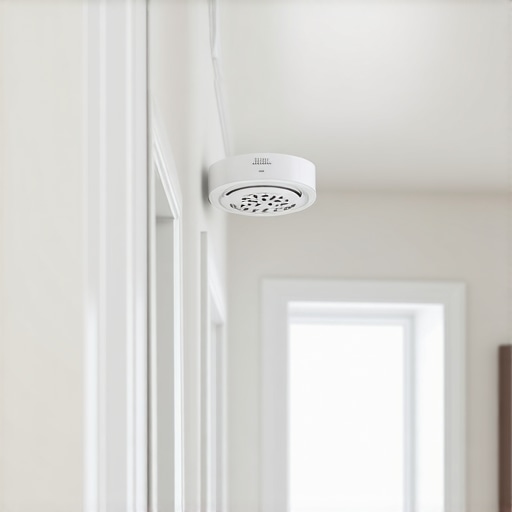
The 3:00 AM Phantom: An Autopsy of the Nuisance Alarm
It always happens at three in the morning. That piercing, rhythmic chirp that slices through your REM sleep like a jagged piece of sheet metal. You stumble out of bed, swatting at the ceiling with a broom handle, desperate to silence the beast. Most people assume it is just a dying 9-volt battery, but as a forensic inspector who has spent three decades tracing voltage drops through charred studs, I can tell you: that chirp is often the dying gasp of a system under electrical duress. It is a sensory warning, a mechanical ‘help me’ from a device that is being poisoned by its own environment.
The Old Timer’s Lesson: The Sin of the Nicked Conductor
I remember my first week as a green apprentice. I was rushing a rough-in, using my pocketknife to strip the jacket off a run of Romex. My journeyman, a man who smelled exclusively of solder and black coffee, grabbed my wrist so hard I thought he’d snap it. ‘You see that tiny score mark on the copper?’ he growled, pointing at a microscopic nick I’d made. ‘That is a heat sink in the making. That nick creates resistance. Resistance creates heat. Heat creates ionized air. You do that near a smoke head, and you’ll be back here in six months wondering why the damn thing won’t stop screaming.’ He was right. Precision in the trim-out isn’t about aesthetics; it is about preventing the micro-arcing that triggers modern sensors. If you are experiencing phantom alarms, we need to look at the forensic evidence left behind by sloppy installations.
“Total smoke alarm response time is significantly affected by the presence of electrical noise and power line transients which can mimic the signature of a fire event.” – NFPA 72: National Fire Alarm and Signaling Code
The Forensic Breakdown: Why Sensors Fail
To understand the ‘why,’ we have to look at the physics of the ionization chamber. Most older heads use a tiny speck of Americium-241 to ionize the air between two charged plates. When smoke enters, it disrupts the flow of ions, triggering the alarm. However, in mid-century homes with aging infrastructure, we see a phenomenon called ‘Cold Creep’ in the service entrance or at the bus bar. As temperatures fluctuate, the metal expands and contracts, loosening the connection. This creates electrical ‘noise’—high-frequency harmonics that travel down the home run and confuse the alarm’s logic board. This is where harmonic filter services become essential. We aren’t just looking for smoke; we are looking for the ‘dirty’ electricity generated by your neighbor’s new pool pump or your own level 2 EV charger.
The Enemy Within: Harmonics and Demand Response Systems
We live in an era of complex electrical loads. When you integrate demand response systems to save on utility costs, or install a 200 amp panel install to support a modern kitchen, you are changing the impedance of your entire home. Modern smoke alarms are essentially small computers. When they are hardwired into a system that is seeing massive spikes from a service entrance upgrade or an EV station, the sensitive electronics can suffer from ‘harmonic interference.’ The sensor thinks it sees smoke, but it’s actually seeing a voltage ripple. This is why a priority service membership with a bonded insured electrical contractor is vital—you need someone who can use a Wiggy or a Tick Tracer to find the phantom voltage before it fries your sensors. If you’re struggling with these issues, you might need expert troubleshooting to isolate the circuit.
The Humidity Trap and The ‘Monkey Shit’ Solution
In homes built between 1960 and 1980, we often find that smoke alarms are placed too close to bathrooms or attic hatches. The physics here is simple: condensation. Water vapor mimics smoke particles in an ionization chamber. But there’s a deeper issue: air infiltration from the attic. I’ve pulled down chirping alarms only to find the junction box filled with ‘Monkey Shit’ (duct seal) because the previous guy was trying to stop a draft. Without proper sealing, the temperature differential between the conditioned room and the scorching attic creates a localized weather system inside your smoke detector. This moisture leads to oxidation on the contact pins, creating a high-resistance path that triggers the ‘low battery’ chirp even with a fresh cell.
“Aluminum wire connections can overheat and cause a fire without tripping the circuit breaker, and the resulting particulates can trigger ionization sensors prematurely.” – CPSC Safety Alert 516
Modern Solutions: AI Fault Detection and Battery Backup Wiring
If your home is still running on a 100-amp service with a ‘Widow Maker’ panel, it’s time to talk about a service entrance upgrade. Modern safety requires stability. We are now installing systems with AI fault detection that can differentiate between a true fire signature and a transient surge from your dishwasher. When we perform a battery backup wiring overhaul, we ensure that the interconnect—the ‘red wire’ that links all your alarms—is shielded from the electromagnetic interference of your high-voltage lines. For those moving toward total energy independence, ensuring your EV charging station setup is properly isolated is the first step in silencing the 3:00 AM phantom. If you’re stuck in a loop of chirping alarms, our weekend electrician services can perform a full forensic sweep of your 200 amp panel install to ensure every lug is torqued to spec.
Conclusion: Sleep at Night Knowing It’s Torqued
Electricity is not a hobby, and a chirping smoke alarm is not just a nuisance—it’s a diagnostic report from your home’s central nervous system. Whether it’s dust-induced static, harmonic distortion from a new EV charger, or the ‘Cold Creep’ of aging aluminum branch circuits, the solution isn’t a hammer; it’s a professional audit. Don’t just replace the head; fix the infrastructure. You can contact us to schedule a forensic inspection. When your connections are tight, your harmonics are filtered, and your system is bonded, you can finally sleep through the night. Because in this business, the only thing better than a fast response is a system that never fails in the first place. Check out our EV maintenance tips to keep your high-draw appliances from wrecking your home’s sensitive electronics.