
The Autopsy of a ‘Simple’ Low-Voltage Project
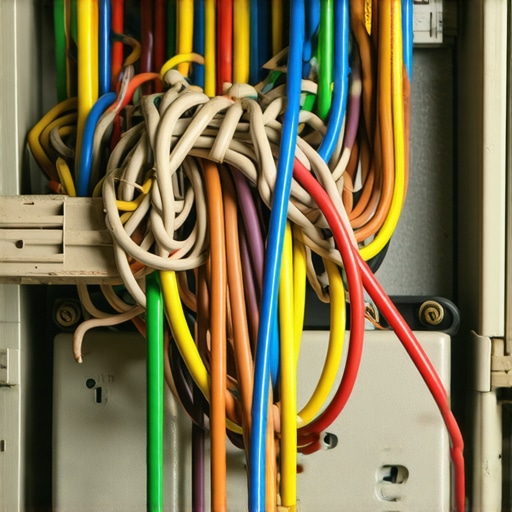
I walked into a Victorian renovation last Tuesday where the homeowner was trying to run a few new phone lines and a cat6 drop. He thought he was being smart, using a long flex-bit to drill blind through the floor plates. What he didn’t realize was that he’d just bored a hole through an original 1920s porcelain knob-and-tube insulator. When I arrived, the wall cavity didn’t just smell like dust; it smelled like ionizing air and charred cedar. I found the short with my Wiggy and a tick tracer, but the damage was done. The flipper before him had buried a live junction box behind the wainscoting, and that flex-bit had turned it into a shower of sparks. This is where the DIY dream dies—at the intersection of high-voltage arrogance and low-voltage ignorance.
The Physics of Interference and Induction
When you’re routing new phone lines or smart thermostat wiring, you aren’t just pulling string. You’re dealing with electromagnetic fields. Most DIYers think because a phone line carries low voltage, they can zip-tie it to a Romex power feed. That’s a forensic nightmare waiting to happen. Through a process called electromagnetic induction, the 60Hz hum from your house wiring leaks into your data lines. This isn’t just ‘static’ on the phone; it’s a thermal risk if that low-voltage insulation breaks down. In older homes, where fuse box to breaker conversion hasn’t been performed, the lack of modern overcurrent protection means a short between a phone line and a power leg won’t just pop a breaker—it’ll turn that thin 24-gauge copper into a heating element that can ignite the paper backing on your insulation before you even smell the ozone.
“Aluminum wire connections can overheat and cause a fire without tripping the circuit breaker.” – CPSC Safety Alert 516
We see this frequently in 1970s builds where aluminum branch circuit wiring is present. If you’re fishing a phone line and you nick a brittle aluminum conductor, you’ve just created a ‘cold creep’ scenario. The metal expands and contracts at a different rate than the screw terminals, loosening the connection until it arcs. This is why professional troubleshooting isn’t just about making the dial tone work; it’s about ensuring the integrity of the entire electrical envelope.
The Heavy-Up Reality: Beyond the Phone Jack
Modern homes require more than just communication lines; they require massive power upgrades. If you’re considering a sauna heater installation or need spa grounding services, you’re looking at a significant load calculation. You can’t just tap into a basement circuit. Most old fuse boxes are rated for 60 or 100 amps, which was fine when the biggest load was a toaster. Today, between EV chargers and HVAC systems, you need a heavy-up. We provide three phase power services for larger estates and commercial applications because the balance of load is critical. Without proper phase balancing, you end up with ‘ghost voltages’ that can fry your expensive smart home hubs. When we perform a fuse box to breaker conversion, we aren’t just swapping parts; we’re recalibrating the home’s heart.
The Forensic Eye: Drone Thermography Scans
Sometimes the failure isn’t inside the wall; it’s at the overhead service drop. Weather and salt air (especially if you’re near the coast) eat away at the service entrance cable. We now use drone thermography scans to identify heat signatures on the mast and the weather head. If I see a glowing red spot on the thermal feed where the utility lines meet your house, I know that connection is failing due to oxidation. We seal those entry points with monkey shit (duct seal) to keep moisture out, but once the copper is pitted, it’s a fire hazard. Using dikes to trim back charred ends is a temporary fix; a full service replacement is the only way to sleep at night. Check our guide on how electricians tackle troubleshooting to see how we track these invisible killers.
“The grounding electrode conductor shall be copper, aluminum, or copper-clad aluminum.” – NEC Article 250.66
But here’s the kicker: DIYers often use the phone line’s ground as a shortcut. I’ve seen people try to ground a subpanel to a cold water pipe that’s been cut and replaced with PEX ten feet down the line. That’s a widow maker. Proper spa grounding services require a continuous, low-impedance path to the earth, not a ‘good enough’ connection to a random pipe. We ensure every rough-in and trim-out meets the most stringent standards, backed by a lifetime workmanship guarantee. We even offer a military discount wiring program because we respect those who understand that ‘standard operating procedure’ isn’t a suggestion—it’s a survival requirement.
Why the DIY Approach Fails in the Long Run
The problem with ‘doing it yourself’ is that you don’t know what you don’t know. You might get the light to turn on or the phone to ring, but did you torque the lugs to the manufacturer’s inch-pound specifications? Probably not. Did you use a torque screwdriver, or did you just ‘grunt-tighten’ it? Over-tightening a terminal can be just as dangerous as leaving it loose, as it crushes the wire and creates a high-resistance hot spot. For those moving toward modern tech, ensuring a safe and efficient EV charging station setup is the ultimate test of your home’s infrastructure. If your main lugs are loose, that constant 40-amp draw will melt your panel long before the car is charged. If you’re having issues, see our EV charger troubleshooting tips to understand the complexity involved. At the end of the day, electricity is a lazy beast—it’s always looking for the shortest path to ground, and if you provide it a path through your body or your attic’s dry timber, it will take it without hesitation. Don’t let a simple phone line project turn into a forensic investigation by the fire marshal. Get it done right, get it torqued, and get it inspected. Contact us today to secure your home’s future.