
The Invisible Sentry: Why Your Grounding System is a Ticking Time Bomb
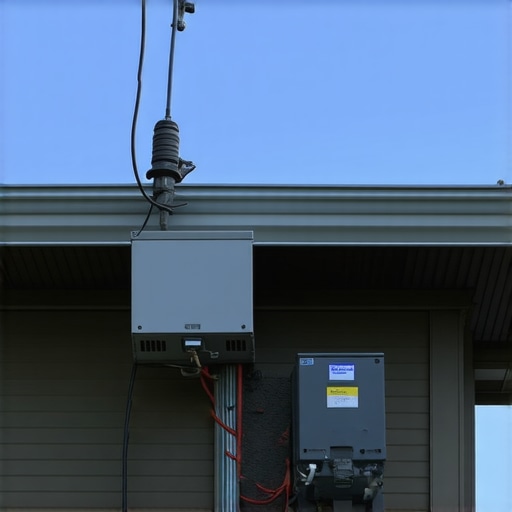
Most homeowners look up at their overhead service drop and see three wires—a triplex—stretching from the utility pole to their weatherhead. They see a simple connection. I see a high-stakes physics experiment that’s been running for forty years, usually with a failing grade. My old journeyman, a man who smelled like burnt ozone and cheap coffee, used to smack my hand with his linesman’s pliers if he saw me rushing a ground rod connection. ‘You nick that copper, you’re inviting the lightning to dinner, kid,’ he’d growl. He wasn’t being dramatic. He knew that in a mid-century home, that grounding system isn’t just a wire; it’s the only thing standing between a 10,000-amp surge and your sleeping family.
We are living in an era of electrical overload. Your 1970s split-level was designed for a toaster and a few lamps, not for a subpanel installation to power a data center in your basement or a high-draw spa grounding services request. When the grounding system fails, the electricity doesn’t just stop. It looks for a different path. It finds it through your cable lines, your gas pipes, or worse, your body. This is the autopsy of a service drop, and why ‘good enough’ is a death sentence in the electrical trade.
“The grounding electrode conductor shall be solid or stranded, insulated, covered, or bare, and shall be resistant to any corrosive conditions existing at the installation or shall be protected against corrosion.” – National Electrical Code (NEC) Article 250.64(A)
The Physics of the ‘Cold Creep’ and the Service Mast
In mid-century builds, specifically those constructed between 1960 and 1980, we deal with the ‘Aluminum Menace.’ It’s not just the Romex inside the walls; it’s the service entrance cable (SE cable) itself. Aluminum has a high coefficient of thermal expansion. It breathes. Every time you turn on your oven, those conductors heat up and expand. When you turn them off, they contract. This is the ‘Cold Creep.’ Over decades, this microscopic movement loosens the mechanical lugs at the weatherhead. Once a gap forms, oxidation moves in. Aluminum oxide is an insulator, not a conductor. It creates resistance, and resistance creates heat.
When I’m performing code violation corrections, the first thing I check is the neutral connection at the mast. If that neutral fails because of Cold Creep, you get a ‘floating neutral.’ Suddenly, your 120V circuits are seeing 200V or more. Your light bulbs pop, your fridge compressor screams, and your expensive electronics fry. This is why remote electrical diagnostics are becoming vital, but they can’t replace a Master Electrician with a Wiggy or a Tick Tracer (often called a Widow Maker for its tendency to lie to you) checking the physical integrity of the mast.
The Anatomy of a Proper Grounding Electrode System (GES)
Grounding isn’t just one rod in the dirt. A code-compliant system is a network. First, you have the grounding electrode conductor (GEC) running from your main service panel to the primary electrode—usually a copper-clad steel rod driven eight feet into the earth. But one rod is rarely enough. Soil resistivity varies. In dry, sandy soil, that rod is about as useful as a toothpick. We often have to drive a second rod at least six feet away to hit the required 25 ohms of resistance. If we can’t hit it, we don’t guess. We test. A real pro doesn’t just ‘rough-in’ a ground; they ensure the path to earth is clear of obstructions.
Then there’s the water pipe bond. If your home has a metal water service entering the building, it must be bonded within five feet of entry. Why? Because the city’s buried iron pipe is the best ground you’ll ever have. I’ve seen 24 hour emergency electrician calls where the homeowner replaced a section of metal pipe with PEX, unknowingly cutting off the home’s primary ground. Suddenly, the whole plumbing system is energized because of a ground fault. That’s how people get shocked in the shower.
The Danger of the Federal Pacific and Zinsco Legacy
If your overhead service drop feeds into a Federal Pacific (FPE) Stab-Lok or a Zinsco panel, you aren’t just looking at a grounding issue; you’re looking at a structural failure of safety. These panels are the pariahs of the forensic world. The breakers are known to jam. They don’t trip even when the wire is melting. In these cases, the grounding system is under immense stress because the overcurrent protection—the breaker—refuses to do its job. I’ve pulled covers off FPE panels where the bus bar was pitted and charred, the result of years of micro-arcing. Any lighting installation services project in a house with these panels should start with a full panel change-out. No exceptions. We use AlumiConn connectors for the small stuff, but for the main service, it’s a total gut job.
“Aluminum wire connections can overheat and cause a fire without tripping the circuit breaker.” – CPSC Safety Alert 516
Advanced Protection: Surge Protectors and Transfer Switches
Once the foundation—the ground—is solid, we look at modern protection. A surge protector installation at the main panel is no longer a luxury; it’s a requirement for the sensitive boards in your LED lights and smart appliances. Without a proper ground, a surge protector is just a paperweight. It needs that path to earth to dump the excess voltage. The same applies when we’re doing a generator transfer switch install. If the generator isn’t bonded correctly to the house’s grounding system, you’re creating a ‘backfeed’ hazard that can kill a utility worker three blocks away.
We also see a massive influx of CAT6 cabling services and home theater wiring. These low-voltage systems are incredibly sensitive to ground loops. If your service drop isn’t grounded properly, you’ll hear a hum in your speakers or see ‘snow’ on your digital displays. It’s the house’s way of telling you that electricity is looking for a way out, and it’s choosing your expensive AV gear as the exit ramp. Before you invest in a [lighting installation](https://reliableelectricpro.com/lighting-installations-made-easy-a-step-by-step-electrician-guide), ensure your ‘home run’ circuits have a dedicated, clean ground path.
The Master’s Method: Step-by-Step Grounding
When I approach a service upgrade, I don’t just look at the wires. I look at the environment. Is there Monkey Shit (duct seal) in the weatherhead to prevent water from tracking down the SE cable into the lungs of the panel? Are the dikes (diagonal cutters) I’m using sharp enough to give a clean cut without crushing the strands?
- Verification: Use a Wiggy (solenoid tester) to verify the current state of the neutral-to-ground bond.
- The Mast: Check the weatherhead. Ensure the drip loop is deep enough so rain doesn’t enter the pipe.
- The Rods: Drive two 8-foot copper-clad rods. Use a hammer drill with a ground rod driver attachment—don’t be the hero with a sledgehammer.
- The Connection: Use ‘acorn’ clamps torqued to spec. If it’s a high-salt or high-moisture area, we use cad-welding for a permanent molecular bond.
- The Interior: Bond the gas line, the water line, and any structural steel.
Modern demands, like [ensuring safe and efficient EV charging station setup at home](https://reliableelectricpro.com/ensuring-safe-and-efficient-ev-charging-station-setup-at-home), require this level of rigor. You cannot charge a Tesla on a grounding system held together by rust and prayer.
Sleep Better When It’s Torqued to Spec
Electricity is a lazy, opportunistic force. It wants to get to the ground, and it doesn’t care if it goes through your copper pipes or your heart to get there. Properly grounding an overhead service drop is the most unglamorous, yet most vital, part of electrical work. It’s the ‘Trim-out’ of the safety world. Whether you’re worried about your subpanel installation or just want to make sure your home theater wiring doesn’t hum, the answer is always in the dirt. Don’t trust a handyman with a ‘Tick Tracer’ and a dream. Get a Master who knows that the difference between a safe home and a forensic investigation is about 20 foot-pounds of torque on a ground lug. If you have questions about your system’s integrity, check our [privacy policy](https://reliableelectricpro.com/privacy-policy) and [contact us](https://reliableelectricpro.com/contact-us) for a real inspection. Anything less is just waiting for the flash.