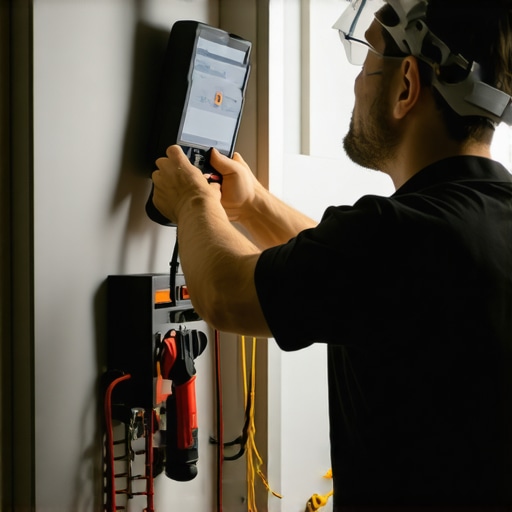
Discovering the Power of Proper Lighting in My Home
I’ll never forget the day I decided to upgrade my home’s lighting system. It started with a simple flicker in the living room lights, but soon I realized that behind this small issue was a complex world of electrical troubleshooting. As I delved deeper, I learned that professional lighting installation and troubleshooting are crucial for ensuring safety and efficiency. Sharing this experience, I hope to guide others facing similar challenges.
Why I Trust Expert Electrical Services for Lighting Installations
When it comes to installing or repairing lighting fixtures, I always recommend consulting with certified electricians. Their expertise ensures that wiring is correctly handled, minimizing risks like electrical faults or short circuits. I personally read some insightful articles on lighting installation made easy, which helped me understand the importance of proper setup. Remember, DIY might seem tempting, but safety should always come first.
My Top Troubleshooting Strategies for Lighting Glitches
One of my most common issues was flickering lights, which I later discovered could be due to loose connections or faulty switches. I learned that systematic troubleshooting—checking circuit breakers, replacing switches, or inspecting wiring—can solve many problems. For more complex issues, I turn to expert advice and sometimes consult authoritative sources like troubleshooting strategies for homes. Identifying the root cause is essential to prevent future hazards.
How Can I Identify the Root Cause of My Lighting Problems?
Understanding whether the issue is with the wiring, switches, or fixtures can be tricky. I usually start by turning off the power, inspecting connections, and using a multimeter to test voltage. If you’re unsure, it’s best to seek professional help to avoid risks. Reliable electricians can pinpoint issues quickly and safely, ensuring your home remains both bright and secure.
If you’re like me, tackling electrical issues can seem daunting, but with the right knowledge and expert guidance, you can maintain a safe and well-lit home. Feel free to share your experiences or ask questions in the comments below—I love hearing from fellow DIY enthusiasts and homeowners!
Unraveling Complex Electrical Issues: A Deep Dive into Troubleshooting Strategies
As an electrician with years of experience, I often encounter homeowners facing persistent electrical problems that seem elusive at first glance. Whether it’s an EV charger that refuses to power up or a lighting system that flickers intermittently, understanding the nuanced causes behind these issues is vital. A systematic approach grounded in electrical fundamentals can reveal hidden faults, ensuring safety and functionality. For instance, inspecting wiring integrity and verifying circuit integrity with professional tools like multimeters is crucial. For more insights, I recommend reviewing expert EV charger troubleshooting tips to handle common problems efficiently.
How Do External Factors Impact Electrical Troubleshooting?
External environmental factors—such as humidity, temperature fluctuations, or nearby electrical interference—can significantly affect the performance of both EV chargers and lighting systems. For example, moisture ingress can corrode connections, leading to intermittent faults or complete failures. Similarly, power surges caused by lightning or grid issues can damage sensitive components. Being aware of these external influences allows electricians to implement preventative measures, like installing surge protectors or ensuring proper enclosure sealing. For comprehensive setup guidance, explore safe EV charging station setup at home.
What Are the Practical Steps for Diagnosing Hidden Faults?
Diagnosing hidden faults involves a combination of visual inspection and diagnostic testing. First, turn off the power and carefully examine wiring connections for signs of wear or corrosion. Next, use a multimeter to test voltage levels and continuity, confirming whether circuits are functioning correctly. If anomalies are detected, tracing the wiring path helps locate damaged sections. For complex scenarios, consulting authoritative troubleshooting guides like top EV charger maintenance tips can provide additional insights. Remember, when in doubt, engaging a certified electrician ensures safety and precision.
If you’re eager to deepen your understanding or face a specific challenge, I encourage sharing your experiences or questions in the comments. Additionally, exploring related topics like lighting troubleshooting for homeowners can further enhance your electrical troubleshooting toolkit.
What Deepens My Understanding of Complex Electrical Faults?
Over the years, I’ve come to realize that some electrical issues are like puzzles—each piece, from wiring to external influences, plays a critical role. One particularly enlightening experience involved diagnosing a persistent flickering in a high-end lighting system. It wasn’t just a loose connection but a subtle corrosion within a concealed junction box, exacerbated by humidity. This taught me that understanding environmental factors is crucial, as moisture ingress can silently undermine electrical integrity. For homeowners and DIY enthusiasts, I recommend exploring lighting troubleshooting tips from expert electricians to deepen your diagnostic toolkit. Remember, mastering complexity often requires patience and a keen eye for detail.
How Do External Factors Influence My Troubleshooting Approach?
External environmental conditions—like temperature swings, humidity, or electrical interference—can subtly alter circuit behavior, leading to elusive faults. I recall inspecting an outdoor EV charger affected intermittently by a surge of moisture during heavy rains. Sealing enclosures and installing surge protectors made a significant difference. These experiences remind me that a comprehensive approach involves not only testing wiring and components but also assessing external influences. For thorough guidance, I often consult safe EV charging station setup at home. Recognizing external factors elevates troubleshooting from reactive fixes to proactive solutions, ensuring longevity and safety.
How Can I Safely Diagnose Hidden Faults in Advanced Systems?
Diagnosing hidden faults demands a blend of visual inspection and diagnostic testing. I always start by turning off power and examining wiring for wear or corrosion, then use a multimeter to verify voltage and continuity. For more intricate issues, I trace wiring paths and inspect junctions meticulously. Sometimes, I utilize thermal imaging cameras to detect hotspots indicating overloads or faulty connections—an advanced yet invaluable tool. For detailed techniques, I reference troubleshooting for lighting installations. Engaging a licensed electrician remains the safest route when doubts arise, as safety is paramount in complex troubleshooting scenarios.
Sharing my experiences, I hope to inspire others to approach electrical challenges with curiosity and caution. If you’ve faced similar issues or have unique insights, I invite you to comment below. Learning from each other enhances our collective expertise and safety in electrical work, whether DIY or professional.
Harnessing Environmental Diagnostics to Uncover Hidden Electrical Faults
One of the most enlightening aspects of my electrical troubleshooting journey has been understanding how environmental factors subtly influence circuit behavior. Moisture ingress, temperature fluctuations, and electromagnetic interference often serve as silent culprits behind intermittent faults in lighting and EV charging stations. Recognizing these influences allows me to implement proactive measures such as sealing enclosures, installing surge protectors, and employing thermal imaging cameras to detect hotspots—tools that have proven invaluable in my professional toolkit. For instance, I recall diagnosing a high-end outdoor lighting system where moisture infiltration caused recurrent short circuits, ultimately resolved by sealing junction boxes and adding dehumidifiers. To deepen your understanding of environmental impacts, I recommend exploring safe EV charging station setup at home.
Decoding Complex Faults with Multidimensional Diagnostic Strategies
When confronting complex electrical faults—such as flickering fixtures or unresponsive EV chargers—it’s crucial to adopt a multidimensional diagnostic approach. Starting with visual inspections, I look for corrosion, loose connections, or damaged insulation. Next, I utilize diagnostic tools like multimeters and thermal imaging to test voltage continuity and identify hotspots. Sometimes, I employ advanced techniques such as tracing wiring paths with signal injectors or inspecting junctions with borescopes. A notable example involved diagnosing a persistent flicker in a high-end chandelier, traced back to a concealed junction box with hidden corrosion exacerbated by humidity. This experience reinforced the importance of environmental awareness and meticulous inspection. For authoritative guidance on troubleshooting, I recommend reviewing lighting troubleshooting for homeowners.
What Are the Cutting-Edge Tools That Elevate Fault Detection Precision?
To elevate fault detection precision, I incorporate advanced tools like thermal imaging cameras, circuit analyzers, and signal injectors. Thermal cameras help visualize hotspots indicating overloads or faulty connections, enabling targeted repairs. Signal injectors facilitate tracing wiring in complex installations, revealing hidden faults that evade conventional testing. These tools, combined with my experience, significantly reduce diagnostic time and enhance safety. For detailed insights, I suggest exploring lighting troubleshooting tips from expert electricians. I invite fellow professionals and DIY enthusiasts to share their experiences with these advanced diagnostics—your insights could be transformative for others navigating similar challenges.
Integrating External Environmental Data for Holistic Fault Prevention
Integrating external environmental data—such as weather patterns, humidity levels, and power quality reports—can inform preventive strategies. For example, in regions prone to heavy rainfall, I recommend installing weatherproof enclosures and surge protectors to shield sensitive components. Monitoring power quality through specialized devices helps detect surges or voltage sags that may damage electrical systems over time. I recall advising a homeowner who faced recurrent outages during thunderstorms; installing comprehensive surge protection and sealing outdoor junctions eliminated the issue. For a comprehensive guide, I suggest reviewing lighting troubleshooting tips from expert electricians.
If you’re eager to master these advanced troubleshooting techniques or share your own experiences with complex faults, I encourage you to engage with the community in the comments. Your insights could be the key to solving elusive electrical mysteries and enhancing safety in modern homes—let’s learn and grow together in this electrifying field.
Things I Wish I Knew Earlier (or You Might Find Surprising)
Unexpected Environmental Impacts
One thing I learned the hard way is how external factors like humidity and temperature fluctuations can silently cause electrical issues. I once overlooked moisture seeping into a junction box, which led to intermittent flickering that puzzled me for weeks. Now I always consider environmental influences as part of my troubleshooting process, and it’s made a huge difference in diagnosing problems faster.
The Hidden Power of Proper Tools
Using the right diagnostic tools, like thermal imaging cameras and signal injectors, has completely transformed how I approach complex faults. Early on, I relied only on basic multimeters, but upgrading to advanced equipment allowed me to see hotspots and hidden wiring issues that I previously missed. Investing in good tools is worth every penny for precise and safe troubleshooting.
The Value of External Resources
Over time, I’ve come to trust certain authoritative sources that provide clear guidance and troubleshooting strategies. For example, lighting installation troubleshooting tips from expert electricians have been invaluable in helping me understand complex issues. These resources save me time and help me avoid dangerous mistakes.
Learning from Mistakes
One of the biggest lessons I wish I’d known earlier is to never underestimate the importance of safety. I once tried to troubleshoot a faulty switch without shutting off the power, which was a risky move. Now, I always turn off the circuit first. Safety should always come first, especially when dealing with high voltages or complex wiring.
External Factors Should Never Be Overlooked
External environmental factors like moisture, temperature, and electrical interference can be the root cause of many elusive faults. Recognizing these influences has helped me implement preventive measures like sealing enclosures and installing surge protectors, extending the lifespan of electrical components and ensuring safety.
Resources I’ve Come to Trust Over Time
- ReliableElectricPro.com: This site offers comprehensive guides on troubleshooting lighting and EV chargers, which I consult regularly for reliable tips.
- National Electrical Code (NEC): Staying updated with NEC standards has helped me ensure my work meets safety regulations and best practices.
- Manufacturer Manuals: Reading manufacturer instructions for specific fixtures and devices has saved me from many installation pitfalls.
Parting Thoughts from My Perspective
From my experience, understanding how external environmental factors influence electrical systems can make all the difference in effective troubleshooting. Using the right tools, consulting trusted resources, and prioritizing safety are the keys to maintaining a safe and efficient home electrical setup. If this resonates with you, I’d love to hear your own tips or stories. Feel free to share in the comments or pass this article along to someone who might find it helpful. Remember, electrical troubleshooting isn’t just a skill—it’s a commitment to safety and continuous learning.
Reading about the detailed troubleshooting strategies really resonated with me, especially the emphasis on environmental factors like humidity and moisture ingress. I’ve experienced similar issues with outdoor lighting setups, where moisture was the silent culprit behind flickering and short circuits. What’s fascinating is how often these external elements are overlooked until a failure occurs. Like you, I’ve found that sealing junction boxes and wiring enclosures can dramatically improve reliability. It makes me wonder, what proactive measures do others take in regions with extreme weather conditions to safeguard their electrical systems? I’m curious about innovative solutions or materials that are particularly effective in harsh climates. This post definitely encouraged me to review my outdoor setup and consider upgrades that could make my system more resilient—safety and longevity are my top priorities.
This post really resonates with me, especially the part about environmental factors affecting outdoor lighting systems. I’ve had similar experiences where moisture ingress caused flickering, and sealing junction boxes made a huge difference. One thing I’ve found effective in harsh climates is using weatherproof enclosures with better sealing ratings and incorporating silicone-based dielectric compounds to prevent corrosion. Additionally, in regions with extremely cold or hot weather, employing thermostatically controlled junction boxes can maintain optimal internal conditions. I’m curious, does anyone have experience with specific materials or approaches that have withstood prolonged exposure to extreme weather? Moreover, how do you balance the need for accessibility with durability for outdoor electrical components? It’s such a vital aspect of ensuring long-term safety and system reliability. Thanks for sharing your insights; this really encourages me to review and upgrade my outdoor setups to enhance resilience.
Reading this post really highlights how crucial professional electrical troubleshooting is, especially when dealing with outdoor lighting issues that can be affected by external environmental factors. I recall a situation where moisture infiltration caused flickering in my garden lights, and sealing the junction boxes completely resolved the problem. It’s interesting how seemingly small details, like proper sealing or choosing the right enclosure material, can make such a difference in long-term reliability. The mention of using thermal imaging for advanced diagnostics is particularly fascinating; I’ve been considering investing in one to better detect hidden faults in outdoor wiring. My question is, what are your thoughts on the best protective materials or coatings to prevent corrosion in areas with high humidity or salt air? Have any of you tried specific products that hold up well over time? I’d love to hear about your experiences, especially in harsh climates—safety and durability are always top priorities for me, and your insights would be very helpful.