
The Ghost in the Pole: Why Your Industrial Lighting is a Financial Vampire
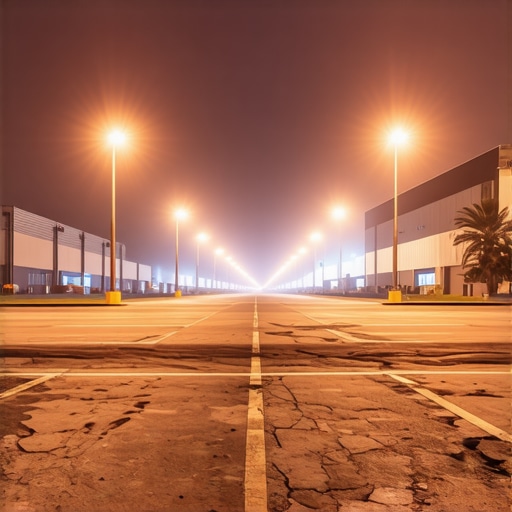
You hear it before you see it. That low-frequency hum vibrating through the steel pole of a 400-watt metal halide fixture. Most facility managers ignore it, thinking it’s just the sound of ‘doing business.’ To me, that hum is the sound of money vibrating right out of your maintenance budget and into the ether. I’ve spent thirty-five years chasing electrons through rusted handholes and climbing bucket trucks in freezing rain, and I’ve learned one thing: industrial parking lot lighting is the most neglected, most expensive, and most dangerous part of a commercial electrical system.
My journeyman used to smack my hand with his dikes if he caught me not using a torque wrench on a lighting contactor lug. ‘You nick the copper, or you leave it loose, you create a hot spot,’ he’d scream over the sound of the plant floor. ‘And a hot spot is just a fire waiting for a shift change.’ He was right. Electricity isn’t a hobby, and in an industrial setting, those 277-volt or 480-volt lighting circuits are unforgiving. If you aren’t paying attention to the physics of your infrastructure, you’re hemorrhaging cash through heat, resistance, and sheer inefficiency.
“Aluminum wire connections can overheat and cause a fire without tripping the circuit breaker.” – CPSC Safety Alert 516
The Forensic Breakdown: The HID Autopsy
To understand why your bills are astronomical, we have to look at the ‘Autopsy’ of a failing High-Intensity Discharge (HID) system. When I pull a dead ballast out of a pole head, I’m looking for the tell-tale signs of thermal runaway. These old-school magnetic ballasts are essentially massive coils of copper or aluminum wire. Over time, the insulation on these windings breaks down due to the extreme heat cycles—we call this the ‘slow cook.’ As the insulation fails, the ballast draws more current to maintain the arc in the lamp. You might be paying for 450 watts of energy for a 400-watt bulb because that ballast has become a parasitic heater. It’s not just the bulb; it’s the entire rough-in delivery system that’s failing.
Then there’s the issue of ‘Cold Creep’ and oxidation in the handholes. Most industrial lots use aluminum conductors for long home run spans to save on material costs. But aluminum has a different thermal expansion coefficient than the brass or copper terminals in the fixture. Every night, the wire heats up and expands; every morning, it cools and contracts. Eventually, the connection loosens. This creates an air gap, which leads to micro-arcing. You won’t see it from the ground, but if I hit that connection with infrared thermography scans, it would look like a miniature sun. That resistance isn’t just a fire hazard; it’s an energy thief. You’re paying for the electricity to heat up that loose connection instead of lighting your lot.
The Power Factor Problem and Industrial Motor Controls
In an industrial environment, your lighting doesn’t live in a vacuum. It’s often tied into the same switchgear as your industrial motor controls. This creates a nightmare of harmonic distortion. When those big 50HP motors kick on, they send ‘noise’ back into the line. For old-style magnetic lighting, this noise causes the ballasts to vibrate and overheat even faster. It’s a vicious cycle. If your power factor is off, your utility company might even be hitting you with surcharges you haven’t noticed. This is where a 100 amp service upgrade for a dedicated lighting sub-panel or even a larger commercial service heavy-up becomes a necessity, not an option.
The Solution: Smart Lighting and the Equipotential Grid
The fix isn’t just swapping a bulb; it’s a total strategic overhaul. A smart lighting installation allows you to bypass the dumb, power-hungry ballast entirely. Modern LED drivers are far more resilient to the ‘dirty power’ found in industrial parks. Furthermore, by integrating surge protector installation at the panel level, you protect these sensitive electronics from the spikes caused by those aforementioned motor controls. When we do a trim-out on a new LED system, we aren’t just putting in lights; we’re stabilizing the entire circuit.
We also have to talk about the equipotential grid. In a parking lot, your light poles are essentially giant lightning rods. If your grounding system is corroded—a common issue in coastal areas where salt air eats the copper-clad rods—a single strike can fry every fixture on the circuit. Part of a forensic inspection involves testing the ‘ground-to-neutral’ voltage with a Wiggy (a solenoid voltmeter) to ensure your system can actually dump a surge into the earth rather than through your expensive new LEDs. This is just as critical as your fire alarm system install or your pool pump electrical grounding; if the path to ground is high-resistance, the electricity will find a path through your equipment.
“National Electrical Code (NEC) Article 410.130(G) requires a disconnecting means for fluorescent luminaires that utilize double-ended lamps and contain ballasts that can be serviced in place.” – NFPA 70 (NEC)
The Hidden Costs of the ‘Handyman Special’
I’ve seen ‘maintenance guys’ try to fix lighting issues by just bypassing the photcell or ‘slugging’ a fuse with a piece of copper pipe. I call that a Widow Maker. When you have a 480V circuit, there is no ‘small’ mistake. A ground fault in a pole with a bad grounding bond can energize the entire pole shell. I’ve seen cases where a dog or even a person touches a pole and gets a lethal shock because the circuit didn’t trip. This is why how electricians tackle troubleshooting for lighting installations involves more than just a Tick Tracer. We use load testers to ensure the integrity of the wire insulation itself.
If you’re building an ADU electrical services suite or a new warehouse, don’t let the contractor skimp on the lighting. High-quality holiday light installation techniques—using proper weather-rated seals and monkey shit (duct seal) in the conduits—actually apply to industrial lot lighting too. If moisture gets into that conduit, it creates a ‘salt bridge’ that leaks current to ground 24/7. You’re literally paying to electrify the dirt around your parking lot.
Conclusion: Torqued and Tested
Stop looking at your lighting bill as a fixed cost. It’s a variable that is currently trending upward because of aging infrastructure and poor maintenance. By investing in infrared thermography scans and moving toward a smart lighting installation, you eliminate the ballast ‘vampire’ and the fire risk of loose aluminum connections. Don’t wait until a fixture falls off a rusted bracket or a pole becomes hot to the touch. Get a master electrician out there to perform a real forensic audit. Sleep better knowing every lug is torqued and every circuit is bonded. If you’re ready to stop the bleed, it’s time to contact us for a real industrial assessment.