
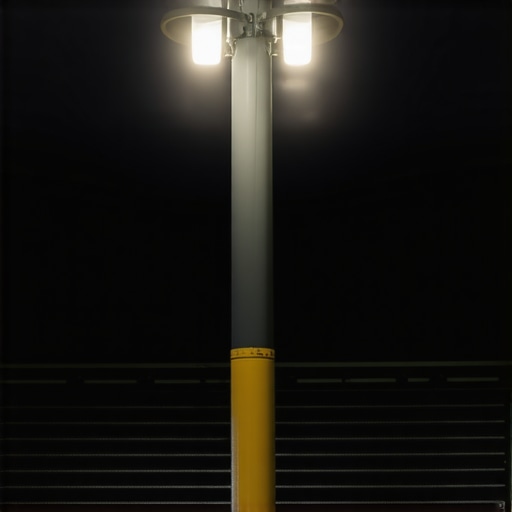
The Forensic Autopsy of a Dark Lot
I walked onto a ‘fully renovated’ retail site last November where the property manager was complaining that half his poles were dark after only six months. I found the culprit with my tracer in about twenty minutes. The previous contractor had buried live junction boxes three feet underground without gasketing, then used residential-grade wire nuts on a 480-volt circuit. I found them because the earth above the splice was literally steaming. That is the ‘Flipper Special’ in a commercial setting, and it is a one-way ticket to a massive insurance claim for fire damage wiring restoration. When you are dealing with high-voltage lighting, there is no room for ‘good enough.’ You either do it to code, or you wait for the smell of ozone and the sound of a main disconnect blowing its guts out.
Parking lot lighting fails for three reasons: heat, vibration, and sheer human incompetence. Most people think a lighting install is just mounting a head and pulling some wire. They forget that electricity is a physical force that generates heat every time a photon is produced. When you have a 1000W metal halide or even a modern high-output LED driver, that thermal energy has to go somewhere. If the housing isn’t vented or the driver is a cheap knock-off, you get thermal runaway. I have seen parking lot lighting heads where the internal wiring had turned into brittle charcoal because the installer didn’t understand the physics of thermal expansion in 480V systems. This is why warranty backed repairs are rare in the wild; most guys know their work won’t last through two seasons of temperature swings.
“Internal parts of electrical equipment, including busbars, wiring terminals, insulators, and other surfaces, shall not be damaged or contaminated by foreign materials such as paint, plaster, cleaners, abrasives, or corrosive residues.” – NEC Article 110.12(C)
The Physics of Failure: Vibration and Cold Creep
One of the most overlooked killers of commercial lighting is wind-induced vibration. If you haven’t performed vibration analysis services on your poles, you’re just waiting for the ‘Widow Maker’ to fall. High-mast lights act like giant tuning forks. Every gust of wind sends micro-vibrations down the pole to the handhole. Over time, these vibrations loosen the terminal screws on your main disconnect services. This leads to a phenomenon called ‘Cold Creep’ in aluminum conductors. As the connection loosens, resistance increases. As resistance increases, heat builds up. Eventually, the wire expands so much it pushes itself out of the lug, arcs, and you have a dead circuit. I’ve pulled my Wiggy out to test these dead poles only to find that the neutral had vibrated completely free, turning a simple 277V circuit into a floating nightmare that fried every driver in the row.
This is where lighting installation services often fail the client. A proper lighting install requires torquing every terminal to the specific inch-pounds required by the manufacturer. If I catch a guy ‘hand-tightening’ a camper electrical panel or a commercial lighting controller, I’ll take his dikes away. You cannot feel 45 inch-pounds with a standard screwdriver. You need a torque wrench, or you’re building a time bomb. This is especially critical when integrating demand response systems into your lighting grid. These systems cycle lights frequently to save energy, but each cycle is a thermal event. If those connections aren’t perfect, the repeated heating and cooling will back the wire right out of the lug.
The Moisture Breach and ‘Monkey Shit’
If the heat doesn’t get you, the water will. I’ve seen EV charger installations at the base of light poles where the installer forgot to use ‘Monkey Shit’ (duct seal) in the conduit. Moisture from the ground travels up the pipe like a chimney, condensing inside the cold fixture head. That water sits on the EV charger control board or the lighting driver until it bridges the gap between phases. Then you get a flashover. If you’re lucky, it just trips the breaker. If you’re unlucky, you’re calling for fire damage wiring restoration. Proper lighting installations made easy starts with understanding that water always wins unless you seal the path. You can read more about avoiding these pitfalls in our guide on lighting installations made easy.
“Failure to maintain electrical equipment in a proper state of repair can lead to catastrophic failure, including arc flash and fire.” – NFPA 70B
We are seeing more properties combine their parking lot lighting with modern infrastructure like an EV charger. This adds a massive continuous load to an existing system. If your original main disconnect services weren’t sized for that, you’re going to experience ‘nuisance tripping’ at best and a melted busbar at worst. Before you add a Level 2 charger to a light pole circuit, you need a forensic load calculation. You can’t just ‘tap’ into the home run and hope for the best. For those looking to do this right, I recommend checking out ensuring safe and efficient EV charging station setup to understand the load requirements.
The Solution: Beyond the Quick Fix
When a pole goes dark, don’t just swap the bulb. You need to troubleshoot the entire path. I start at the panel with my Tick Tracer and move downstream. Are the contractors for the lighting installation services using copper or aluminum? Are they using split-bolt connectors or insulated blocks? If I see a camper electrical panel being used to sub-feed a parking lot, I know I’m looking at a code violation that will fail within a year. A real lighting install involves checking the grounding electrode system and ensuring the main disconnect services are properly bonded. If the system is already failing, you might need expert troubleshooting for lighting installations to find the hidden faults before they become fires. If you have an EV charger on the same circuit, maintenance becomes even more critical. Follow the top EV charger maintenance tips to keep the whole system operational. If the system is already acting up, you should look into EV charger troubleshooting immediately. Do not wait for the smell of burning plastic. If you suspect your system was installed by a ‘flipper’ or a handyman, contact us for a forensic inspection before your liability insurance gets canceled.