
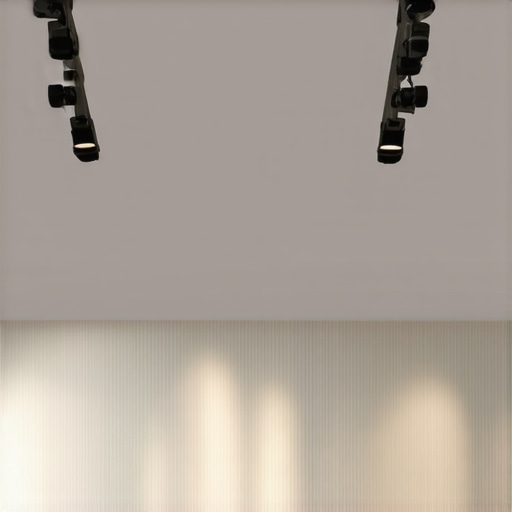
The Sensory Warning: When Your Lighting Is a Fire Hazard in Disguise
I’ve spent 35 years in this trade, and I can tell you that electricity has a specific vocabulary. It speaks in the low-frequency hum of a struggling magnetic transformer, the sharp ozone tang of an arcing connection, and the heat you feel radiating through a plaster ceiling. When someone tells me they want to install track lighting because it looks ‘modern,’ I usually start looking for my Tick Tracer. Most people see a sleek rail with adjustable heads; I see a series of mechanical connections that are prone to oxidation, thermal expansion, and the inevitable ‘handyman special’ wiring that turns a kitchen renovation into a forensic crime scene. If your lights are flickering or you hear a rhythmic clicking when you dim them, you aren’t looking at a ‘mood setting’—you’re looking at a failure in progress.
The Forensic Breakdown: Why the Flipper Special Fails
I recently walked into a ‘fully renovated’ 1930s Victorian where the flipper had installed high-end low voltage lighting to accentuate the original crown molding. On the surface, it looked like a magazine shoot. But when I pulled the canopy off the junction box, I found the nightmare. The installer had buried a live junction box behind the new drywall, and instead of a dedicated Home Run back to the panel, they’d tapped into an old ungrounded cloth-covered circuit from 1942. They used a ‘bootleg ground’—connecting the neutral to the ground screw—to trick a simple plug tester. But my tracer found the truth: the entire metal track was energized with 40 volts of leakage because of the inductive coupling between the old wires. This is the reality of code violation corrections in older homes. You can’t just slap new tech on 80-year-old insulation that crumbles like a dry biscuit the moment you touch it with your Dikes.
“Aluminum wire connections can overheat and cause a fire without tripping the circuit breaker.” – CPSC Safety Alert 516
The Physics of Track Lighting Failure: Resistance and Arcing
To understand why track lighting fails, you have to look at the Bus Bar. Inside that track are two or more copper rails. The lighting heads use spring-loaded contacts to bite into those rails. This is a mechanical connection, and in the world of physics, mechanical connections are the enemy. Over time, the heat from the lamps causes the track to expand and contract. This ‘thermal cycling’ eventually loosens the tension of the springs. When the contact becomes loose, you get a microscopic gap. Electricity, being the stubborn force it is, jumps that gap. This is arcing. Arcing creates heat—sometimes upwards of 2,000 degrees Fahrenheit—which carbonizes the surrounding plastic. Eventually, that heat migrates back to the Rough-in wiring. If you didn’t use the right Romex gauge or if you overfilled the box, you’ve just built a space heater inside your ceiling. This is why troubleshooting lighting isn’t just about changing a bulb; it’s about checking the integrity of the mechanical path from the breaker to the filament.
Low Voltage vs. Line Voltage: The Secret to Stability
The biggest mistake in low voltage lighting installations is ignoring voltage drop. When you drop from 120V to 12V, your amperage increases ten-fold for the same wattage. High amperage means heat. If your transformer is tucked away in a dusty cabinet without airflow, it’s going to cook itself. I’ve seen electronic transformers melt their casings because they were overloaded with ‘just one more’ head. When we handle commercial electrical services, we calculate the exact load-to-distance ratio to ensure the light at the end of the track is as bright as the one at the start. Without this, you get ‘yellowing’ at the end of the run, which is a visual sign of wasted energy being converted into heat. For those looking for a safer, more robust setup, understanding lighting installations made easy through proper planning is the only way to avoid holiday emergency calls when the system finally gives up the ghost.
Smart Lighting and the Surge Protection Requirement
In a smart lighting installation, you aren’t just dealing with copper and glass; you’re dealing with sensitive microprocessors. Modern dimmers and smart tracks are effectively small computers. In older homes with ungrounded systems, these components are sitting ducks for transient voltage spikes. If you aren’t investing in a surge protector installation at the main panel, one local lightning strike or a grid switch from the utility company will fry your $500 smart bridge. I’ve seen entire ‘smart homes’ go dark because the homeowner skipped the $300 surge protection to save money. It’s like buying a Ferrari and parking it in a swamp. When we perform remote electrical diagnostics, we often see the ‘ghosting’ effect where LEDs stay dimly lit even when off—this is usually due to neutral-to-ground leakage that shouldn’t be there.
“The technical requirements for grounding and bonding are not merely suggestions; they are the primary defense against electrical shock and fire.” – NFPA 70: National Electrical Code
The Anatomy of a Code-Compliant Repair
A proper Trim-out for track lighting involves more than just clicking heads into a rail. It starts with the Load Calculation. In older homes, we have to ensure the branch circuit isn’t already screaming for mercy from a window AC unit or a microwave. If the house has knob-and-tube or early ungrounded Romex, the only ‘good’ way to install track lighting is a full rewire for that circuit. We install AFCI (Arc-Fault Circuit Interrupter) breakers that can ‘hear’ the signature of an arc before it starts a fire. This is standard for OSHA compliance wiring in commercial settings, and it should be the standard in your living room too. We also use Monkey Shit (duct seal) in any exterior-facing conduit to prevent moisture from traveling down the pipe and hitting the bus bars. Moisture and track lighting are a lethal combination; salt air in coastal regions can bridge the gap between the hot and neutral rails, leading to a slow-burn failure that won’t trip a standard breaker until it’s too late.
Sleep at Night Knowing It’s Torqued
Electricity isn’t a hobby, and it certainly isn’t a place for aesthetic compromises that bypass safety. Whether it’s access control wiring for a business or a ‘pretty’ track light in your hallway, the physics remain the same. Loose connections kill. Overloaded neutrals burn. If you’re dealing with an older home, don’t trust the previous owner’s ‘updates.’ Get a pro who knows how to use a Wiggy and understands the forensic signs of failure. If you’ve been having issues with other modern upgrades, like your car charger, you might want to look into ev charger troubleshooting to see if your home’s infrastructure is the actual culprit. At the end of the day, a high-end lighting system is only as ‘good’ as the hidden wiring that feeds it. If you suspect your home has code violations or if those lights are humming a tune they shouldn’t, it’s time to contact us before the ‘Time Bomb’ in your ceiling goes off. You want to see your artwork, not the inside of a fire truck. For more on the technical side of these systems, check out our guide on how electricians tackle troubleshooting for lighting installations.