
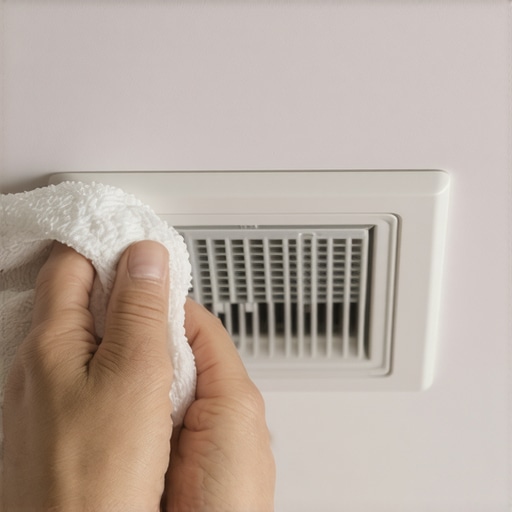
The Autopsy of a Soggy Ceiling: A Forensic Look at Bathroom Ventilation
You step out of the shower and the room is a literal cloud. You can’t see the mirror, the wallpaper is starting to peel at the seams, and there is a faint, metallic tang in the air. You hear the fan whirring away—or maybe it’s more of a rhythmic, labored thumping—but it isn’t doing its job. Most homeowners assume they just need a bigger motor. They’re usually wrong. After 35 years of crawling through the guts of 1920s bungalows and mid-century ranches, I’ve learned that a fan that doesn’t clear steam is a symptom of a deeper systemic failure. It’s often a combination of fluid dynamics, electrical resistance, and what I call ‘the handyman’s apathy.’
The Old Timer’s Lesson: A Foundation of Fear
My old journeyman, a man who smelled like solder and cheap coffee, used to smack my hand with his pliers if I ever tried to ‘eyeball’ a duct connection during a rough-in. ‘You treat that duct like a live wire, kid,’ he’d bark. ‘If the air can’t move, the motor burns. If the motor burns, the house follows.’ He was right. One of the biggest mistakes I see in older homes involves the sheer lack of respect for how air actually moves. We see houses where the fan was installed in 1945 and hasn’t been touched since. When you combine un-grounded systems with the high-humidity environment of a bathroom, you aren’t just looking at a steam problem; you’re looking at a corrosion event waiting for a spark.
“Aluminum wire connections can overheat and cause a fire without tripping the circuit breaker.” – CPSC Safety Alert 516
The Forensic Breakdown: Why Your Fan Is Failing
When I perform infrared thermography scans in a bathroom, I’m not just looking for heat; I’m looking for the cold signatures of moisture trapped where it doesn’t belong. The failure of a bathroom fan usually breaks down into three distinct categories of ‘death’:
1. The Physics of Static Pressure and Duct Rupture
Most bathroom fan installations are crippled by 4-inch flex-duct that looks like an accordion. If that duct is crushed, kinked, or—god forbid—venting directly into the attic insulation, you’ve created a back-pressure nightmare. Component Zoom: Static Pressure. In fluid dynamics, static pressure is the resistance to airflow. Every 90-degree turn in a duct is equivalent to adding 10 feet of straight pipe. If your ‘simple fix’ was a DIY job where you used 20 feet of loose Romex and a coiled-up duct, the fan motor’s torque isn’t high enough to push the heavy, moisture-laden air against that resistance. The steam stays in the room, and the motor overheats.
2. The Oxidation Layer: Electrical Resistance at the Terminal
In homes built between 1900 and 1950, we often find fans tied into ancient lighting circuits. Moisture is the ultimate catalyst for oxidation. When steam isn’t removed, it infiltrates the fan’s electrical housing. Component Zoom: Cupric Oxide. As humidity hits the copper connections, a layer of black cupric oxide forms. This layer is non-conductive. This creates a high-resistance point. Now, instead of the electricity flowing cleanly to the motor, it’s fighting through a ‘clog.’ This generates heat. I’ve seen wire nuts that have literally melted into a glob of ‘monkey shit’ (duct seal) because the resistance was so high. This is why NEC code updates require specific grounding and often AFCI protection in these zones.
3. The Mechanical Choke: The Flapper and the Grille
Sometimes the fix is even simpler, but no less forensic. The backdraft damper (the ‘flapper’) at the wall or roof cap gets stuck. Over years, dust mixes with bathroom humidity to create a paste that hardens like concrete. If that flapper doesn’t open, your fan is just a noise-maker. I always pull out my Wiggy or a tick tracer to ensure the circuit is dead before I start digging into the housing. If the fan blades are caked in grease, the aerodynamics are destroyed. It can’t grab the air.
“A bathroom exhaust fan shall be exhausted to the outdoors. Discharge of exhaust air into an attic or crawl space is prohibited.” – National Electrical Code (NEC) Section 406.9
The Forensic Fix: Beyond the Surface
If you want to actually clear the steam, you need to stop thinking about the ‘box in the ceiling’ and start thinking about the whole path. First, we look at the home run—the dedicated circuit from the panel. If you are adding high-CFM fans or heating elements, you might need a subpanel installation to handle the load, especially if you’re already pushing the limits with garage wiring services or an EV charging station setup. Check out how we handle complex lighting installations to see the level of detail required for moisture-prone areas.
The real ‘simple fix’ is often replacing the 4-inch duct with 6-inch rigid metal pipe. This reduces static pressure significantly. We also look at smart thermostat wiring—not for your HVAC, but for humidity sensors. A modern fan should be triggered by a hygrometer, not a wall switch. This ensures the fan runs until the ‘dew point’ in the room has dropped, preventing the mold growth that destroys old plaster.
When the Fan Isn’t the Only Problem
Often, homeowners ask me to look at their bathroom fan while I’m there for other things, like chandelier installation or Christmas light services. I always tell them the same thing: Electricity in a wet environment is the most dangerous thing in your house. If your fan is failing, check your low voltage lighting transformers and your bollard light installation outside too; moisture-related ground faults are a house-wide epidemic. If you’ve seen flickering elsewhere, it might be time for troubleshooting for lighting installations to ensure your whole system is up to current NEC code updates.
Sleep at Night: The Final Torque
Don’t be the guy who buys a $20 fan and staples it to a joist. That’s how fires start. You want a fan that is properly torqued, vented with rigid pipe, and protected by a modern breaker. Whether you are doing a sign lighting installation or just trying to clear the fog after a shower, the physics of safety never change. If you’re dealing with electrical gremlins or a soggy ceiling, it’s time to contact us. We don’t just swap parts; we perform a forensic upgrade that keeps your family safe and your bathroom dry. Electricity isn’t a hobby—it’s a force of nature that needs to be respected, especially when it’s five feet away from your shower head.