
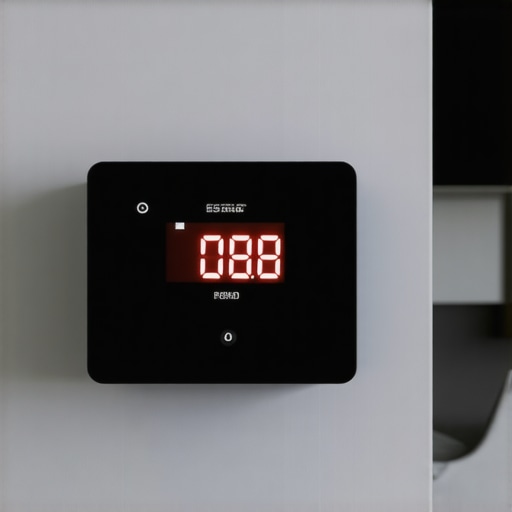
You smell it before you see it. That sickly-sweet scent of ozone and melting PVC. It usually starts behind a drywall patch or deep inside a dead-front panel where a loose lug has been cooking for months. As a forensic inspector with 35 years in the trade, I’ve seen homeowners go bankrupt paying for electricity that isn’t even lighting their homes—it’s just heating up their wall cavities through high-resistance connections or feeding ‘vampire’ loads that never sleep. Most people think a smart meter is just a utility snitch, but if you know how to read the data, it’s the best forensic tool in your arsenal. I walked into a ‘fully renovated’ 1974 split-level last November where the kitchen flipper had buried three live junction boxes behind a designer tile backsplash. My tracer was screaming, but the smart meter was the real hero; it showed a constant 400-watt draw even when the house was ‘dark.’ We found the culprit: a series of bootleg grounds and a miswired refrigerator circuit that was literally bleeding current into the structural framing. That’s not just a bill problem; that’s a fire waiting for a reason to start.
The Physics of the Phantom Load
When we talk about energy vampires, we aren’t just talking about a standby light on a TV. We are talking about the physics of switching power supplies and inductive loads. Modern electronics use bridge rectifiers and capacitors that draw current in short, high-intensity pulses. This creates harmonic distortion on the line. Even when an appliance is ‘off,’ the transformer inside is still energized, creating a small magnetic field and consuming ‘real power’ measured in watts. Over a thousand hours, that ‘small’ 10-watt draw from a coffee maker or a computer workstation becomes a massive waste. In older homes, these vampires are often hidden in the bones of the building. We see it constantly with load center upgrades where the old bus bars are so oxidized that they create a voltage drop, forcing motors in your HVAC or fridge to run longer and hotter just to keep up. This resistance is essentially a heater you didn’t ask for, hidden inside your walls.
“Aluminum wire connections can overheat and cause a fire without tripping the circuit breaker.” – CPSC Safety Alert 516
If your home was built between 1965 and 1978, you’re likely dealing with aluminum branch circuit wiring. This stuff is a nightmare for energy efficiency and safety. Because of Cold Creep, the aluminum expands and contracts at a different rate than the steel screws on your outlets. Every time you plug in a high-draw device, the wire moves. Eventually, the connection becomes loose, resistance skyrockets, and you get ‘vampire’ heat loss. This is why a virtual consultation wiring review is often the first step in stopping the bleed. We can look at your smart meter’s real-time data spikes and tell if your water heater is failing or if you have a grounding issue in your dock electrical services. Water and electricity are already a volatile mix, but a stray current leak at the dock can cost you hundreds a month and potentially kill anyone in the water due to the lack of an equipotential grid.
Using Smart Data to Dissect Your Home’s Appetite
Smart meters, or Advanced Metering Infrastructure (AMI), provide a granular look at your consumption. By accessing your utility’s portal, you can see your ‘baseload’—the minimum amount of power your house draws at 3:00 AM when everyone is asleep. If that number is higher than 200-300 watts for a standard home, you have a leak. It might be a fire alarm system install that was done poorly, or perhaps your security camera wiring is shorting out against a gutter. I’ve even seen holiday light installation jobs where the homeowner used interior-grade timers that leaked current into the damp soil all winter. To truly hunt these vampires, you need to perform a ‘breaker-by-breaker’ autopsy. You turn off every branch circuit in the load center and watch the smart meter’s digital readout. When you flip the breaker for the garage and the wattage drops by 150W, you know exactly where the culprit is hiding.
“The grounding electrode conductor shall be protected from physical damage by being enclosed in metal, rigid nonmetallic conduit…” – NFPA 70 (NEC) Article 250.64
Sometimes the vampire isn’t an appliance, but a lack of whole house surge protection. Repeated micro-surges degrade the insulation on your Romex over decades. As the insulation becomes brittle (a common sight in 1940s knob and tube systems), you get ‘tracking’ where current jumps across charred paths. It’s not enough to trip a standard thermal breaker, but it’s enough to keep the meter spinning and the wires cooking. If you are seeing erratic spikes, it might be time for a three phase power services evaluation for home workshops or a simple rebate assistance program check to replace that ancient, power-hungry heat pump.
The Solution: From Forensic Hunting to Modern Upgrades
Once you’ve identified the draw, the fix isn’t just pulling plugs. It’s about infrastructure. If your panel looks like a bird’s nest of ‘monkey shit’ (duct seal) and tangled ‘home runs,’ no amount of smart tech will save you. You need a clean rough-in and a professional trim-out. For those moving into the future, ensuring safe and efficient EV charging station setup at home is the biggest load change you’ll ever make. A smart meter will show you exactly how that charger impacts your peak demand, which is crucial for staying within your service’s capacity. If you’re seeing flickering when the charger kicks in, you aren’t just seeing a vampire; you’re seeing a voltage sag that can fry your sensitive electronics. We often recommend troubleshooting for lighting installations when homeowners complain about ‘ghosting’ LEDs—where the lights stay dimly lit even when off. This is usually caused by induced voltage in long parallel wire runs, another form of energy waste that smart meters can help identify if the scale is large enough. Don’t let your house eat your paycheck. Grab a Wiggy or a tick tracer, check your meter, and if the numbers don’t add up, contact a licensed master electrician before that vampire turns into a house fire. “