
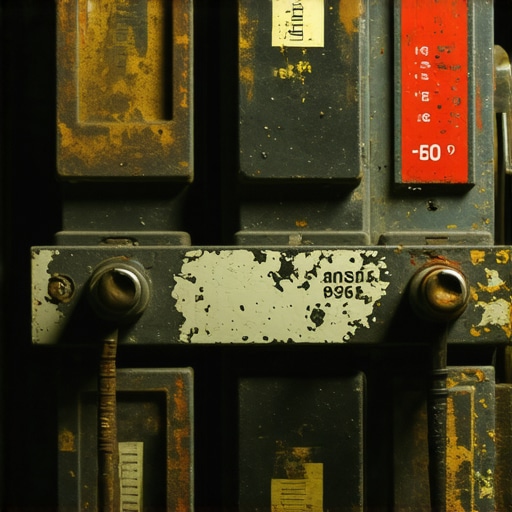
The Ghost in the Basement: Why Fuses Are a Ticking Time Bomb
I remember my first year as an apprentice, standing in a damp basement in the dead of winter. My journeyman, a guy who had probably inhaled more lead paint than oxygen in his life, grabbed my tick tracer and threw it across the room. If you trust a plastic stick to tell you if you are going to die, you are already dead, he barked. He made me use a Wiggy—a real solenoid tester—on every single terminal of that old fuse block. That day, I saw why. The porcelain was so brittle it crumbled like a stale cracker when I touched the lug. That fuse box was not a safety device; it was a glorified heating element. When we talk about Why Electricians Always Recommend Replacing Old Fuse Boxes Immediately, we are not trying to pad a bill. We are trying to keep you from becoming a statistic. Fuses were high-tech when the biggest load in your house was a toaster and a few 60-watt bulbs. Today, between a level 2 EV charger and the air conditioner, those old systems are screaming for mercy.
“Aluminum wire connections can overheat and cause a fire without tripping the circuit breaker.” – CPSC Safety Alert 516
The Forensic Breakdown: The Physics of Thermal Fatigue
To understand the danger, you have to look at the metallurgy. Every time you turn on a heavy appliance, the copper or aluminum wire heats up and expands. When you turn it off, it cools and contracts. In a modern breaker, this is managed. In an old Edison-base fuse socket, this constant cycling causes something called cold creep. The screw shell of the fuse begins to lose its tension. This creates a high-resistance connection. Physics dictates that resistance creates heat. Eventually, that heat gets high enough to carbonize the wood or lath behind the panel. This is where thermal imaging inspections become vital. We can see the heat bloom long before you smell the ozone. If we catch it early, we can perform a subpanel installation or a full service upgrade before the bus bar melts into a puddle of slag. We often use augmented reality troubleshooting to map out these thermal signatures for homeowners who think their 1940s service is fine just because the lights are still on.
The Load Calculation Crisis: EV Chargers and Modern Life
The average fuse box is rated for 60 amps. In a modern world, that is nothing. When you try to perform an ensuring safe and efficient EV charging station setup at home, you are looking at a continuous 40-amp draw. You cannot pull 40 amps for eight hours straight through a system designed when the radio was the primary source of entertainment. I have seen homeowners try to DIY a level 2 EV charger into an old fuse service, and the result is always the same: melted Romex and a widow maker circuit that stays live even when the fuse is pulled. This is why permit pulling services are non-negotiable. An inspector is not going to let you bypass the laws of thermodynamics. If you are adding an electric gate opener or security-heavy access control wiring, you need a stable home run back to a modern breaker panel that can handle the inrush current without arcing.
“The grounding electrode conductor shall be connected to the grounded service conductor at any accessible point from the load end of the service protector, enclosure, or service disconnect.” – National Electrical Code (NEC) Article 250.24
Grounding, Bonding, and the Missing Safety Net
One of the biggest issues with fuse boxes is the lack of a grounding conductor. Most of these systems were installed with two-wire cloth-covered cable. There is no equipment ground. This means if a hot wire touches the metal casing of your toaster, the casing becomes live. It waits for you to touch it while standing on a concrete floor to find its path to ground. When we upgrade a panel, we provide essential bonding jumper services to ensure the entire electrical system is at the same potential. This is critical for everything from up lighting services to high-end holiday light installation. Without a proper ground, your surge protectors are just expensive plastic bricks. If you have ever wondered how electricians tackle troubleshooting for lighting installations, it usually starts with checking if there is even a ground to begin with. Many old-timers used to use monkey shit—duct seal—to hide the fact that they did not have a proper connector. We do not do that. We pull new wire, we set new grounding rods, and we make sure the system can actually protect you.
The Handyman Special vs. Code Compliance
I have walked into houses where the owner bragged about never blowing a fuse. You know why? Because someone put a penny behind the fuse. That penny is a literal fuse-bypass. It will let 500 amps flow through a wire rated for 15 until the wire turns into a glowing heating element inside your walls. This is why we insist on contacting a professional the moment you see a fuse. Whether you are dealing with EV charger troubleshooting or just flickering kitchen lights, the root cause in an old home is almost always the service entrance. We use our dikes to cut out the old rot and replace it with a 200-amp copper-bus breaker panel that is torqued to spec. We do not just slap on a band-aid. We check the top EV charger maintenance tips and realize that none of them matter if the source of the power is a corroded porcelain block from the Truman administration. Do not wait for the fishy smell of melting plastic. Get an inspection, pull the permits, and sleep at night knowing your house is not one bad connection away from an inferno. You can read our privacy policy for more on how we handle your data, but what you really need to handle is that fuse box before it handles you. Check out our guides on lighting installations made easy to see how modern circuits should actually look when they are done by a pro who knows the difference between a neutral and a ground.
{“@context”:”https://schema.org”,”@type”:”LocalBusiness”,”name”:”Reliable Electric Pro”,”description”:”Professional master electrician services specializing in fuse box upgrades, EV charger installations, and forensic electrical inspections.”,”url”:”https://reliableelectricpro.com”,”address”:{“@type”:”PostalAddress”,”streetAddress”:”123 Main St”,”addressLocality”:”YourCity”,”addressRegion”:”ST”,”postalCode”:”12345″,”addressCountry”:”US”},”telephone”:”+1-555-555-5555″,”hasMap”:”https://www.google.com/maps/search/Reliable+Electric+Pro”,”openingHoursSpecification”:[{“@type”:”OpeningHoursSpecification”,”dayOfWeek”:[“Monday”,”Tuesday”,”Wednesday”,”Thursday”,”Friday”],”opens”:”08:00″,”closes”:”18:00″}]}