
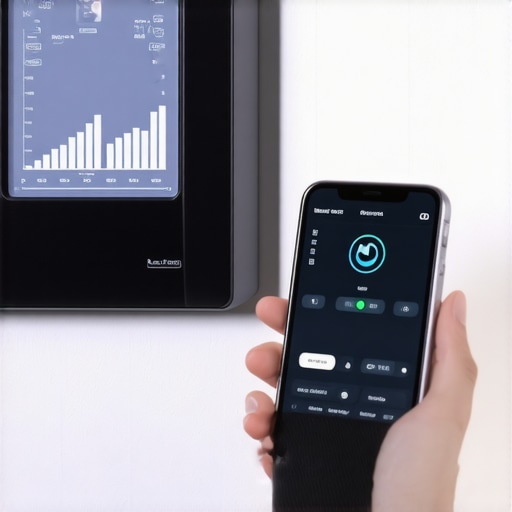
The Hum of the Ghost in the Machine
You can’t see electricity, but if you’ve spent thirty-five years in the trade like I have, you can hear it, smell it, and feel it. I’m talking about that low-frequency 60Hz hum vibrating through a loose bus bar, or the sharp, ozone-heavy stench of a Home Run circuit starting to cook its insulation because some installer decided a 14-gauge wire was ‘good enough’ for a 20-amp load. Most homeowners treat their electrical panel like a mysterious black box—something they only think about when the lights flicker or a breaker trips. But with the advent of modern smart meter technology, that mystery is being stripped away. We aren’t just guessing anymore. We’re performing a digital autopsy on your home’s energy consumption in real-time.
My journeyman used to smack my hand if I stripped a wire with a knife. ‘You nick the copper, you create a hot spot,’ he’d scream. He was right. That microscopic nick reduces the cross-sectional area of the conductor, increasing resistance. Resistance generates heat. Heat causes expansion. In an old 1970s home with aluminum wiring, this is a death sentence. Those of you living in mid-century builds are dealing with the physics of Cold Creep. Aluminum expands and contracts at a much higher rate than the steel screws in your outlets. Over time, that connection walks itself loose, creating a high-resistance gap that can reach temperatures exceeding 1,100 degrees Fahrenheit without ever drawing enough current to trip a standard breaker. This is why we don’t just ‘fix’ things; we investigate them.
“Aluminum wire connections can overheat and cause a fire without tripping the circuit breaker.” – CPSC Safety Alert 516
The Load Calculation: Why Your 1974 Panel is Screaming
When I walk into a house built in the late 70s, I usually see a 100-amp service. Back then, that was plenty for a few lights, a fridge, and a color TV. Today? You’ve got a 50-amp EV charger, a 30-amp dryer, a dishwasher, three computers, and you’re asking me about holiday light installation for a display that would rival the Vegas strip. This is where electrical load calculations become the difference between a functional home and a fire hazard. Using a Wiggy or a modern Tick Tracer only tells me if voltage is present; it doesn’t tell me the health of the system under load. That’s where smart meters come in. They use high-frequency sampling to detect the ‘signature’ of every appliance in your house. It’s essentially a form of vibration analysis services for your electrons. By monitoring the specific harmonic distortion and current draw patterns, a smart meter can tell you if your refrigerator compressor is about to seize or if your whole house fan wiring is drawing 40% more power than it should due to a failing motor winding.
If you’re considering ensuring safe and efficient EV charging station setup at home, you cannot ignore the baseline load of your house. Every time you plug in that Tesla, you’re pushing your service mast to its thermal limit. A smart meter provides the granular data needed to see exactly how much ‘headroom’ you have left. It’s the difference between a calculated installation and a ‘hope and a prayer’ job that ends with a melted service lateral.
Forensic Breakdown: The Physics of Resistance
Let’s talk about the Rough-in. When we pull Romex through studs, we have to be mindful of ‘staple-crush.’ If you hammer a staple too hard, you compress the dielectric insulation between the hot and the neutral. Under normal conditions, it holds. But as soon as you add a heavy load—maybe you’re doing a massive up lighting services project for your backyard—the heat generated by that increased current causes the insulation to soften. Eventually, you get a carbon path. A smart meter can actually pick up the tiny ‘micro-arcs’ that occur long before a full-blown short circuit happens. It’s like having a smoke detector installation that looks inside the walls instead of just sniffing the air.
For those of you in older homes, you might be dealing with a ‘Widow Maker’—those old Federal Pacific or Zinsco panels where the breakers are notorious for jamming. They look fine on the outside, but inside, the bus bars are corroding. A smart meter won’t fix a jammed breaker, but it will show you the massive heat-loss happening at the panel. If your meter says you’re drawing 40kWh but your appliances only account for 30kWh, that 10kwh is being bled off as pure heat somewhere in your walls or at the main lugs. That is a storm damage electrical repair waiting to happen.
“The total connected load shall not exceed the carrying capacity of the conductors or the rating of the overcurrent devices.” – NEC Section 220.10
Integrating Modern Safety Systems
Smart technology isn’t just for tracking pennies; it’s for infrastructure survival. When we perform a GFCI outlet installation, we’re providing localized protection against ground faults. But a smart meter provides ‘macro’ protection. It can alert you to a ‘lost neutral’—a terrifying condition where your lights suddenly get ultra-bright and your electronics start popping. This usually happens at the weatherhead where the utility line meets your house. If you haven’t checked your security camera wiring recently, you might miss the physical signs of salt-air corrosion or squirrel damage, but the data from a smart meter will show the voltage instability immediately.
If you live in an area prone to outages, a generator transfer switch is a necessity, not a luxury. But how big of a generator do you need? Most guys will just sell you the biggest unit on the truck. I use smart meter data to see your actual peak demand. Why spend $10k on a 22kw unit when your smart meter proves you never cross the 8kw threshold? That’s the ‘no-nonsense’ approach. We use the data to build a system that works, not a system that pads a salesman’s commission. This same logic applies to lighting installations made easy; it’s about understanding the cumulative draw on your circuits before you start drilling holes and pulling wire.
The Final Torque: Sleep at Night Knowing It’s Right
Electricity is lazy; it always takes the path of least resistance. But it’s also relentless. It will find every nick, every loose screw, and every undersized wire in your home. Smart meters give us the ‘eyes’ to see where the energy is going and, more importantly, where it’s being wasted or turned into dangerous heat. Whether we are doing trim-out on a new addition or troubleshooting ev charger troubleshooting, we rely on the data to confirm our mechanical connections. I don’t care how many years you’ve been doing this; you don’t argue with the meter. If the meter says there’s a 2-amp parasitic draw when everything is off, you go find the Monkey Shit (duct seal) and start checking the exterior penetrations for moisture intrusion. You don’t stop until the numbers match the reality. That is how you keep a house from burning down. If you’re seeing weird spikes on your energy bill, don’t just complain to the utility company. It might be your house trying to tell you something is about to fail.