
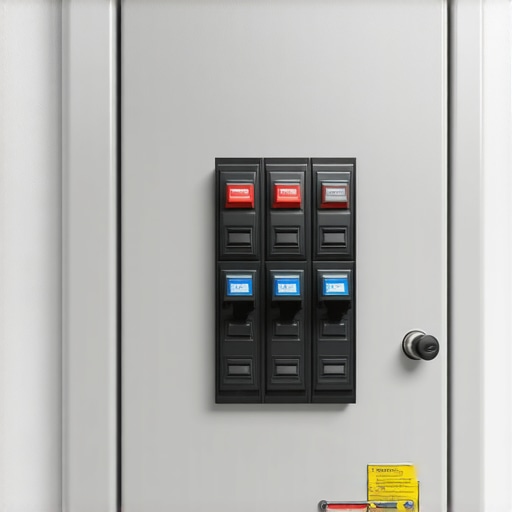
The Ghost in the Walls: Why Your Old Fuse Box is a Liability
You smell it before you see it. That sickly-sweet metallic tang, a mix of ozone and scorched bakelite, wafting from the corner of the basement. To most homeowners, it’s a mystery; to me, after 35 years of crawling through spider-infested crawlspaces and tracing shorts in the dead of winter, it’s the smell of a disaster waiting for an invitation. When I started my apprenticeship, my old mentor, ‘Shorty’ Joe, used to slap my pliers away if I tried to scrape the oxidation off a terminal with a flathead. ‘You’re just creating more surface area for the fire to feed on,’ he’d growl. He wasn’t just being a crank; he knew that resistance is the silent killer in these old fuse-heavy bungalows. He’d seen too many Edison bases fused into a permanent mass of molten copper because some guy thought a penny was a good substitute for a 15-amp fuse.
If your home still relies on a fuse box, you aren’t just living in the past; you are living in a physics experiment where the variables are stacked against you. Modern life demands a level of current that the 1940s never anticipated. Between your high-draw kitchen appliances and the high-tech EV charger in the garage, you are pushing these ancient ceramic blocks to the absolute limit of their thermal capacity.
“Fuses and circuit breakers shall be so located or shielded that persons will not be burned or otherwise injured by their operation.” – National Electrical Code (NEC) 240.41
The Forensic Breakdown: The Mechanics of Fuse Failure
Let’s zoom into the physics. A fuse is a simple device: a thin strip of eutectic alloy designed to melt when the current exceeds a specific threshold. In theory, it’s foolproof. In practice, it’s a nightmare. The problem is the contact resistance. Over decades, the threads of the fuse socket oxidize. This creates a tiny air gap—microscopic, really—but enough to create resistance. Resistance generates heat. This heat doesn’t stay in the fuse; it migrates to the wire. This is where we see ‘Cold Creep’ in older systems, especially if some ‘handyman’ used aluminum wire during a mid-century rough-in. The wire expands and contracts, eventually pulling away from the terminal. Now you’ve got an arc, a 3000-degree plasma bridge that will burn through the panel enclosure before the fuse even thinks about blowing.
When I’m out on a call for troubleshooting for lighting installations, I often find homeowners who have committed the ultimate sin: over-fusing. They got tired of the fuse blowing when the toaster and the microwave ran at the same time, so they swapped the 15-amp blue fuse for a 30-amp green one. Congratulations, you’ve just turned your 14-gauge Romex into a heating element. The wire will melt long before that 30-amp fuse detects a problem. This is why an electrical panel upgrade isn’t a luxury; it’s a survival necessity.
The Modern Load: Why Tiny Homes and Smart Systems Demand Breakers
Even if you are working on tiny home wiring, the density of the electronics requires precise overcurrent protection. Modern home automation setup and sophisticated LED drivers used in pendant light hanging projects create ‘dirty power’ or harmonics. This is where harmonic filter services come into play. A fuse is a ‘dumb’ device; it doesn’t care about the frequency of the current or the spike of a switching power supply. A modern Arc-Fault Circuit Interrupter (AFCI) breaker, however, has a microprocessor that looks for the specific signature of a spark. It kills the power before the fire starts. If you’re putting up permanent holiday lighting, you need that level of intelligence at the service entrance.
“The fire hazard in older homes is often hidden behind walls, where aging insulation and overloaded circuits create a perfect storm of ignition risk.” – NFPA Safety Report
The Insurance Trap and the ‘Widow Maker’
Let’s talk about your wallet. Insurance companies have finally caught on to what us old-timers have known for years. If you have a fuse panel or, heaven forbid, a Zinsco or Federal Pacific breaker panel, many carriers will either refuse coverage or jack your premiums into the stratosphere. They know that these systems suffer from ‘jammed pivots.’ In a fuse box, there is no mechanical switch. In a faulty breaker panel, the internal mechanism can seize. I’ve seen bus bars so corroded from salt air (if you’re near the coast) that the breaker was physically welded to the frame. I call those panels the ‘Widow Maker’ because if you touch them with a Tick Tracer, the whole thing might just explode in a shower of sparks.
This is why we push annual maintenance contracts. An electrician can come in, check the torque on your lugs, use remote electrical diagnostics to find hotspots with an infrared camera, and ensure your grounding rods haven’t rusted away. It’s about more than just keeping the lights on; it’s about making sure your home doesn’t become a statistic. When we do a trim-out on a new panel, we use lockout tagout training protocols to ensure safety, something you can’t easily do with a 1950s fuse block where the ‘bus’ is always live and screaming for a victim.
The Final Torque: Sleep Better with a Breaker Panel
If you’re still carrying a box of spare fuses to the basement every time you run the vacuum, stop. You are gambling with your family’s safety. Upgrading to a modern breaker system allows for things like EV charger maintenance, surge protection for your sensitive electronics, and the peace of mind that comes from knowing your electrical system isn’t a ticking time bomb. I’ve spent too many nights looking at charred remains of what used to be a living room because of a $0.50 fuse that didn’t blow. Don’t be that story. If you need a pro to look at your setup, contact us before the smell of ozone becomes the smell of smoke. We’ll get you set up with a panel that’s torqued to spec and ready for the 21st century. Check our privacy policy for more info on how we handle your data, but more importantly, get that antique out of your wall.