
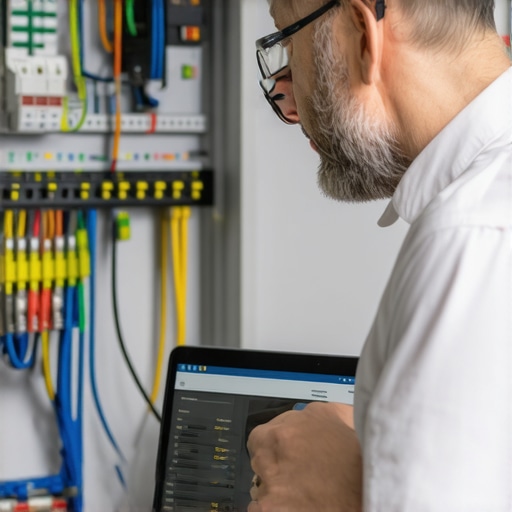
The Illusion of the Digital Diagnosis: A Master Electrician’s Warning
Let me tell you about the time I almost lost my eyebrows to a homeowner’s smartphone camera. It was during a video call with a guy who wanted me to diagnose a flickering circuit. He held up his phone to a subpanel, panning across the breakers. Through the fuzzy screen, everything looked clean—neatly organized Romex, labeled breakers, no obvious burn marks. But my gut screamed that something was wrong. I drove out to his place, pulled the deadfront off, and took out my trusty Wiggy solenoid tester. The moment my probes touched the bus bar, I smelled it: that unmistakable, sickeningly sweet stench of vaporizing phenolic plastic. The back of the main lug had completely carbonized because of a loose, high-resistance connection. The heat was so intense it had welded the adjacent breaker’s casing to the frame. On camera? It looked immaculate. On-site? It was a ticking thermal bomb that was hours away from burning the structure down.
Virtual consultations have surged in popularity, promising instant answers for everything from lighting installations made easy to complex solar panel electrical hookup questions. While video calls are fantastic for initial scoping, estimating, and basic troubleshooting, they are not a substitute for physical diagnostic testing. The camera lens hides the invisible killers: micro-ohms of resistance, deteriorating insulation, and improper physical tension on terminations. As an electrician with over three decades of field work, I want to demystify exactly what we can diagnose through your camera lens, and where the digital eye fails, requiring a physical truck roll with proper diagnostic tools.
The Digital Field of View: What a Camera Can Actually Reveal
Do not get me wrong; virtual assessments are not useless. In fact, they are highly efficient for logistics and preliminary evaluations. When you walk us through your home with a high-definition smartphone camera, we can gather critical macro-level data about your electrical infrastructure.
1. Spatial Constraints and Physical Clearances
If you are planning an EV charger installation or a massive warehouse lighting retrofit, we can immediately identify physical layout issues. We can see if your main service panel is buried in a cluttered closet, violating the NEC working space requirements. We can evaluate the pathway for a new conduit run from your basement to an outdoor charging station, checking for structural obstacles like concrete footings, HVAC ducts, or heavy-duty structural steel.
2. Aesthetic and Architectural Considerations
Planning a pendant light hanging project? A virtual walk-through lets us see your ceiling height, joist orientation (if exposed), and the general architectural style. We can tell you if we will need specialized scaffolding, long extension ladders, or if the ceiling plaster is too fragile for a standard mounting bracket. For minor projects like an outlet switch repair, we can quickly confirm the trim-out style, plate color, and accessibility.
3. Basic Panel Identification and Physical Damage
During a video call, we can read the manufacturer labels on your electrical panel. We can identify hazardous legacy brands like Federal Pacific, Zinsco, or Challenger, which are notorious for failing to trip. We can also spot obvious external physical damage, such as rusted enclosure doors, bulging meter cans, or scorched outer casings that indicate catastrophic internal failures.
“Because aluminum is subject to galvanic corrosion, thermal expansion and contraction (cold creep), and oxidation when exposed to air, terminations must be made with specially listed connectors.” – NFPA 70: National Electrical Code
The Forensic Blindspots: What Lies Beyond the Camera Lens
While the camera shows us the layout, it cannot measure physics. Electricity is an invisible force governed by resistance, heat, and electromagnetic fields. Here is what your phone’s camera absolutely cannot see, and why skipping a physical inspection is a gamble with your life.
1. The Physics of Cold Creep and Thermal Expansion
In homes built between the late 1960s and late 1970s, aluminum branch circuit wiring was common. Aluminum expands and contracts under thermal load at a rate vastly different from the copper alloy screws on standard outlets. Over time, this causes “cold creep”—the wire literally squeezes itself out of the terminal screw, creating a loose connection. The resulting air gap creates high-resistance micro-arcing. To your camera, the outlet looks fine. But with a physical thermal imaging camera and a torque screwdriver, we can see the dangerous heat signature and feel the loose connection. Standard video calls cannot measure micro-ohms of resistance or verify if a termination is torqued to manufacturer specifications.
2. Insulation Breakdown and “Widow Maker” Short Circuits
Whether we are discussing phone line installation, old knob-and-tube wiring, or underground feeders for a solar panel electrical hookup, wire insulation degrades over time due to UV exposure, heat, and age. Through a camera, an old wire might look intact. However, a megohmmeter (or “Megger” test) is the only way to verify if the insulation has cracked internally, allowing current to leak to ground or adjacent phases. Without this, you run the risk of introducing a “dead short” when powering up new equipment.
3. Electrical Load Calculations and Hidden Panel Capacity
Homeowners often assume that if they have empty slots in their breaker panel, they have room for heavy loads like an EV charger installation, portable generator hookup, or a massive transformer installation. This is a dangerous misconception. Your physical panel might have open slots, but your service main might only be 100 amps, already operating near capacity. A camera cannot calculate the active load of your HVAC system, water heater, and electric range. A physical inspection involves clamping a true-RMS ammeter around your service conductors to measure actual current draw under load, accompanied by precise electrical load calculations.
“Failure of electrical distribution systems is one of the leading causes of home fires, often stemming from arc faults, overloads, and compromised insulation that cannot be detected by visual inspection alone.” – CPSC Safety Alert 501
The Hazardous Handyman Special: Hidden Disasters
During virtual consultations, we are entirely dependent on what you point your camera at. This creates a major blindspot for hidden, non-compliant work. Think of the flipper who buries a live junction box behind drywall instead of keeping it accessible, or the DIYer who hooks up a backup generator without an interlock kit, creating a backfeeding hazard that could electrocute utility workers down the street. Without a tick tracer to sniff out live conductors hidden in walls, or physically pulling outlets out of their boxes to inspect the rough-in work, we cannot guarantee safety. If you are experiencing charging errors, you can consult our guide on EV charger troubleshooting, but always remember that high-voltage diagnostics require hands-on physical measurements.
The Hybrid Approach: How to Use Virtual Consultations Wisely
To keep your home safe while saving time and money, use a hybrid approach. Start with a virtual consultation to show your electrician the general scope, identify the location of your main panel, and share photos of your equipment labels. This allows the electrician to arrive at your home with the exact materials, breakers, and conduits needed for the job, eliminating multiple trips. However, always insist on a physical, hands-on diagnostic check before any major installation or repair is completed. When it comes to high-voltage systems, never let digital convenience replace physical safety.