
The Invisible Ceiling on Your Home’s Value
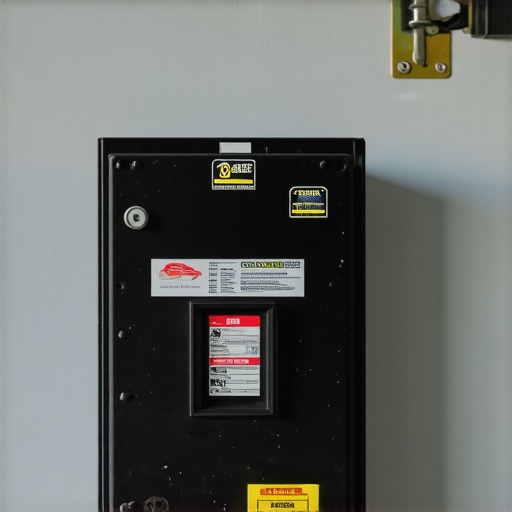
You walk through a beautifully staged home built in 1928. The hardwood floors are pristine, the quartz countertops in the kitchen gleam, and the paint is fresh. But if you walk down the basement stairs, open a rusty metal door, and find a tiny gray box housing a 60-amp main fuse block or breaker, all that surface-level beauty evaporates. As a forensic inspector, when I see a 60-amp electrical service, I don’t just see old equipment—I see an immediate safety hazard, an uninsurable property, and a home locked out of the 21st century.
My journeyman used to smack my hand if I stripped a wire with a knife. ‘You nick the copper, you create a hot spot,’ he’d scream. He was right. Electricity is unforgiving, and when you try to force modern electrical loads through an infrastructure designed when a radio and three lightbulbs were the only appliances in the house, you are playing a dangerous game of thermal roulette.
The Anatomy of a 60-Amp Bottleneck
To understand why a 60-amp panel ruins your home’s market value, you have to look at the physics of electrical load calculation. A standard 60-amp, 240-volt service delivers a theoretical maximum of 14,400 watts of power. In reality, under continuous load rules, you should only utilize 80% of that capacity, leaving you with roughly 11,520 usable watts. Let’s do some quick math on a modern winter morning: a standard electric dryer pulls 5,000 watts, an electric water heater demands 4,500 watts, and a basic microwave draws 1,500 watts. Turn those three on, and your entire household budget for electricity is spent. Throw in a computer, a refrigerator compressor kick-on, or a space heater, and you are instantly overloading the system.
“Where a change in the building envelope or a change in the heating, ventilation, or air conditioning system occurs, the service or feeder capacity shall be calculated in accordance with the provisions of Article 220.” — National Electrical Code (NEC) Article 220.16
The result of pushing these limits is extreme thermal stress. Over decades, overloaded circuits undergo persistent cycles of heating and cooling. This thermal expansion causes terminal screws to loosen on breaker bars, a phenomenon that leads to high-resistance connections. Eventually, you get micro-arcing. You won’t see it until you pull the panel cover off with your insulated tools and smell that unmistakable, fishy stench of burning phenolic resin and melting Romex insulation.
The Old-Home Infrastructure Context: Why Your System is Aging Rapidly
If your home is operating on a 60-amp service, it almost certainly dates back to the pre-1950s era. This means we are dealing with aged insulation systems, potential knob-and-tube remnants, and ungrounded circuits. In these vintage environments, homeowners frequently attempt dangerous workarounds. I regularly find ‘bootleg grounds’ inside receptacles where someone jumped the neutral screw to the ground screw to trick a cheap three-prong outlet tester. This creates a path where the metallic frame of your appliances can become energized, waiting to shock the next person who touches it while standing on a concrete floor.
Furthermore, these old systems lack the grounding electrode system required by modern safety codes. Today, we install dual copper-clad grounding rods spaced at least six feet apart and bond them directly to the incoming water main. A 60-amp panel often relies on a single rusty pipe connection that was compromised decades ago when a plumber replaced a section of copper pipe with PEX, breaking the grounding pathway completely.
The Insurance Trap: Why Buyers Walk Away
From a real estate standpoint, a 60-amp service is an absolute dealbreaker. Most major homeowners insurance carriers will flat-out refuse to write a policy for a property with a service size under 100 amps, and many now demand a minimum of 200 amps. If a buyer cannot secure insurance, their mortgage company will not fund the loan. Your pool of potential buyers instantly shrinks to cash-only flippers who will demand a massive discount to cover the cost of a full heavy-up electrical service upgrade.
“Fuses and circuit breakers that are oversized for the wire gauge they protect create an extreme fire hazard by allowing wires to overheat without cutting off the current.” — Consumer Product Safety Commission (CPSC) Safety Alert
When buyers look at a home, they also think about future upgrades. They want to know if they can install high-speed CAT6 cabling services for their home office, set up automated smart home wiring, or implement a home backup generator install to protect against severe weather events. None of these modern conveniences are viable on an archaic 60-amp backbone. Even basic preventative electrical maintenance cannot save a system that is fundamentally undersized for contemporary living.
The Real Cost of Upgrading to Modern Standards
Upgrading your electrical infrastructure is not just about swapping the gray box on the wall; it is a comprehensive system overhaul. It begins with the utility company installing a new, larger lateral drop from the pole. We then mount a heavy-duty meter enclosure on the exterior of the home, seal it against moisture penetration using high-grade duct seal (commonly known in the trade as ‘monkey shit’), and run thick copper feeders down into a brand new 200-amp breaker panel.Inside the new panel, we do not just slap in standard breakers. Modern electrical code demands the use of Arc-Fault Circuit Interrupters (AFCIs) on almost all branch circuits. These smart breakers utilize advanced microprocessors to analyze the signature waveform of the current, instantly shutting down power if they detect the chaotic electrical signature of an arc-fault—the primary cause of residential electrical fires. To protect your sensitive electronics, we also integrate a whole house surge protection device directly at the main bus bars, routing transient high-voltage spikes harmlessly into the earth before they can fry your smart appliances or computer systems.
Final Thoughts: Don’t Wait for the Failure
If you are planning to sell your home, or if you simply want to live safely without the constant fear of flickering lights and warm outlet covers, upgrading your electrical panel is the single best investment you can make. It is not an aesthetic upgrade, but it is the literal foundation of your home’s safety and marketability. Stop relying on luck and a prayer every time you turn on your microwave and your dryer at the same time. Call a licensed master electrician to perform a comprehensive load calculation and get your home up to code.