The Smell of a Potential Disaster
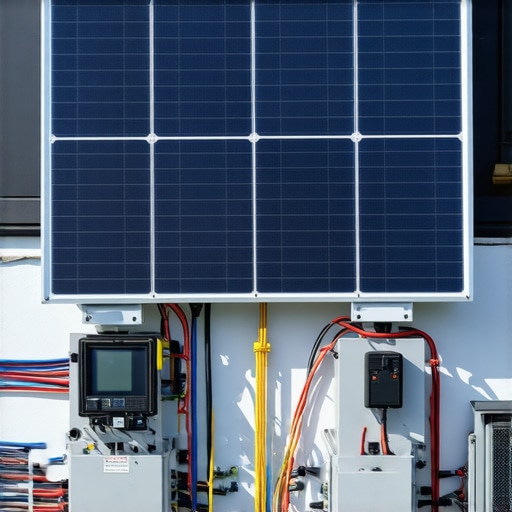
I’ve spent 35 years tracking down the scent of ozone—that sharp, metallic tang that tells you copper is screaming for help. I’ve seen it all, from rodents chewing through fiber optic cabling to DIY ‘experts’ trying to wire a data center power setup in their basement. But nothing boils my blood quite like a solar installation gone wrong. I recently walked into a ‘fully renovated’ home where the flipper had installed a 10kW solar array but buried live junction boxes behind the attic insulation. I found them with my tracer after the homeowner complained about a ‘ghostly’ humming in the ceiling. The wire nuts were melted, the Romex was charred, and they were one load-spike away from a total structure fire. Solar isn’t a weekend project; it’s a high-amperage chemical and electrical conversion process that demands respect for physics.
Mistake 1: The Load Center Overload and the Backfeed Trap
The most common sin I see in 2026 is the failure to perform a proper load center upgrade before slapping panels on the roof. People think they can just shove a 60-amp breaker into a 200-amp bus bar and call it a day. It doesn’t work like that. You have to account for the ‘120% Rule.’ If your bus bar is rated for 200 amps and your main breaker is 200 amps, you can’t just add more current from the solar side without risking a localized meltdown. This is where three phase power services come into play for larger estates—balancing that load across phases is technical work, not something you eyeball. When the sun is high and your AC kicks on, the thermal expansion in those lugs is real. If they aren’t torqued to spec with a calibrated wrench, you get ‘Cold Creep.’ Aluminum and copper expand at different rates, and suddenly that ‘tight’ connection is a high-resistance heater. For those dealing with older mid-century homes, failing to address aluminum wiring repair before a solar install is a death sentence for the equipment.
“The sum of the ampere ratings of all overcurrent devices on utilization equipment load side shall not exceed the rating of the busbar or conductor.” – NEC 705.12(B)(3)
Mistake 2: The Floating Neutral and Grounding Gremlins
I’ve seen guys treat grounding like an afterthought. They’ll run a subpanel installation for the inverter and forget that the neutral and ground should only be bonded at the main service entrance. When you create a ‘bootleg ground’ or a multi-point bond, you’re creating parallel paths for current. This can make the entire metal chassis of your solar racking ‘live’ under fault conditions. It’s a Widow Maker waiting to happen. If you’re installing bollard light installation or exterior circuits alongside your solar, you have to ensure the grounding electrode system is unified. I always pull out my Wiggy to test for stray voltage. If my Tick Tracer starts chirping three feet away from a conduit, I know some hack didn’t seat the fittings or used the wrong ‘Monkey Shit’ (duct seal) in the service mast, letting moisture rot the grounding bridge. Proper GFCI outlet installation is also critical for your exterior maintenance plugs, but don’t expect a standard GFCI to handle the harmonic noise of a cheap inverter without tripping constantly. You need a power quality analysis to ensure your system isn’t polluting the local grid with ‘trash’ electricity.
Mistake 3: Improper Home Run Routing and Skin Effect
In the trade, we call the main DC lines from the roof the ‘Home Run.’ In 2026, we’re seeing higher voltage DC strings to increase efficiency. Higher voltage means higher risk of arcing. I’ve seen people use standard Dikes to snip wires, leaving a tiny nick in the copper. That nick creates a ‘hot spot’ where the cross-sectional area of the conductor is reduced, leading to resistance and, eventually, a fire. When you’re doing a lighting install, you might get away with a loose wire nut; with solar, that loose nut becomes an arc welder. I’ve found solar installers running DC lines through the same conduit as their fiber optic cabling—that’s a massive code violation and a recipe for data corruption from electromagnetic interference. You need separation. You need specialized DC-rated switchgear that can extinguish an arc, because unlike AC, DC doesn’t have a ‘zero-crossing’ to help put the fire out.
Mistake 4: Skipping the Heavy-Up for EV Integration
If you’re getting solar, you’re probably getting an EV. But if your load center upgrade didn’t account for a 48-amp continuous draw from a Level 2 charger, you’re going to trip your main every time the sun goes down and you plug in. You can learn more about ensuring safe and efficient EV charging station setup at home to avoid these bottlenecks. Many homeowners try to skimp by using a subpanel that isn’t rated for continuous duty. Electricity is like water; if you try to shove a fire hose worth of current through a garden hose wire, things get hot fast. I’ve seen subpanel installation jobs where the installer used undersized neutrals, causing the lights to flicker like a horror movie whenever the car started charging.
“Aluminum wire connections can overheat and cause a fire without tripping the circuit breaker if the proper terminal connectors are not used.” – CPSC Safety Alert 516
Mistake 5: Failing the Trim-Out and Rapid Shutdown Test
The ‘Trim-out’ is where the pros are separated from the amateurs. It’s the final stage where everything is labeled and tested. A common mistake in 2026 is failing to properly integrate the Rapid Shutdown (RSD) system. If the fire department shows up because your neighbor’s house is burning, they need to be able to kill the power on your roof with one switch. If that switch doesn’t work because you botched the data center power setup for the smart controller, they’ll just let your house burn rather than risk electrocution. I always recommend a full power quality analysis after the system is live. You want to see how the inverter’s sine wave looks. Is it clean, or is it jagged? High harmonic distortion can fry your LED lighting install and shorten the life of your refrigerator compressor. Don’t let a handyman touch your solar. If you’re having issues, you should check out these expert tips for lighting troubleshooting and EV charger troubleshooting. Electricity isn’t a hobby; it’s a force of nature that wants to return to the earth through the path of least resistance. Make sure that path isn’t you or your home. If you suspect your system was installed by a ‘flipper,’ contact us immediately for a forensic inspection. Sleep at night knowing your lugs are torqued and your grounds are bonded.
Reading through this post really resonated with me, especially the section on proper load center upgrades. I’ve seen firsthand how neglecting the 120% rule can lead to dangerous situations. When I was installing solar last summer, we took extra care in verifying the bus bar ratings and balancing the loads across phases, which seemed to prevent any thermal expansion issues. One thing I wonder about is how many DIYers really understand the importance of torque specifications for lugs. In my experience, even slight deviations can cause high-resistance joints over time, especially in hot climates where expansion and contraction are significant. Has anyone faced ongoing problems with these connections after installation? What measures do you recommend to ensure long-term reliability beyond just torque wrench calibration? It’s clear that investing in proper training and using the right tools can make a huge safety difference, but I’d love to hear about practical tricks others use to double-check their work during the install process.