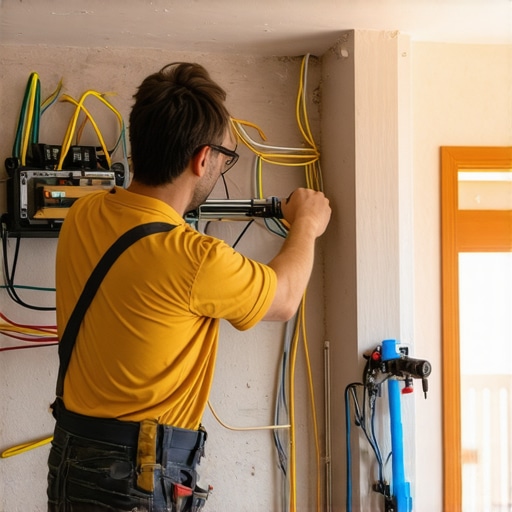
The Old Timer’s Lesson: A Legacy of Nicked Copper
My journeyman used to smack my hand if I stripped a wire with a knife. ‘You nick the copper, you create a hot spot,’ he’d scream. He was right. Back in the day, when we were pulling wire through houses built in the late 1940s, we weren’t just dealing with copper; we were dealing with the early iterations of mass-produced residential insulation. The lesson he taught me wasn’t just about the wire itself, but about the integrity of the system. Today, that integrity is rotting. If you are living in a home built between the 1920s and the early 1960s, you are likely sitting on a network of cloth-insulated wiring that is currently disintegrating into a fine, flammable dust. This isn’t just an inconvenience; it’s a looming failure that will render your home uninsurable by the 2026 home inspection cycle.
The Anatomy of Failure: Why Cloth Wiring is a Time Bomb
To understand why cloth wiring is a hazard, we have to look at the physics of rubber vulcanization and cotton braiding. Unlike modern Romex, which uses a durable PVC jacket, vintage wiring relied on a rubberized coating wrapped in a cotton braid. Over seventy years, the plasticizers in that rubber evaporate. This process, known as thermal degradation, turns the flexible insulation into a brittle shell. When you touch it, it simply flakes off, leaving bare energized copper exposed to the wooden lath and plaster of your walls. I’ve opened junction boxes where the vibration of a passing truck was enough to knock the insulation off the wires, causing a direct short. We call these ‘widow makers’ for a reason. When that insulation fails, you don’t always get a clean short that trips the breaker. Instead, you get arcing—a localized electrical fire that burns at thousands of degrees, often undetected until the smell of ozone fills the hallway.
“Aluminum wire connections can overheat and cause a fire without tripping the circuit breaker.” – CPSC Safety Alert 516
While that alert focuses on aluminum, the principle of resistance-based heating applies even more severely to compromised cloth copper systems. As the cloth wicks moisture from the air—a phenomenon known as hygroscopic absorption—it creates a conductive path for leakage current. This results in ‘carbon tracking,’ where the charred remains of the insulation become a semi-conductive bridge. This is why power quality analysis is becoming a standard part of high-end home inspections; we can now see the ‘noise’ on the line created by these micro-arcs before they turn into full-blown structure fires.
The 2026 Inspection Crisis: Insurance and Liability
Why is 2026 the deadline? The insurance industry is undergoing a massive data-driven shift. Actuarial models are being updated to reflect the reality that homes with cloth-insulated wiring are 40% more likely to experience an electrical fire. By 2026, most major carriers will require a full electrical certification before renewing a policy on any home over 50 years old. If you’re planning a chandelier installation or any major renovation, you are going to hit a wall. No reputable electrician will tie a modern, high-draw fixture into a cloth-wired circuit. I’ve had to walk away from jobs where the homeowner wanted a 400-pound crystal light but refused to address the crumbling cotton-wrapped ‘home run’ feeding the room. It’s a liability nightmare. If you haven’t yet, you need to look into lighting installations made easy through proper modern wiring practices.
Component Zooming: The Danger of the ‘Bootleg Ground’
One of the most insidious problems with cloth-insulated wiring is the lack of an equipment grounding conductor. In the mid-century era, we didn’t use three-prong outlets. When modern ‘handymen’ try to ‘flip’ these houses, they often perform what we call a ‘bootleg ground.’ They jumper the neutral screw to the ground screw on a new three-prong outlet. This tricks a cheap plug-in tester into showing a ‘correct’ wiring status, but it is a lethal trap. In a bootleg ground scenario, if the neutral wire ever fails—a common occurrence in old cloth systems—the entire metal chassis of your toaster, microwave, or refrigerator becomes energized at 120 volts. I’ve seen senior discount services targeted by unscrupulous contractors who leave these traps behind. If you are a veteran, always ensure you are getting military discount wiring from licensed pros who follow lockout tagout training protocols and never skip the ground wire.
Heavy-Ups and the 400 Amp Service Entrance
Modern life demands more power than a 1950s cloth-wired system can handle. Between EV chargers, high-end HVAC, and permanent holiday lighting systems, the old 60-amp or 100-amp fuse boxes are screaming for mercy. Upgrading to a 400 amp service entrance is no longer a luxury; it’s a necessity for load management. When we do a ‘heavy-up,’ we aren’t just swapping the panel. We are replacing the service mast, the meter can, and the grounding rods. We use ‘monkey shit’ (duct seal) to ensure no moisture enters the house through the conduit. This is the only way to ensure your pathway lighting install or fence line lighting doesn’t brown out your kitchen every time the compressor kicks on. If you’re struggling with outages, check out this guide on how electricians tackle troubleshooting for complex lighting loads.
“The National Electrical Code requires that all conductors of the same circuit… shall be contained within the same raceway, auxiliary gutter, cable tray, trench, cable, or cord.” – NEC Section 300.3(B)
In cloth-wired homes, this rule is often violated during ‘creative’ repairs, leading to inductive heating of the metal conduits. This is why a simple temporary power service during construction can often reveal deep-seated issues that a standard tick tracer might miss. I’ve used my Wiggy (solenoid tester) on old systems and watched the voltage fluctuate wildly because the cloth-insulated neutral was so corroded it was barely making contact.
The Solution: A Strategic Rewire
Replacing cloth wiring is a surgical process. We don’t just rip out your walls. We use the existing wires as pull-strings where possible, or we run new lines through the attic and crawlspace. It’s dirty, hot work, but it’s the only way to sleep at night. During the rough-in phase, we install Arc-Fault Circuit Interrupters (AFCI). These breakers are designed to detect the specific signature of an arcing cloth wire and shut down the circuit before a fire starts. It’s the closest thing we have to a forensic investigator in your breaker panel. If you are dealing with modern tech like EV chargers, you need to understand that old wiring simply cannot handle the continuous load. For those looking to upgrade, I recommend reviewing ensuring safe and efficient EV charging station setup at home. If your charger is already acting up, you might need ev charger troubleshooting to see if your old infrastructure is the bottleneck.
Conclusion: Don’t Wait for the Smell of Ozone
Electricity isn’t a hobby, and it isn’t something you ‘fix’ with electrical tape and a prayer. Cloth insulation served its purpose for the better part of a century, but its time has run out. By the time 2026 rolls around, the cost of a forced rewire by an insurance company will be double what it is today. Get a power quality analysis now. Look for the signs: flickering lights when the wind blows, outlets that feel warm to the touch, or the dreaded ‘fishy’ smell of burning phenolic resin. Use your dikes to cut the cord on the past and invest in a copper system that won’t burn your house down while you sleep. Safety isn’t about code compliance; it’s about making sure you don’t become a forensic case study in my next report. For more information on maintaining your modern electrical components, see our top EV charger maintenance tips. Your family’s safety is worth more than a ‘handyman’ patch job.
Reading this post really makes me reflect on how much early wiring has aged in our homes without us noticing until problems pop up. I had a similar situation in my old house where flickering lights and a strange burning smell prompted me to call in an electrician. Turns out, the cloth-insulated wiring was degrading, and I was lucky it didn’t cause a fire sooner. It’s clear that waiting until signs become obvious is a gamble. I’ve also heard from neighbors that they’re planning full rewires before the 2026 deadline, especially since insurance premiums are increasing. I’m curious, has anyone here experience with the actual rewiring process? Was it as disruptive as they say, and how did you handle living through it? Also, I wonder if there are quick checks homeowners can do themselves to identify if their wiring might be on its last legs. Would love to hear more insights or tips from others who have dealt with these issues firsthand.
This post really hits home for me, especially since my house built in 1952 still has some of the original cloth wiring in the basement. Over time, I’ve noticed flickering in certain circuits and a faint metallic smell if I hold the outlets long enough, which now makes sense after reading your explanation. The idea of micro-arcing and carbon tracking sounds terrifying, and I agree that waiting for visible signs like burnt smell or warm outlets can be dangerously late. Has anyone had experience with non-invasive inspections like thermal imaging to detect these hidden issues before doing a full rewire? I would love to hear about safe, minimally disruptive methods to confirm if rewiring is genuinely necessary, or if perhaps some early fixes can prolong the timeline. Also, what’s the typical turnaround time for a professional rewire of an average home? Thanks for spreading awareness on this crucial safety issue.
This post really sheds light on a critical issue that many homeowners might overlook until serious problems arise. Having personally dealt with older homes, I can attest to the fact that cloth wiring often appears fine visually but is rotting silently inside. I’ve seen flickering lights and occasional warm outlets, which I now realize were early warning signs. The part about micro-arcing and carbon tracking resonated with me because I’ve always wondered if there are non-invasive ways to diagnose these issues before a catastrophe happens. Thermal imaging sounds promising, but I’d love to hear from others about its reliability in detecting hidden wiring deterioration. Also, the reputation of AFCI breakers in preventing fires is promising, but at what point do you decide a full rewiring is inevitable? How did others approach this decision when faced with slow deterioration but no immediate danger? I think proactive upgrades might save a lot of headache and safety risks down the road.