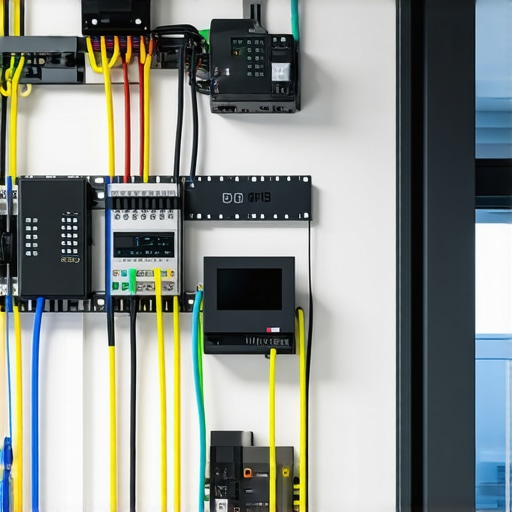
The Anatomy of a Failing System: Why Your Security is a Fire Hazard
I have spent 35 years pulling wire through the guts of commercial buildings, and if there is one thing I have learned, it is that electricity does not care about your deadlines or your aesthetic finishes. It only cares about the path of least resistance and the inevitable laws of thermodynamics. I walked into a ‘fully renovated’ office suite last month where the tenant was complaining that the magnetic locks were clicking like a swarm of cicadas. The ‘pro’ they hired had buried three live junction boxes behind a designer wood-slat wall in the reception area. I found them with my tracer, and when I opened the wall, the smell of cooking insulation hit me before I even saw the copper. That flipper had used low-voltage bell wire to jump a 120V circuit, and the heat was already bubbling the drywall. That is the reality of modern infrastructure: it looks shiny on the outside, but behind the paint, it is often a ticking clock of resistance and heat.
1. Solving the ‘Cold Creep’ and Resistance in Low-Voltage Strikes
Most office managers think access control is just ‘plug and play’ software, but the physics happens at the strike. In the 2026 landscape, we are seeing more high-draw electric strikes that require precise voltage. When you use inferior conductors or improper terminations, you run into the ‘cold creep’ phenomenon—the physical deformation of the wire under the pressure of a screw terminal over time. This leads to loose connections, which increases resistance. Increased resistance generates heat.
“Aluminum wire connections can overheat and cause a fire without tripping the circuit breaker.” – CPSC Safety Alert 516
While we mostly use copper for access control, the principle of loose terminations remains the same. A strike that does not get its full 24VDC because of a bad rough-in will chatter, overheat the solenoid, and eventually fry the control board. If you are experiencing intermittent failures, it is time for preventative electrical maintenance that includes torquing every terminal to spec, not just ‘snug enough.’
2. Eradicating EMI with Proper Ethernet Wiring Services
In the rush to make everything ‘smart,’ contractors are throwing Cat6 and data cables into the same trays as high-voltage lines. This is a rookie mistake that leads to Electromagnetic Interference (EMI). I have seen smart lighting installation projects fail because the dimming signals were being choked out by the 480V lines running parallel to them. For your 2026 office, your ethernet wiring services must include shielded twisted pair (STP) cabling for any run passing near motors or fluorescent ballasts. If you do not have a home run for each access controller back to the server room, you are asking for crosstalk. I have used my Wiggy to troubleshoot ghost signals in communication lines that were caused by nothing more than a poorly grounded cable shield. Don’t let a lazy trim-out ruin a million-dollar security suite.
3. The Battery Backup Wiring Redundancy
A security system without power is just a very expensive paperweight. Most buildings have a UPS, but the actual battery backup wiring at the local controller level is often ignored. These batteries have a shelf life, and the charging circuits can fail silently.
“The emergency power system shall be tested under load and operated at intervals that will indicate its condition is satisfactory.” – NFPA 110 Standard for Emergency and Standby Power Systems
Beyond just testing, we need to look at the chemistry. Lead-acid batteries in warm closets outgas and corrode terminals. If I see one more ‘technician’ use dikes to strip back a battery lead and leave half the strands on the floor, I am going to lose it. Every strand matters for ampacity. This is why a priority service membership is vital; it ensures an inspector who actually knows what a tick tracer is comes out and checks these critical fail-safes before the grid goes down.
4. Modernizing the Meter Base and Service Entrance
You cannot run a 2026 tech office on 1980s service. If you are adding EV chargers or high-density server racks, you likely need a meter base replacement to handle the increased load. I have seen meter cans that looked fine on the outside, but when I pulled the glass, the lugs were pitted and oxidized from decades of thermal cycling. This is not just about capacity; it is about safety. If your service entrance is failing, your internal voltage will sag, causing your sensitive access control electronics to reboot constantly. This is where permit pulling services become necessary. Do not let a handyman ‘tap’ into your main bus. If you are building out ADU electrical services for a satellite office on the property, you need a dedicated sub-panel and proper grounding rods, not a long extension cord buried in a PVC pipe.
5. Safety Protocols and Lockout Tagout Training
The most dangerous thing in an office building is a person who ‘knows a little bit’ about electricity. Every time we modify a system, whether it is pendant light hanging or relocating a card reader, we must follow strict safety protocols. This means lockout tagout training for all maintenance staff. I have had my hand smacked more than once by an old journeyman because I reached into a live panel without verifying with a meter. He was right to do it. Electricity is the ‘widow maker’ for a reason. If you are troubleshooting, check out how electricians tackle troubleshooting for lighting installations to see the level of rigor required. Never assume a circuit is dead just because the lights are off. Use your meter, verify your ground, and for the love of all things holy, do not use monkey shit (duct seal) to hide a bad wire penetration in a fire-rated wall.
Electricity is not a hobby. It is a powerful force that requires respect and precise engineering. Whether you are dealing with ev charger troubleshooting or simply trying to get your front door to unlock on the first swipe, the solution is always found in the physics of the connection. Torque your lugs, shield your data, and keep your hands out of the panel unless you are wearing the right gear. Sleep better at night knowing your building isn’t just up to code, but up to my standards.