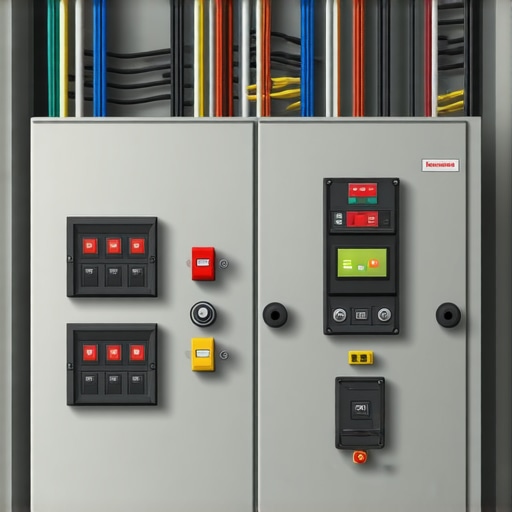
The Ticking Clock Behind Your Drywall: Why Insurance Carriers Are Quitting Your Home
You might think that little glass window in your basement is just a relic of a simpler time, but to an insurance adjuster in 2026, it looks like a litigation-shaped crater waiting to happen. I’ve spent thirty-five years pulling Romex through rat-infested crawlspaces and tracing shorts that would make a sane man quit the trade, and I’m telling you now: the fuse box era is officially over. If you’re still swapping out screw-in fuses when the toaster and the vacuum run at the same time, you aren’t just living in the past—ing you’re living in a tinderbox that no underwriter wants to touch. The 2026 mandates are shifting, and the ‘grandfathered’ excuses are evaporating faster than a 15-amp fuse on a 30-amp circuit.
The Flipper Special: A Forensic Discovery
I walked into a ‘fully renovated’ Craftsman last month—the kind with the pristine white subway tile and the brand-new quartz countertops that hide a multitude of sins. The homeowner complained that their new bathroom exhaust fan kept cutting out. I pulled out my tick tracer and started sniffing around the backsplash. Nothing. Then I used my circuit tracer, and the signal died right behind a gorgeous custom cabinet. I cut a small hole, and there it was: a buried junction box, live, open-air, with wires joined by nothing but electrical tape and hope. The flipper had extended the old 1940s cloth-bound wire to feed a modern lighting install without ever upgrading the main service. It was a classic ‘flipper special.’ They’d bypassed the fuse box entirely for the new kitchen circuits, creating a parallel path of destruction. This isn’t just bad luck; it’s a forensic certainty that resistance equals heat, and heat equals fire. When you add smart home wiring or network cable installation to these ancient skeletons, you’re asking a mule to pull a freight train. Eventually, the mule collapses.
The Physics of the Failure: Why Fuses Can’t Keep Up
Let’s talk about why your insurance agent is sweating. A fuse is a simple device: a thin strip of metal that melts when current exceeds its rating. In theory, it’s foolproof. In practice, I’ve seen homeowners put a penny behind a blown fuse to keep the lights on—a move we call the ‘suicide special.’ But even without the idiocy, fuses have a fatal flaw in a 2026 household. Modern life is inductive and surge-heavy. Between EV charger troubleshooting and the constant draw of deck lighting services, we are pushing more 120V and 240V loads than these boxes were ever designed to handle.
“Aluminum wire connections can overheat and cause a fire without tripping the circuit breaker.” – CPSC Safety Alert 516
This quote highlights the danger of mid-century systems. When you have a 60-amp fuse service trying to power a home with patio cover outlets and high-speed internet, the bus bars inside that old box begin to suffer from thermal fatigue. The metal expands when hot and contracts when cold. Over decades, this creates ‘cold creep,’ where the screw terminals loosen. A loose connection is a high-resistance connection. High resistance creates an arc, and an arc is basically a controlled lightning bolt inside your wall. By the time you smell the ozone, the wood studs are already carbonizing.
The Load Center Upgrade: More Than Just a Box Swap
When we talk about load center upgrades, we aren’t just talking about a gray box on the wall. We’re talking about a fundamental shift in how your home breathes. A modern 200-amp breaker panel provides Arc-Fault Circuit Interrupter (AFCI) protection, which ‘listens’ to the wire for the signature sound of a spark. A fuse can’t do that. A fuse only cares if you’re pulling too many amps; it doesn’t care if those amps are jumping across a gap in a frayed wire behind your headboard. This is why home rewiring services are becoming a prerequisite for policy renewals. If you’re planning on a lighting install or setting up deck lighting services, you need to ensure your home run (the direct line from the panel to the first outlet) is properly sized. I’ve seen guys use dikes to snip away at the insulation just to jam a 12-gauge wire into a terminal meant for 14-gauge. It’s hack work, and it’s why I carry a Wiggy to test for the phantom voltages that these botched jobs produce.
The Hidden Cost of Inaction
Insurance companies are now using thermal imaging drones and 3D site surveys to assess risk. If they see an old service mast with crumbling weather-head insulation, they’ll drop you. They know that after hours electrical repair calls peak in homes with fuse boxes because these systems lack the overhead for modern spikes. Think about it: you want smart home wiring to control your thermostat, but that thermostat is connected to a furnace being fed by a 1950s fuse. You’re putting a Ferrari engine in a lawnmower frame.
“The authority having jurisdiction may require the replacement of existing equipment that is found to be in an unsafe condition.” – NFPA 70: National Electrical Code (NEC)
This isn’t a suggestion; it’s the law of the land. If your system can’t handle a simple smoke detector installation without flickering the lights, you are operating an unsafe job site. We see this often when people try to add patio cover outlets for outdoor kitchens. They tap into the nearest circuit, not realizing that circuit is already crying for mercy. They don’t use monkey shit to seal the conduits, moisture gets in, and the old fuse box becomes a saltwater battery, corroding from the inside out.
The 2026 Strategy: From ‘Widow Maker’ to Peace of Mind
If you’re facing a cancellation notice, the path forward isn’t a patch job. It’s a full load center upgrade. This involves pulling a new home run for critical loads, ensuring your network cable installation is isolated from high-voltage interference, and potentially looking at ensuring safe and efficient EV charging station setup at home as part of your future-proofing. Don’t let a ‘handyman’ with a pair of rusty pliers touch your service. You need a master who knows the difference between a neutral and a ground—because in these old houses, they’re often ‘bootlegged’ together, a practice that can turn your kitchen sink into a live conductor. When we do a rough-in for a new panel, we aren’t just looking at the wires; we’re looking at the grounding electrode system—those rods driven into the earth that give excess electricity a place to go. Without them, you’re the grounding rod. If you’re struggling with old tech, contact us before the 2026 insurance deadline hits. Whether it’s lighting installations made easy or a full-scale forensic audit of your wiring, the goal is the same: making sure you can sleep at night without one eye on the smoke detector. Electricity is a faithful servant but a cruel master. Treat it with the respect it’s earned over the last century, or it will remind you why we stopped using candles in the first place.
{“@context”:”https://schema.org”,”@type”:”HowTo”,”name”:”Fuse Box to Breaker Conversion Process”,”step”:[{“@type”:”HowToStep”,”text”:”Conduct a full load calculation to determine if a 200-amp service is required for modern appliances.”},{“@type”:”HowToStep”,”text”:”Coordinate with the utility company to disconnect the service drop from the old mast.”},{“@type”:”HowToStep”,”text”:”Remove the outdated fuse box and forensicly inspect existing wires for insulation rot.”},{“@type”:”HowToStep”,”text”:”Install a new UL-listed load center with AFCI and GFCI protection.”},{“@type”:”HowToStep”,”text”:”Establish a new grounding electrode system with dual copper rods and water pipe bonding.”},{“@type”:”HowToStep”,”text”:”Label all circuits accurately and perform a torque test on all lugs to prevent cold creep.”}]}