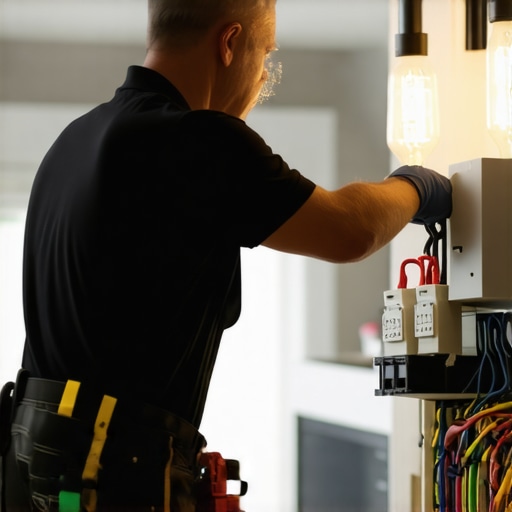
My First Encounter with Lighting Troubles
I’ll never forget the day I decided to upgrade my home’s lighting. I was excited but quickly realized how tricky lighting installations can be. The flickering bulbs, inconsistent switches, and unexpected faults initially overwhelmed me. But through experience and some research, I learned valuable tips that I now want to share for safer, more reliable home lighting.
Why Proper Lighting Installation Matters
From my personal journey, I discovered that correct lighting installation isn’t just about aesthetics; it’s crucial for safety. Faulty wiring or improper setup can pose fire risks or cause electrical shocks. That’s why I always recommend consulting an electrician for complex setups, especially for high-voltage fixtures or outdoor lighting. For those interested, this comprehensive guide walks you through the installation process step-by-step.
Simple Troubleshooting Tips I Found Useful
When minor issues occurred, I started troubleshooting systematically. First, I checked the bulbs and switches—sometimes, the solution was as simple as replacing a faulty bulb or tightening a loose connection. If problems persisted, I examined the wiring behind switches and fixtures, ensuring no exposed or damaged wires. For more complex issues, I referred to trusted resources like expert troubleshooting tips.
How Can I Ensure Electrical Safety During Lighting Troubleshooting?
Safety is my top priority. I always turn off the power at the circuit breaker before inspecting any wiring or fixtures. Using a voltage tester helps confirm that the circuit is de-energized, preventing shocks. Wearing insulated gloves and using proper tools further minimizes risks. If I ever felt unsure, I contacted a professional electrician rather than risking personal safety.
What Are the Common Causes of Lighting Faults, and How Can I Prevent Them?
In my experience, common causes include loose wiring, faulty switches, and outdated fixtures. Regular maintenance, like tightening connections and replacing worn-out components, can prevent many issues. Additionally, investing in quality fixtures and following manufacturer instructions helps ensure longevity and safety. For more detailed insights, I recommend reading about electric fault troubleshooting.
If you’re tackling lighting issues at home, I encourage you to share your experiences or ask questions in the comments. Sometimes, a fresh perspective can make all the difference!
Delving Deeper: What Are the Hidden Complexities Behind Lighting Failures?
While many homeowners initially perceive lighting issues as simple fixes—like replacing a bulb—there are underlying complexities that demand an expert’s attention. For instance, persistent flickering might stem from incompatible dimmers or fluctuating voltage levels, which can damage fixtures over time. These issues often require a nuanced approach to diagnosis that considers the entire electrical system, not just the visible symptoms. Moreover, aging wiring can develop corrosion or insulation breakdown, leading to intermittent faults that are tricky to detect without proper testing equipment. To navigate these complexities effectively, consulting a qualified electrician becomes essential, especially for high-risk or intricate setups. For comprehensive troubleshooting, professionals often leverage advanced diagnostic tools, which are explained in detail at this trusted resource—a testament to the depth of expertise required. Taking preventive measures, such as regular inspections and upgrades, can significantly mitigate these risks before they escalate into safety hazards or costly repairs.
How Can Regular Maintenance Elevate Your Lighting System’s Longevity and Safety?
Regular maintenance isn’t just about fixing problems as they arise; it’s a proactive strategy that ensures your lighting system remains safe, efficient, and visually appealing. Simple practices like tightening loose connections, cleaning fixtures to prevent dust buildup, and replacing worn-out switches can extend the lifespan of your lighting components. Additionally, periodic inspections by a licensed electrician can uncover hidden issues—like subtle wiring degradation—that might not be immediately apparent. For instance, upgrading outdated fixtures with modern, energy-efficient models not only improves aesthetics but also reduces the risk of electrical faults. When maintenance involves handling complex wiring or high-voltage circuits, safety protocols become paramount. Turning off power at the circuit breaker and using tested tools are non-negotiable steps, as highlighted in our expert lighting tips. Moreover, incorporating smart lighting controls can facilitate easier troubleshooting and maintenance, providing real-time status updates and alerts—an innovation that merges safety with convenience.
What Role Does Future-Proofing Play in Modern Lighting Solutions?
As technology evolves rapidly, integrating future-proofing strategies into your lighting setup becomes increasingly vital. For example, installing compatible smart switches and fixtures ensures your system can adapt to new features without costly rewiring. This approach not only enhances convenience but also adds resilience against obsolescence, which is a common challenge in electrical systems. Additionally, future-proofing involves considering load demands and wiring capacity—preventing overloads that could cause faults or fires. Experts recommend adhering to the latest building codes and standards, like those outlined in the ultimate guide. This foresight simplifies future upgrades, such as integrating new lighting technologies or expanding your electrical system. For homeowners, understanding these nuances can lead to smarter investments and safer environments. If you’re planning a lighting overhaul or upgrades, consulting an experienced electrician like those at Reliable Electric Pro can help you craft a resilient, efficient, and safe lighting ecosystem—reach out via our contact page for tailored advice.
Unraveling the Intricacies of Lighting Failures: A Personal Reflection
Over the years, my journey into home lighting has taken me through a labyrinth of challenges and discoveries. One of the most eye-opening realizations was how seemingly simple issues, like flickering lights or switches that refuse to cooperate, often mask deeper electrical complexities. For instance, I once faced persistent flickering in a room that I initially attributed to a faulty bulb. However, a more thorough inspection revealed incompatible dimmers causing voltage fluctuations, which led to fixture damage over time. This experience taught me that understanding the underlying causes—beyond surface symptoms—is crucial for long-term solutions. It also highlighted the importance of staying informed about the latest electrical standards and diagnostic tools, such as advanced multimeters and oscilloscopes, which professionals often use to pinpoint elusive faults. These insights, gleaned from my own troubleshooting adventures, underscore the value of a comprehensive approach to electrical health, especially as systems age or when integrating new smart technologies that demand compatible infrastructure.
Why Deep Electrical Knowledge Transcends Basic Troubleshooting
From my perspective, troubleshooting isn’t just about replacing parts; it’s about interpreting signals, understanding circuit behaviors, and anticipating potential failures. For example, I learned that loose wiring connections, often overlooked, can cause intermittent faults that are difficult to detect without proper testing. Regularly inspecting connections behind fixtures and switches—using tools like voltage testers and continuity testers—has saved me from larger problems down the line. Moreover, I discovered that some failures are rooted in outdated wiring that’s deteriorated over decades, which can lead to dangerous scenarios like arcing or fire hazards. This realization prompted me to consult with licensed electricians for thorough rewiring projects, especially when planning to upgrade to energy-efficient, smart lighting systems. These experiences emphasize that a solid understanding of electrical principles can greatly enhance safety and reliability—something I wish I had appreciated earlier in my DIY endeavors.
How Can I Safeguard My Home’s Electrical System in Advanced Ways?
Beyond routine checks, I’ve adopted proactive measures to protect my home. Installing surge protectors at critical points and integrating smart circuit breakers that monitor load and alert me to anomalies has been transformative. These devices, often recommended by experts at trusted sources, provide real-time insights that enable me to act before faults escalate. Additionally, I’ve explored the benefits of regular professional inspections, which can identify subtle issues like insulation degradation or hidden corrosion. When considering upgrades, I prioritize installing compatible smart switches and fixtures designed to withstand future technological advancements, adhering to standards outlined at industry guidelines. These steps not only enhance safety but also prepare my electrical system for seamless integration with emerging smart home solutions.
What Are the Nuanced Challenges of Upgrading to Smart Lighting?
Transitioning to smart lighting is not as straightforward as it seems. I’ve learned that compatibility issues between fixtures, switches, and controllers can introduce unforeseen faults. For example, incompatible dimmers may cause flickering or limit functionality, which was a surprise during my first upgrade. This experience led me to research thoroughly and choose fixtures compliant with smart home standards, ensuring future compatibility. Furthermore, I discovered that wiring capacity and load calculations are critical; overloading circuits with smart devices can lead to frequent tripping or damage. To mitigate these risks, I relied on detailed consultations with professional electricians, referencing guides like this expert resource. Embracing future-proofing strategies—such as installing adaptable switches and modular wiring—has helped me create a resilient, efficient, and safe lighting environment that evolves with my needs. If you’re contemplating such upgrades, I encourage you to share your experiences or seek tailored advice through our contact page.”}
Mastering Complex Electrical Diagnostics for Long-Term Lighting Stability
Over the years, I have come to realize that many persistent lighting issues stem from intricate electrical interactions rather than superficial faults. For example, I encountered a scenario where flickering persisted despite replacing bulbs and switches. A thorough analysis revealed that fluctuating voltage levels caused by an aging transformer were to blame. This experience underscored the importance of employing advanced diagnostic tools like oscilloscopes to monitor circuit behavior in real time. Such equipment, often used by professional electricians, allows for precise identification of anomalies that standard testers might miss. Incorporating these techniques into your troubleshooting repertoire can prevent costly repairs and safeguard your home from potential fire hazards, as detailed in the expert troubleshooting tips.
Why a Deep Understanding of Electrical Theory Elevates Your Troubleshooting Skills
From my personal journey, I learned that a solid grasp of electrical principles—such as circuit impedance, load balancing, and the behavior of different switch types—can dramatically improve troubleshooting accuracy. For instance, understanding how incompatible dimmers interact with LED fixtures helped me diagnose flickering issues more effectively. This knowledge enables proactive measures, like replacing incompatible components or upgrading wiring to handle modern loads, which significantly enhances safety. To deepen your understanding, I recommend exploring authoritative resources like the comprehensive installation guides. Mastery of these fundamentals empowers homeowners to prevent common faults and undertake smarter upgrades that stand the test of time.
How Can I Safeguard My Electrical System Against Future Failures?
Beyond routine maintenance, implementing advanced safeguards such as smart circuit breakers and surge protection devices has proven invaluable in my experience. These systems continuously monitor load conditions and provide real-time alerts, enabling me to act before minor issues escalate into dangerous faults. For example, installing a smart breaker that detects irregular current patterns alerted me to an insulation degradation issue early, preventing a potential fire risk. Professionals often recommend integrating these technologies during major upgrades or rewiring projects, as detailed in expert lighting tips. Regular inspections by licensed electricians complemented with these smart solutions establish a resilient electrical infrastructure, safeguarding your home and providing peace of mind.
Can Future-Proofing Your Lighting System Save You Money and Hassle?
Absolutely. Future-proofing involves selecting compatible, upgradable fixtures and controls that can adapt to evolving technology standards. For instance, I chose modular wiring setups and standard-compliant smart switches, which facilitated seamless integration with new lighting innovations over time. Adhering to current standards, such as those outlined in the industry guidelines, ensures that your system remains resilient against obsolescence. This strategic foresight minimizes future upgrade costs and reduces the risk of faults caused by incompatible components. If you’re contemplating comprehensive lighting upgrades, consulting with experienced electricians can help tailor a resilient, smart, and scalable system—reach out via our contact page.
What Are the Nuanced Challenges in Integrating Smart Lighting Technologies?
Integrating smart lighting involves more than just installing compatible fixtures; it requires understanding complex compatibility matrices between controllers, fixtures, and wiring infrastructure. During my early attempts, incompatible dimmers caused persistent flickering, highlighting the importance of meticulous planning. Modern smart lighting solutions demand adequate load calculations and adherence to standards like those in the smart home electrician guide. Moreover, the complexity increases when integrating voice-controlled systems or automation platforms, which necessitate precise wiring and network configurations. Consulting with professional electricians experienced in smart home setups is invaluable. They can conduct comprehensive assessments, ensuring your system’s longevity and safety while maximizing smart features’ benefits. If you’re considering such innovations, I recommend sharing your plans or seeking expert advice through our expert tips.
Things I Wish I Knew Earlier (or You Might Find Surprising)
The Hidden Layer of Electrical Interactions
One thing I learned the hard way is that many lighting issues are caused by underlying electrical interactions, not just faulty bulbs or switches. I once replaced a flickering bulb, only to find the real culprit was incompatible dimmers causing voltage fluctuations. Understanding these hidden dynamics has made troubleshooting more effective for me.
The Importance of Regular, Preventive Maintenance
Initially, I thought fixing problems as they appeared was enough. But I discovered that regular inspections, tightening connections, and upgrading old fixtures prevent many faults. It’s like giving your electrical system a check-up, saving money and avoiding hazards in the long run.
Smart Technologies Require Thoughtful Integration
Upgrading to smart lighting systems was exciting, but I quickly realized the importance of compatibility and load calculations. Incompatible switches caused flickering, and overloading circuits led to tripped breakers. Careful planning and expert advice made the transition smoother and safer.
Deep Knowledge Elevates Troubleshooting Skills
Learning about circuit impedance, load balancing, and wiring standards has transformed how I approach issues. It’s no longer guesswork — I can diagnose faults more confidently, ensuring safety and longevity for my lighting system.
Future-Proofing Saves Hassle Later
Thinking ahead by choosing upgradable fixtures and compliant wiring saved me headaches and costs. It’s like investing in a resilient foundation that adapts to new tech without requiring major rewiring. This foresight keeps my home safer and more efficient.
Resources I’ve Come to Trust Over Time
- National Electrical Code (NEC): This standard guides safe electrical design, and I always refer to it for compliance and safety tips.
- Electrical Safety Foundation International (ESFI): Their resources are trustworthy and help me understand best practices for electrical safety at home.
- Home Depot’s Electrical DIY Guides: Practical, easy-to-understand guides that helped me with basic DIY repairs and upgrades.
Parting Thoughts from My Perspective
From my experience, understanding the deeper intricacies of home lighting and electrical systems can make a huge difference in ensuring safety, efficiency, and peace of mind. Troubleshooting isn’t just about fixing problems; it’s about knowing what’s beneath the surface and planning ahead. If you’ve ever faced puzzling lighting issues, I encourage you to dive deeper, consult trusted resources, and consider professional help when needed. Your home’s electrical health is worth it. If this resonated with you, I’d love to hear your thoughts or stories in the comments. And if you found this helpful, feel free to share it with someone who might benefit from a fresh perspective on lighting safety and troubleshooting.
Reading about the complexities behind lighting failures really resonated with me. I’ve encountered issues where flickering lights weren’t just caused by loose bulbs or switches but stemmed from aging wiring or incompatible dimmers, similar to what was described. It made me realize how crucial it is to look deeper, especially when problems persist after simple fixes. I appreciate the emphasis on using advanced diagnostic tools like oscilloscopes—these can make a real difference in pinpointing elusive faults. Have others found that regular inspections and compatibility checks, especially when upgrading to smart lighting, can prevent these intricate issues from developing? I’d love to hear strategies others have used to ensure their systems stay reliable long-term, especially in older homes with legacy wiring.
Reading about your experience really struck a chord with me. Upgrading home lighting can seem straightforward at first, but as you mentioned, the underlying electrical system’s age and compatibility often introduce hidden challenges. I personally encountered flickering in a room that I initially blamed on faulty bulbs. It turned out to be incompatible dimmers causing voltage fluctuations, which over time damaged the fixtures. This highlighted the importance of thorough diagnostics beyond basic troubleshooting. What’s been your biggest lesson when it comes to verifying compatibility before installing new fixtures or smart systems? I’ve found that investing time in a detailed electrical assessment and consulting with qualified electricians can save a lot of headaches later. Do you think future-proofing your wiring with modular setups is a good precaution, especially in older homes? I’d love to hear other strategies that have worked for you or others in maintaining long-term safety and reliability in complex electrical systems.
This post really hits home for me. Like many homeowners, I underestimated how complicated lighting installations can be, especially in older houses with legacy wiring. I remember replacing a flickering bulb, only to find that the root cause was a worn-out dimmer switch that didn’t play nicely with LED bulbs, leading to fluctuating voltage and potential damage. It made me realize how important proper diagnostics are before rushing into upgrades. I’ve learned that conducting a thorough assessment, including verifying compatibility between fixtures and switches, can save a lot of trouble down the line. Has anyone here experienced issues with incompatible smart switches or fixtures? How did you handle the troubleshooting process? I believe investing in professional evaluations of your electrical system is worth it, even if it means extra cost upfront—especially to prevent safety hazards. Also, regular maintenance and inspections seem key to spotting problems early before they become costly repairs. What strategies have worked best for you in keeping your system reliable? Would love to hear your tips or stories about long-term lighting safety.