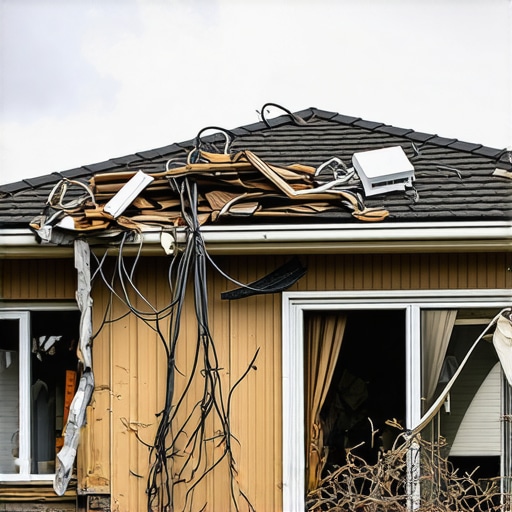
The Autopsy of a Surge: Why Your Policy Won’t Pay
If you have ever stood in a dark hallway while the acrid, metallic tang of ozone stings your nostrils, you know the true scent of an electrical failure. I have spent 35 years pulling back charred drywall and sniffing out the literal ashes of ‘good enough’ wiring. Most homeowners think that after a hurricane or a massive thunderstorm, the insurance company will just hand over a check because the lights won’t come on. They are dead wrong. I walked into a kitchen recently where a ‘fully renovated’ backsplash had supposedly survived a roof leak. My Tick Tracer was screaming before I even touched the wall. The flipper had buried three live junction boxes behind the tile, using nothing but electrical tape and hope. When the water hit those Romex splices, it created a carbon track that nearly leveled the house. The adjuster saw the lack of a proper Rough-in inspection and denied the claim on the spot. Electricity doesn’t care about your aesthetics; it follows the path of least resistance, and right now, that path might be leading straight to your denial letter.
“Aluminum wire connections can overheat and cause a fire without tripping the circuit breaker.” – CPSC Safety Alert 516
1. The Forensic Reality of the 200 Amp Panel Install
When a storm surge hits, your main service panel is the first line of defense. If you are still running on an old 60-amp or 100-amp service with a ‘Zinsco’ or ‘Federal Pacific’ label, you are essentially living with a ticking time bomb. During a 200 amp panel install, we aren’t just swapping boxes; we are ensuring the bus bars can handle the thermal expansion caused by modern electrical loads. In mid-century homes, aluminum wiring is the enemy. Aluminum has a high coefficient of thermal expansion, a phenomenon known as Cold Creep. As the wire heats up under load, it expands; as it cools, it contracts. This movement eventually loosens the terminal screws. A loose connection creates resistance, resistance creates heat, and heat creates fire. When an adjuster sees melted lugs in a 40-year-old panel, they don’t see storm damage—they see ‘wear and tear’ and lack of maintenance. Upgrading to a modern main disconnect services setup is the only way to ensure your OSHA compliance wiring stands up to forensic scrutiny.
2. Thermal Imaging Inspections: Seeing the Invisible Threat
After the clouds clear, the real danger is often invisible. I never trust my eyes alone; I trust my infrared camera. Thermal imaging inspections allow me to see the ‘hot spots’ where moisture has entered a conduit or where a surge has compromised the insulation of a Home Run. Water is a polarized molecule, and when it gets trapped inside a bathroom exhaust fan housing or a service mast, it acts as a conductor. I have seen salt-air corrosion in coastal builds bridge the gap between phases, causing a slow-burn arc that won’t trip a standard breaker until it’s too late. If you don’t have a licensed master electrician perform a forensic scan after a storm, you are essentially gambling with your structural integrity. For those dealing with complex systems, understanding how electricians tackle troubleshooting for lighting installations can reveal why those flickering lights are more than just a nuisance—they are a heat signature.
“The service-disconnecting means shall be installed at a readily accessible location either outside of a building or structure or inside nearest the point of entrance of the service conductors.” – NEC Article 230.70
3. Solar Panel Electrical Hookup and Storm Vulnerability
Your solar panel electrical hookup is a massive lightning rod. If the grounding electrode system wasn’t installed with Widow Maker precision, a surge can travel from your roof directly into your sensitive electronics. Most ‘pro-sumer’ solar installs I inspect fail because the installers didn’t use Monkey Shit (duct seal) to properly plug the conduits, allowing pressurized storm water to bypass the seals and enter the inverter. This leads to internal arcing that fries the motherboard. If you want your insurance to cover a fried inverter, you need to prove the grounding was up to code. This is as critical as ensuring safe and efficient EV charging station setup at home, where high amperage meets high heat. If the installer didn’t use a Wiggy to verify the voltage drop, the insurance company will argue the equipment failed due to improper installation, not the lightning strike.
4. Outdoor Infrastructure: Bollard Lights and Deck Services
Landscape lighting is the first thing to fail in a flood. Bollard light installation and deck lighting services require specific burial depths and moisture-rated connectors. I have seen ‘handymen’ use indoor-rated Romex for outdoor deck lighting services, burying it only two inches deep. One heavy rain later, the soil becomes saturated, the insulation fails, and the ground-fault current begins to cook the earth. If your permanent holiday lighting starts tripping the GFCIs after a storm, don’t just keep resetting them. You are likely dealing with a breached jacket. Using dikes to snip away damaged leads and replacing them with UF-rated cable is the only way to keep your OSHA compliance wiring intact. When an adjuster sees ‘indoor’ wire used underground, they will close your file faster than a tripped 15-amp breaker.
5. The Main Disconnect and Life Safety
The final tip for surviving an insurance audit is documentation of your main disconnect services. If your system was damaged, don’t just ‘patch’ it. Ensure your licensed master electrician provides a line-itemed report showing that the repair meets the latest NFPA 70 standards. Whether it’s a bathroom exhaust fan that shorted out or a full-scale 200 amp panel install, the paper trail is your only shield against a denied claim. If you have questions about your specific setup or need a forensic eye on your storm-damaged property, you should contact us immediately. Don’t let a ‘handyman special’ turn your insurance policy into a useless piece of paper. Torque your lugs, seal your conduits, and never, ever trust a circuit that smells like fish.