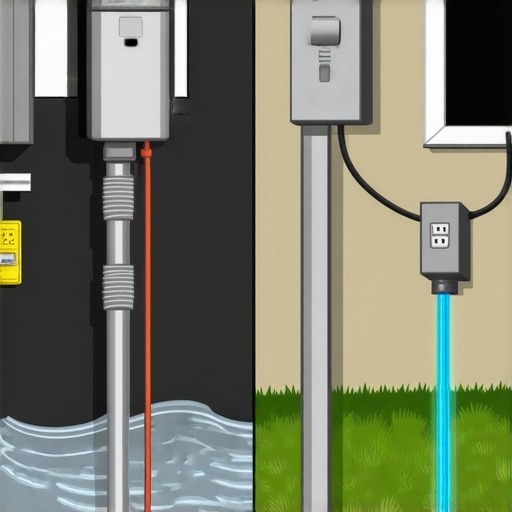
The Autopsy of a Submerged Circuit: Why Your Home is a Conductive Trap After the Flood
I’ve spent thirty-five years pulling mud-caked Romex out of crawlspaces and listening to the sickening pop of a breaker trying to clear a fault in a salt-saturated panel. By the time 2026 rolls around, our coastal and inland flood zones will be dealing with a new breed of electrical failure. When floodwaters recede, they leave behind a microscopic layer of silt and conductive minerals that turn your walls into a low-grade heater. If you think a weekend with a shop-vac and a couple of fans makes your house safe to re-energize, you’re betting your life on a coin flip where both sides are tails.
The Old Timer’s Lesson: The Nick that Becomes a Fire
My journeyman back in the late 80s used to carry a heavy brass plumb bob in his pocket. If he caught me stripping the jacket off a conductor with a standard pocketknife instead of a proper set of dikes or calibrated strippers, he’d bark, ‘You nick that copper, kid, and you’ve just built a fuse that won’t blow until the house is on fire.’ He was obsessed with stress points. In a flood situation, those nicks and tiny imperfections in the wire insulation are where the real disaster starts. Water enters the jacket through capillary action, traveling feet or even yards away from the initial submerged point, turning the copper black with oxidation. By the time you see the green crust on your outlets, the entire circuit is compromised.
“Aluminum wire connections can overheat and cause a fire without tripping the circuit breaker.” – CPSC Safety Alert 516
Step 1: Forensic Decontamination and Knob and Tube Removal
If you are living in a pre-1950s home that took on water, the math is simple and brutal. Most of these structures still have remnants of knob and tube wiring hiding in the joists. This stuff wasn’t designed to be submerged. The loom—that fabric sleeve over the wire—acts like a wick, drawing contaminated water into the center of the conductor. This leads to tracking, where electricity starts jumping across the saturated insulation. In 2026, the first step is a mandatory electrical inspection to identify these relics. If you have knob and tube that touched water, it’s not a repair job; it’s a knob and tube removal job. You pull it all out and run new home runs back to the panel. There is no middle ground here.
Step 2: Evaluating the Trenching and Conduit Integrity
When the ground saturates, trenching electrical conduit becomes a focal point of failure. I’ve seen PVC conduit joints fail under the hydraulic pressure of a rising water table, filling the pipes with silt. This isn’t just about the wire; it’s about the thermal envelope. Wire is rated for a certain heat dissipation. When that conduit is packed with dried mud, the wire can’t breathe. It cooks. For anyone planning 2026 renovations, you need to ensure any underground runs—whether for a detached garage or permanent holiday lighting—are flushed or replaced. We use a Wiggy to check for continuity and a megohmmeter to test insulation resistance. If the numbers are off, the conduit is a dead man walking.
Step 3: The Low-Voltage Logic (CAT6 and Fiber Optic Cabling)
People focus on the big wires, but the low-voltage systems are the first to rot. Your smart home’s backbone—the CAT6 cabling services and fiber optic cabling—are highly susceptible to moisture-induced signal attenuation. Even if the fiber itself is glass, the connectors and the localized power supplies for your routers are fragile. If your phone line installation or data racks were in a basement that flooded, the salt bridges the pins on the RJ45 connectors. You’ll get ghost signals, dropped packets, and eventually, a total hardware fry-out. In 2026, we don’t just ‘dry out’ data lines; we replace them to ensure the shielding hasn’t been breached by corrosive minerals.
Step 4: Managing Atmospheric Moisture with Attic Fan Installation
Flood recovery isn’t just about the water you can see; it’s about the 90% humidity trapped in the attic and wall cavities. This moisture settles on every electrical contact point. An attic fan installation is a critical safety step to pull that humid air out of the building envelope before it can condense on your ceiling fan installation or light fixtures. I’ve seen ceiling fan installation brackets rusted to the point of structural failure just three months after a flood because the attic wasn’t vented. The humidity causes galvanic reaction between the steel screws and the zinc-plated boxes. It’s a slow-motion car crash for your electrical hardware.
“Electrical equipment that has been submerged in water should generally be replaced. The ability of the equipment to operate safely may be compromised.” – NFPA 70: National Electrical Code
Step 5: Load Calculations and the 2026 Power Grid
In 2026, we are asking our homes to do more than ever. Between EV chargers and heat pumps, our panels are at their limits. A flooded panel is a compromised panel. The bus bars—the thick metal strips that distribute power to the breakers—will pit and corrode once they’ve been wet. This creates resistance. In the world of electricity, resistance equals heat. You might think your 200-amp service is fine because the lights turn on, but when you plug in your vehicle, the increased load on a corroded bus bar can lead to a thermal runaway. We always recommend getting free electrical estimates to price out a panel swap if there’s any sign of water ingress in the enclosure. Don’t let a ‘handyman’ spray it with WD-40 and call it a day. That’s a recipe for a 3:00 AM visit from the fire department.
Conclusion: Sleep Better Because It Was Done Right
Electricity is the only utility in your house that is actively trying to return to the earth as fast as possible. When you introduce water, you give it a thousand new paths to follow. From phone line installation to your main service entrance, every inch needs a professional eye. Before you flip that main breaker back on, ask yourself: Is the copper still bright, or is it black? Are the lugs torqued to spec, or are they crunchy with silt? If you don’t know the answer, you aren’t ready to go back home.