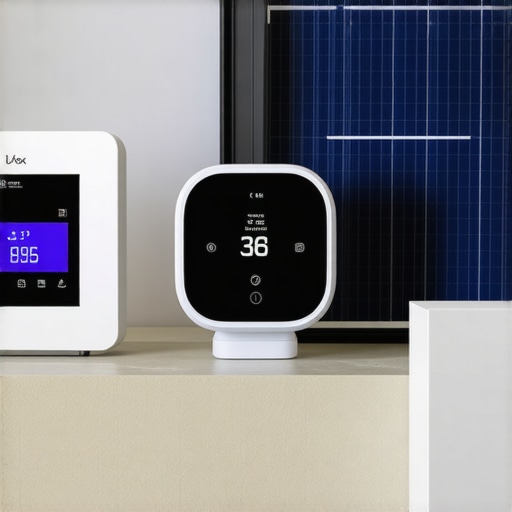
The Looming Crisis of the Modern Grid
I’ve spent thirty-five years smelling the distinct, metallic tang of vaporized copper and the acrid stench of melting PVC insulation. I’ve crawled through attics where the fiberglass was so thick it felt like breathing needles, all to find that one loose neutral that was turning a homeowner’s appliances into expensive paperweights. Electricity isn’t a ‘convenience’ anymore; it’s a high-pressure system that we’re asking to do more than it was ever designed for. By 2026, the utility companies aren’t just going to ask you to save power—they’re going to force your hand with tiered pricing that would make a loan shark blush. If you’re still running your home on a mid-century mindset, you’re not just wasting money; you’re sitting on a thermal time bomb.
The Old Timer’s Lesson in Precision
My journeyman used to smack my hand if I stripped a wire with a knife. ‘You nick the copper, you create a hot spot,’ he’d scream. He was right. That tiny notch in the metal reduces the cross-sectional area, increasing resistance. In a low-draw world, you might get away with it. But in 2026, when we’re talking about demand response systems that cycle heavy loads like HVACs and EV chargers, that ‘hot spot’ becomes an ignition point. Resistance generates heat, heat causes expansion, and when the load drops, the metal contracts. This cycle, known as thermal cycling, eventually leads to ‘Cold Creep’—where the wire literally crawls out from under the terminal screw. Once that connection is loose, you get micro-arcing. That’s the buzzing sound you hear in the walls right before the magic smoke escapes.
1. Integrated EV Managed Charging (V2G Readiness)
The biggest drain on any residential service today is the EV charger installation. We’re seeing homeowners try to slap a 48-amp continuous load onto a 100-amp panel that’s already struggling with a 1970s kitchen and a central air unit. It doesn’t work. A demand response system for your EV doesn’t just turn the charger off; it negotiates with the grid. It uses electrical load calculations to determine exactly how much headroom your main bus bar has left. If you haven’t seen the inside of a 1975 Federal Pacific panel lately, let me tell you: the bus bars are often pitted and thin. Adding a high-draw charger without a managed system is asking for a structural fire. When ensuring safe and efficient EV charging station setup at home, you have to account for the fact that these chargers run for hours. This isn’t like a toaster that runs for two minutes. This is a marathon for your wires. If your lugs aren’t torqued to the exact inch-pound spec, they will fail. I’ve used my Wiggy to troubleshoot ‘ghost voltages’ on poorly grounded EV circuits more times than I can count. A simple tick tracer won’t tell you the truth here; it’ll just tell you there’s ‘something’ there, while the Wiggy tells you if you actually have the stones to move the load.
“Aluminum wire connections can overheat and cause a fire without tripping the circuit breaker.” – CPSC Safety Alert 516
If your home was built between 1965 and 1975, you likely have aluminum branch signaling. These demand response systems are critical because they prevent the sudden ‘inrush’ of current that causes aluminum to expand at a different rate than the brass screws on your outlet switch repair jobs. You need AlumiConn connectors and a real pro who knows how to apply the ‘monkey shit’ (duct seal) to keep moisture out of your service mast. For more on the technical side of these high-draw systems, you should look into ev charger troubleshooting expert tips to fix common issues.
2. Smart Panels and Three-Phase Commercial Retrofits
For my commercial clients or those with massive estates, three phase power services are becoming the standard for 2026 power management. Why? Efficiency. By spreading the load across three phases, you reduce the current on each individual conductor. This is vital for office lighting upgrades and heavy kitchen range hood wiring in restaurant settings. A smart demand response panel acts as the ‘brain,’ using augmented reality troubleshooting interfaces to show an inspector exactly where a phase imbalance is occurring before a motor burns out. I’ve seen speaker system setup guys try to tap into these lines and cause a harmonic distortion that vibrates the neutral wire right out of the lug. It’s ugly. In an office environment, a smart system can shed non-essential loads—like decorative recessed lighting installation zones—during peak demand hours to keep the servers cool. When we do a rough-in for these systems, we’re not just pulling Romex; we’re installing shielded data lines that talk to the utility. If you’re a DIYer, stay out of these panels. One wrong move with a pair of dikes and you’re looking at an arc flash that’ll turn your pliers into shrapnel.
3. AI-Driven Thermal Storage and Load Shedding
The third system that will dominate 2026 is AI-driven load shedding, specifically for seasonal peaks like Christmas light services or summer heatwaves. Most people don’t realize that their holiday display can add 20-30 amps of intermittent load. If your electrical load calculations were done for a 1980s lifestyle, you’re redlining your transformer. These AI systems ‘learn’ your habits. They know you don’t need the water heater at 5:00 PM when you’re using the oven for dinner. They bridge the gap. They also integrate with office lighting upgrades to harvest daylight, dimming the LEDs as the sun hits the windows. This isn’t just about saving a few bucks; it’s about preventing ‘brownout’ conditions in your own home that kill sensitive electronics. I’ve been called out for outlet switch repair where the plastic was charred black because the homeowner was running a space heater and a vacuum on the same circuit for three hours. A demand response system would have shut that circuit down before the molecular structure of the copper started to degrade. I always tell people to check our lighting installations made easy guide, but remember: ‘easy’ doesn’t mean ‘ignorant of code.’
“The total connected load shall not exceed the rating of the service entrance equipment.” – NEC Article 220.10
The Forensic Verdict
I’ve seen enough ‘handyman specials’ to know that electricity is the most unforgiving force in your home. You can live with a leaky faucet, but a ‘leaky’ electrical connection is a fire. Whether you’re looking at EV charger installation or just trying to survive the 2026 utility hikes, the math doesn’t lie. You need a trim-out that is clean, connections that are torqued, and a system that respects Ohm’s Law. Don’t wait until you smell the ozone. Get your load calculations done by someone who knows what a home run really means and who isn’t afraid to tell you that your old Zinsco panel belongs in a museum, not your garage. If you have questions about your specific setup, you can always contact us or read our privacy policy for how we handle your data. Stay safe, stay grounded, and for the love of all things holy, stop using your tick tracer as a primary safety tool. It’s a widow maker for a reason.