The Autopsy of a Kitchen Disaster: Why Your ‘Renovated’ Outlets are Time Bombs
I walked into a ‘fully renovated’ 1940s kitchen last week where the owner complained of a faint, fishy odor every time she used the air fryer. To the untrained eye, the backsplash was gorgeous—white subway tile with pristine 2026-compliant GFCI outlets. But as I pulled my Wiggy (solenoid tester) out of my bag, my gut told me the flipper had cut corners. I touched the probes to the terminals, and the voltage drop was staggering. When I finally cut into that tile, I found exactly what I feared: the flipper had buried three live junction boxes behind the grout and used ‘bootleg grounds’ to trick a cheap plug-in tester. They had jumped the neutral to the ground screw, creating a path for current that looked safe on a DIY tool but was actually a death trap waiting for a wet hand to touch the toaster.
This isn’t just about ‘making things work.’ Electricity is lazy; it’s always looking for the easiest path to the dirt. In a kitchen, that path is often through you. As we move into 2026, the complexity of smart home wiring and high-draw appliances like built-in sous vide stations and heavy-duty EV charger circuits in the attached garage means your kitchen’s electrical backbone is under more thermal stress than ever. If you aren’t following the forensic-level rules of installation, you aren’t just violating code—you’re gambling with fire damage wiring restoration costs or worse.
“The ground-fault circuit interrupter is intended to protect personnel by de-energizing a circuit within an established period of time when a current to ground exceeds some predetermined value that is less than that required to operate the overcurrent protective device of the supply circuit.” – NFPA 70: National Electrical Code (NEC)
Rule 1: The Physics of the 6-Foot Threshold and Moisture Mitigation
The standard ‘within 6 feet of water’ rule is getting a 2026 overhaul. We aren’t just looking at the sink anymore. Forensic inspections of kitchen fires often point to the ‘micro-environment’ created by steam-heavy appliances. When I’m doing a rough-in, I calculate the ‘vapor-path.’ If a dishwasher or an under-counter ice maker is present, every outlet on that wall must be GFCI protected, regardless of the tape measure distance to the faucet. The salt and minerals in tap water act as a bridge. Over time, salt air corrosion (even in inland homes due to cleaning chemicals) creates a high-resistance path inside the outlet. This causes the internal solenoid to pit and eventually weld shut. Use a tick tracer to check for phantom voltage; if you see the light flickering, your insulation is already failing.
Rule 2: Dedicated Home Runs and Eliminating ‘Cold Creep’
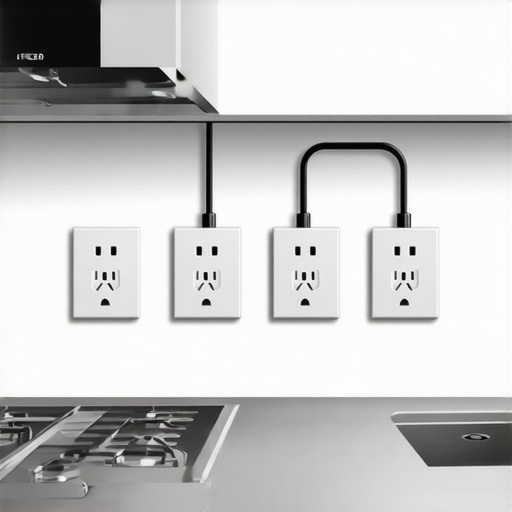
Modern kitchens are power-hungry monsters. You cannot daisy-chain four outlets off a single 15-amp Romex line and expect it to survive. A proper 2026 installation requires dedicated 20-amp home runs for high-wattage zones. When you use cheap back-stab connections instead of side-wiring with a torque screwdriver, you invite a phenomenon called Cold Creep. Copper and brass expand and contract at different rates as they heat up under load. This thermal cycling loosens the connection. A loose wire is an arcing wire. If you smell ozone, the preventative electrical maintenance window has already closed. You need to pull the device and check for charred ‘monkey shit’ (duct seal) or melted jackets. This is where lighting installations and power circuits must be strictly separated to prevent flickering when the fridge kicks on.
Rule 3: Smart Home Integration and Whole House Surge Protection
In 2026, a GFCI isn’t just a mechanical switch; it’s a computer. Many high-end kitchen outlets now feature augmented reality troubleshooting chips that broadcast status to your phone. However, these sensitive electronics are the first things to fry during a grid spike. Without whole house surge protection installed at the main panel, a nearby lightning strike or a utility transformer pop will cook the sensing coil inside your kitchen GFCIs, leaving them stuck in the ‘on’ position without the ability to trip. I’ve seen ‘dead’ GFCIs that still provided power but offered zero ground-fault protection—a literal widow maker scenario. If your home has an EV charger, the surges generated by the car’s inverter can eventually degrade the GFCI’s internal PCB. For more on this, check out safe EV charging station setup.
“Aluminum wire connections can overheat and cause a fire without tripping the circuit breaker.” – CPSC Safety Alert 516
Rule 4: The 2026 Permit and Inspection Mandate
Don’t let a ‘handyman’ tell you that kitchen outlets are a DIY job. In the forensic world, the first thing an insurance adjuster looks for after a fire is the permit history. Professional permit pulling services ensure that your electrician isn’t just guessing. They verify that the emergency exit lighting is functional (yes, even in large modern kitchens) and that the camper electrical panel you have tied into the side of the house isn’t back-feeding the kitchen circuit. If you are dealing with an older home, you might even need a fire damage wiring restoration specialist to strip back the ‘crispy’ insulation before installing new devices. Every screw must be torqued to the manufacturer’s specific inch-pounds. If you use dikes to strip your wires and nick the copper, you’ve just created a localized hot spot that will eventually brittle the wire and cause a failure.
If you’re unsure about the state of your kitchen, don’t wait for the sparks. You can contact us for a full forensic load-calc and inspection. Keeping your family safe isn’t about the color of the outlet; it’s about the integrity of the copper behind the wall.
This article highlights some critical points that often get overlooked during kitchen renovations. I’m surprised at how many DIYers and even some professionals underestimate the importance of proper wiring practices, especially in older homes where corrosion and outdated wiring may be lurking behind the walls. I recently had a similar experience with a client whose GFCI outlets kept tripping, and it turned out to be a high-resistance corrosion build-up inside the outlet box, compounded by salt air exposure from nearby coastal environments. It’s a reminder that moisture and mineral buildup can silently cause dangerous conditions over time. I agree that dedicated home runs and proper torque tightening are essential to prevent cold creep and arcing. Have others experienced issues with salt air or high-humidity environments affecting GFCIs or wiring longevity? It would be interesting to hear how different conditions influence these critical safety systems.
Reading this article really opened my eyes to how crucial proper wiring practices are, especially with the new standards coming in 2026. I recently encountered a similar situation where a homeowner’s GFCI outlets kept triping inexplicably, which seemed odd until I discovered corrosion buildup inside the outlet box, likely from high humidity and improper sealing. It’s alarming how such issues can go unnoticed because the outlet appears to be functioning fine, but the underlying electrical integrity is compromised. I’ve been curious about how water vapor and mineral deposits affect the long-term reliability of these safety devices. In my experience, using high-quality, properly installed outlets with dedicated circuits makes a huge difference. Also, I wonder, what are some effective strategies for homeowners to regularly check and maintain their GFCI outlets amidst such environmental challenges? It seems like a proactive approach could prevent potential hazards before they become emergencies.