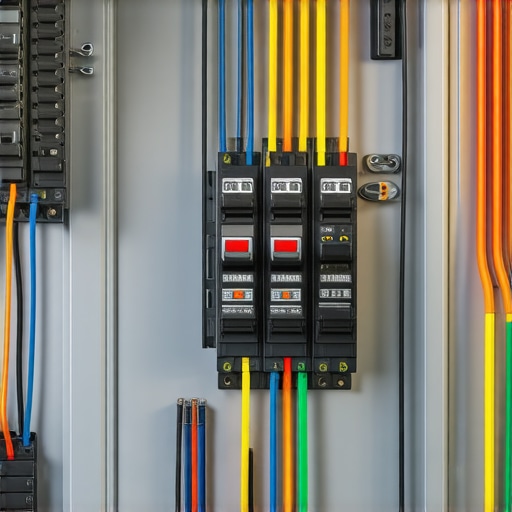
The Ghost in the Copper: Why Your Modern Home is a Fire Hazard
You hear that? That faint, rhythmic ‘tick-tick-tick’ coming from your service panel in the garage? That’s not a clock. That’s the sound of thermal expansion screaming for mercy because you just plugged in a 48-amp Level 2 EV charger while the HVAC kicked over and the water heater started its cycle. As a master inspector who has spent 35 years sniffing out the scent of ozone—that sharp, metallic, electric-burnt-hair smell—I can tell you that most homes are currently red-lining their infrastructure. By 2026, the average residential load will have tripled compared to the 1990s, and if you’re still relying on a 100-amp service, you’re not living in a home; you’re living in a slow-motion fuse.
“Aluminum wire connections can overheat and cause a fire without tripping the circuit breaker.” – CPSC Safety Alert 516
My journeyman used to smack my hand if I stripped a wire with a knife. ‘You nick the copper, you create a hot spot,’ he’d scream. He was right. That tiny nick reduces the cross-sectional area of the conductor, forcing the same amount of current through a smaller space. It’s the electrical equivalent of a bottleneck on the freeway, generating localized heat that can reach 400 degrees Fahrenheit before you even notice a flicker. This obsession with precision is what separates a bonded insured electrical professional from a guy with a pair of dikes and a ‘can-do’ attitude. When we talk about load calculations, we aren’t just playing with calculators; we’re preventing a structural autopsy.
Tip 1: The 400 Amp Service Entrance—The New Gold Standard
If you’re planning a workshop electrical setup or adding architectural lighting that turns your backyard into a resort, a 200-amp panel is no longer the ceiling; it’s the floor. For a safer 2026 home, we are increasingly looking at the 400 amp service entrance. Why? Because the physics of Cold Creep and heat dissipation don’t care about your budget. When you pull 80% of your rated capacity for hours—like when charging an EV—the bus bars in your panel heat up. This heat causes the metal to expand and contract. Over time, those screws holding your breakers in place loosen. A loose connection is a high-resistance connection. High resistance equals more heat. It’s a death spiral for your panel. Ensuring a safe and efficient EV charging station setup starts with calculating your total demand, not just your ‘average’ use. If your home run wires are getting warm to the touch, you’ve already lost the battle.
Tip 2: Combatting the Mid-Century Time Bomb—Aluminum Wiring Repair
If your home was built between 1965 and 1973, you likely have a ‘Widow Maker’ hidden in your walls: aluminum wiring. The problem isn’t the metal itself; it’s the chemistry. Aluminum oxidizes instantly when exposed to air, creating a layer of aluminum oxide—a literal insulator. To make matters worse, aluminum expands at a different rate than the brass screws on your outlets. This is why aluminum wiring repair is the most critical safety upgrade for mid-century homes. We don’t just ‘twist on’ new wires. We use AlumiConn connectors or COPALUM crimps to create a gas-tight seal. I’ve seen ‘handymen’ use monkey shit (duct seal) to try and stop corrosion, but that’s a fairy tale. You need a bonded insured electrical expert to perform a forensic check on every junction box. If you find yourself frequently using a tick tracer to find dead circuits, your aluminum wires are likely arcing behind your drywall right now.
Tip 3: The Workshop Load—Three Phase Power Services and Arc Flash Studies
For the serious hobbyist, a workshop electrical setup isn’t just about adding a few outlets. When you start bringing in heavy machinery—lathes, table saws, dust collectors—you’re dealing with inductive loads that have massive ‘inrush’ current. This is where three phase power services become relevant for larger residential estates. But with great power comes the need for arc flash studies. Most homeowners think arc flashes only happen in factories. Wrong. If you have a 400-amp service with low impedance, the ‘available fault current’ is high enough to vaporize copper and send a molten spray into your face if a tool slips. This is why annual maintenance contracts are vital; we check the torque on every lug with a calibrated wrench to ensure no ‘hot spots’ are developing in your shop. If you’re struggling with power delivery, expert troubleshooting can identify if your shop is starving your main house of voltage.
“The service-entrance conductors for a dwelling unit shall be sized to carry the load as calculated by Article 220.” – NFPA 70: National Electrical Code (NEC)
Tip 4: Architectural Lighting and The Hidden Heat Load
Modern architectural lighting has moved to LED, which people think means ‘zero heat.’ That’s a dangerous assumption. While the light source is cool, the drivers and transformers are heat-generating machines. When we perform a load calculation, we have to account for the ‘continuous load’ of these systems. A continuous load (anything running for 3 hours or more) must be de-rated to 80% of the circuit’s capacity. If you have a 20-amp circuit for your exterior lighting, you can only safely put 16 amps on it. If you’re pushing 19 amps, that Romex is slowly cooking its own insulation until it becomes brittle and cracks. This is a common find during trim-out on high-end renovations. If you’re seeing flickering, you might need to troubleshoot your lighting installation before a small arc becomes a big fire.
Tip 5: Standby Generator Install—The Fail-Safe Calculation
A standby generator install is the ultimate peace of mind, but it’s only as good as the transfer switch and the load shedding logic. You cannot simply slap a 22kW generator on a house and expect it to run four AC units and an EV charger. We use ‘load shedding’ to prioritize what stays on. In 2026, your load calculation must include your emergency backup plan. We look at the ‘locked rotor amps’ (LRA) of your appliances. If the generator can’t handle the ‘kick’ of the compressor starting, the whole system collapses. This is why we offer senior discount services to help those on fixed incomes ensure their medical equipment and climate control stay live during a grid failure. Don’t let a ‘trunk slammer’ electrician install your backup system; if it’s not torqued to spec, the vibration of the generator will vibrate the lugs loose in six months.
Electricity is a lazy, dangerous beast. It’s always looking for the easiest path to ground, and it doesn’t care if that path is through your floor joists or your heartbeat. If you haven’t had a forensic inspection of your panel in the last five years, you’re overdue. From aluminum wiring repair to upgrading to a 400 amp service entrance, the goal is the same: making sure that when you flip the switch, the only thing that happens is the lights come on. No pops, no smells, no tick tracer alarms. Sleep at night knowing your system is torqued, balanced, and calculated for the world of 2026. If you’re ready to stop guessing and start knowing, it’s time to contact us for a professional load evaluation.