
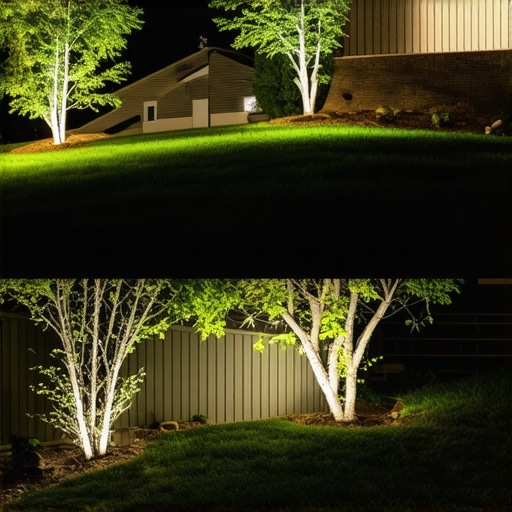
The Autopsy of a Dying Landscape System
I’ve spent the better part of four decades following the scent of ozone and charred PVC across high-end estates and retail store wiring projects. My old journeyman, a man who viewed electricity as a predatory animal, used to smack the back of my head if I even looked at a pair of dikes the wrong way while stripping UF cable. ‘You nick that copper, you create a microscopic hot spot,’ he’d growl, his voice like gravel in a blender. ‘And once that wire is buried under six inches of wet mulch, that hot spot becomes a thermal runaway event.’ He was right. Most homeowners think they are paying for lights; what they are actually paying for is the integrity of the copper and the quality of the splices. If those fail, you aren’t just looking at a dark yard—you’re looking at a potential fire hazard or, at the very least, a very expensive paperweight buried in your dirt.
The Sensory Warning Signs: If It Smells Like a Fish Fry, Something is Arcing
The first sign of a hack job isn’t always visual. Sometimes it’s the smell. A properly installed transformer shouldn’t smell like anything. If you walk past your outdoor power source and catch a whiff of fish or burning plastic, you have a loose lug or an overloaded circuit. This is where we get into the forensic breakdown. When a wire isn’t torqued correctly into the transformer terminal, the electricity has to ‘jump’ the gap. This is arcing. Arcing generates heat—massive amounts of it—long before a standard breaker even thinks about tripping. This is why we often suggest a 100 amp service upgrade or even a 400 amp service entrance for larger properties; you need the headroom to handle the load without stressing the main lugs. If your installer didn’t perform a proper load calculation, they are setting you up for a catastrophic failure.
“Underground cable and conductors installed in PVC conduit shall be buried a minimum of 18 inches deep to prevent accidental damage that can lead to arcing and ground faults.” – National Electrical Code (NEC) 300.5
Component Zooming: The Physics of Cold Creep and Capillary Action
Let’s talk about why your lights flicker. It’s usually not the bulb; it’s the physics of the wire. In outdoor environments, especially if you’re near the coast, we deal with capillary action. If an installer uses a standard wire nut instead of a grease-filled, direct-burial connector, moisture is literally sucked up into the stranded copper wire like water through a straw. Once that moisture hits the copper, oxidation begins. This creates a high-resistance ‘green crust’ (verdigris). Resistance generates heat. Heat causes the copper to expand and contract—a phenomenon known as Cold Creep. Eventually, the connection becomes so loose that the voltage drops, the light dims, and the heat at the splice point starts melting the insulation. This is why how electricians tackle troubleshooting for lighting installations involves more than just swapping bulbs; we are hunting for these thermal failures with thermal imagers or even augmented reality troubleshooting tools in modern setups.
The Home Run and the Voltage Drop Disaster
In a professional rough-in, we use what we call the ‘Home Run’ method or a ‘T-Hub’ layout. A handyman will ‘daisy chain’ your lights—running one wire from the transformer to the first light, then the second, then the third. By the time you get to the tenth light, the voltage drop is so severe that the last fixture looks like a dying firefly. Worse, the first fixture is being overdriven with too much voltage, shortening its life by 70%. When we do retail store wiring or high-end residential jobs, we calculate the exact gauge needed—often 10/2 or 12/2 low-voltage wire—to ensure every fixture receives exactly 11.5 to 12 volts. If your installer didn’t use a Wiggy or a high-quality multimeter to check the voltage at the furthest fixture, they haven’t finished the job. You’re essentially paying for a system that is designed to fail within two seasons.
The Grounding and Bonding Oversight
One of the most ignored aspects of outdoor power is bonding jumper services. People think because it’s ‘low voltage’ (12V or 24V), it can’t hurt them. Tell that to the guy who touches a metal fixture while standing barefoot on wet grass when there’s a 120V primary-side leak in the transformer. Proper grounding isn’t optional. Every transformer enclosure must be bonded to the house grounding electrode system. If your electrician didn’t check the ground path, they’ve left a Widow Maker in your backyard. This is the same level of precision we apply to sauna heater installation or home theater wiring; if the path to ground isn’t the path of least resistance, you become the path. If you have doubts, getting free electrical estimates for a safety audit is cheaper than an ER visit.
“Aluminum wire connections can overheat and cause a fire without tripping the circuit breaker if not properly terminated with antioxidant compounds.” – CPSC Safety Alert 516
The Checklist: Before You Sign the Check
Before you hand over the final payment, walk the property. Check the burial depth. If you can see the wire by kicking away an inch of mulch, it’s a failure. That wire will be nicked by an edger or a shovel within a year. Look at the splices. Are they housed in a junction box or at least using heat-shrink, gel-filled connectors? If you see black electrical tape, fire the contractor on the spot. Tape is not a moisture barrier; it’s a sponge. Ask about the total wattage on the circuit. A professional will never load a transformer past 80% of its rated capacity. If you have a 300W transformer, you shouldn’t be running more than 240W of lights. This ensures the system runs cool and survives the summer heat. If you’re seeing issues already, don’t wait—look for same day service appointments to fix it before the moisture reaches the main panel. For those interested in the right way to do things, check out lighting installations made easy for a breakdown of the gold standard.
Comments
3 responses to “How to Spot a Bad Landscape Lighting Install Before You Pay the Bill”
This article hits the nail on the head when it comes to diagnosing why landscape lighting fails prematurely. I’ve seen countless installations where the focus was purely on aesthetics, while neglecting the vital details like proper burial depth, correct splicing, and grounding. The part about moisture infiltration using standard wire nuts really resonated with me; I once had a flickering light that was traced back to moisture-induced verdigris at a splice. It took a thermal camera to spot it, and once corrected with gel-filled connectors, the problem was gone. It makes me wonder, though, how many homeowners actually know what to look for during a routine walk-around before signing off on a job? Do others have trusted tips or tools they use for quick inspections? Sharing experiences or recommended checklists could be really helpful for those trying to safeguard their outdoor systems without necessarily needing a full professional audit every time.
Reading through this detailed breakdown of landscape lighting failures really opened my eyes to how many subtle factors can compromise safety and longevity. Like others, I’ve had flickering lights that I initially thought was just bad bulbs, but it turned out to be moisture creeping into the wire nuts after heavy rain. I now always check for gel-filled connectors and buried wiring that’s deep enough—not just for aesthetic reasons but for durability and safety. Has anyone tried using thermal imaging to routinely inspect their outdoor wiring? I wonder what the cost-benefit analysis looks like for a typical homeowner considering regular thermal scans to catch issues early. Also, I’d love to hear whether DIYers have found any reliable, simple tools or checklists for quick inspections before calling in a pro. It seems that the key is understanding the physics and being attentive to the signs, even the smells. What are some other telltale signs that might not be obvious but indicate a serious installation flaw?
This post provides a critical reminder about what often gets overlooked during landscape lighting installations—safety and thoroughness. I’ve personally learned the hard way that cutting corners on wire burial depth or skimping on waterproof connectors can lead to costly fixes down the line. When it comes to spotting issues early, I’ve found that regular visual checks combined with simple tools like a multimeter can really help. Have others had success integrating infrared or thermal imaging tools for routine inspections? It seems like a worthwhile investment, especially in coastal or high-moisture environments where moisture ingress is a constant threat. Also, I’m curious, what’s your take on the best way for DIY homeowners to verify their system’s safety without calling in a professional every time? In my experience, education on basic electrical safety can be invaluable for avoiding dangerous surprises or fire hazards. Sometimes, a quick walk-around and a few simple tests can save a lot of trouble later.