The Hubris of the Backyard ADU: Why Your Panel is a Ticking Clock
I’ve spent the better part of 35 years in this trade, and if there is one thing that keeps me awake at night—besides the permanent ringing in my ears from years of impact drivers—it’s the way people approach electrical service for an Accessory Dwelling Unit (ADU). In 2026, we aren’t just building ‘granny flats’ anymore; we are building high-tech, energy-dense miniature homes equipped with induction stoves, heat pumps, and high-speed EV chargers. People treat electricity like it’s a bottomless well. It’s not. It’s a series of controlled explosions waiting for a path of least resistance. If you’re planning an ADU, you aren’t just adding a room; you’re adding a massive load to a system that was likely designed when the most taxing thing in the house was a 1,000-watt toaster. When you screw this up, you don’t just get a flickering light; you get a thermal event that turns your investment into a pile of ash.
Before we get into the technical weeds, let me tell you about a ‘renovated’ carriage house I inspected last November. I walked into this ‘fully renovated’ kitchen where the flipper had buried live junction boxes behind a beautiful marble backsplash. I knew something was wrong the moment I pulled my tick tracer out and the damn thing started screaming through the stone. I used my circuit tracer to map the runs and realized the clown had pig-tailed Romex directly to old cloth-covered wire with no box in sight. He’d buried the evidence, hoping the sale would close before the heat cycles of an electric range caused those connections to expand and contract enough to arc. I found them, but most inspectors won’t. That’s the reality of the ADU market right now: hidden hazards behind high-end finishes.
“The service disconnecting means shall have a rating not less than 60 amperes… however, for a one-family dwelling, the service disconnecting means shall have a rating not less than 100 amperes, 3-wire.” — National Electrical Code (NEC) 230.79
Mistake 1: The Load Calculation Lie and the 100-Amp Myth
The biggest mistake I see in 2026 is the ‘Heavy-Up’ dodge. Homeowners think they can just tap into their existing 100-amp or 150-amp main panel to feed a new ADU. They see an empty slot in the breaker and think, ‘Hey, there’s room!’ It doesn’t work like that. You have to perform a formal load calculation. If you’re adding an EV charger and an ADU, you are likely pushing your main service past its physical limits. I’ve seen main lugs glowing cherry red because the bus bar was being asked to carry 110% of its rated capacity for hours. In an ADU context, you need to consider the 2026 shift toward total electrification. We aren’t using gas anymore. That means your heating, cooling, and cooking are all pulling from the same copper. If you don’t upgrade to a 200-amp or even a 400-amp ‘Class 320’ service, you’re just waiting for a catastrophic failure. I’ve seen enough melted plastic in meter cans to know that the ‘standard’ service isn’t enough for the modern footprint.
Mistake 2: The Subpanel Grounding Disaster (The ‘Three-Wire’ Trap)
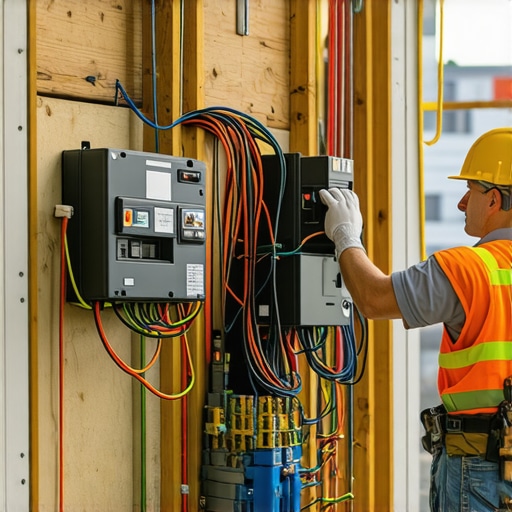
When you run power from the main house to the ADU, you’re usually installing a subpanel installation. This is where the handymen get dangerous. I can’t tell you how many times I’ve opened an ADU panel and seen the neutral and ground bonded together. That is a violation that can literally kill someone. In a separate structure, you must have a four-wire feed: two hots, a neutral, and a dedicated equipment grounding conductor. Furthermore, you need local grounding electrodes—ground rods—at the ADU itself. If you bond the neutral and ground in the subpanel, you are creating a parallel path for the return current. Now, your metal siding, your faucets, and your appliance frames could be carrying ‘objectionable current.’ If the main neutral fails, you become the path to ground. I’ve seen circuit breaker replacement jobs turn into full forensic investigations because a ‘bootleg ground’ fried every sensitive piece of electronics in the house. Always verify your grounding with a Wiggy or a high-quality multimeter; don’t trust a cheap plug-in tester that can be fooled by a phantom voltage.
Mistake 3: Ignoring the Physics of ‘Cold Creep’ in Older Systems
If you are building an ADU on a property built between 1960 and 1978, you might be tempted to tie into existing circuits. If that house has aluminum wiring, you are playing with fire—literally. Aluminum has a high coefficient of thermal expansion. This leads to what we call ‘Cold Creep.’ When current flows, the wire heats up and expands. Because it’s trapped under a terminal screw, it deforms. When it cools, it doesn’t snap back; it stays squashed. Over hundreds of cycles, the connection becomes loose. Loose connections have high resistance. Resistance creates heat. Heat creates more oxidation, which increases resistance further. It’s a death spiral. If your ADU project involves any aluminum wiring repair, you need to use AlumiConn connectors or COPALUM crimps. Do not just twist them together with a purple wire nut and hope for the best. I’ve seen those nuts melt into a glob of grape-scented plastic because they couldn’t handle the heat. [IMAGE_PLACEHOLDER]
“Aluminum wire connections can overheat and cause a fire without tripping the circuit breaker.” — CPSC Safety Alert 516
Mistake 4: Trenching and the Trench-Rot Reality
The rough-in phase of an ADU is where the most physical labor happens, specifically the trenching. I see guys digging 12-inch trenches for direct-burial cable to save on conduit costs. In 2026, with the increasing volatility of soil moisture and ground movement, that’s a mistake. You need to be at least 18 inches deep for PVC conduit, or 24 inches for direct burial. But here’s the pro tip: use Schedule 80 PVC where the conduit emerges from the ground to protect against lawnmowers and weed whackers. I’ve seen ‘Widow Makers’—wires with nicked insulation buried in wet mud—that stayed live for years until a dry spell caused the ground to crack and expose the arc. If you are doing a warehouse lighting retrofit style setup in a modern ADU loft, ensure your conduit runs are straight and secured. Use ‘monkey shit‘ (duct seal) to plug the ends of the conduit entering the house to prevent moisture and ants from migrating into your panel. I’ve seen panels filled with dead ants that caused a phase-to-phase short because they were attracted to the electromagnetic field.
Mistake 5: Failing the ‘Future-Proof’ Load Test
Mistake number five is a lack of foresight regarding EV charger infrastructure and home theater wiring. People build these ADUs with just enough power for today. Then, two years later, they want a Level 2 charger. If you didn’t pull a 1-inch or 1.25-inch conduit for the feed, you’re stuck. You’ll be paying an electrician to dig that trench all over again. In 2026, every ADU should be ‘EV Ready.’ This doesn’t just mean a 240V outlet; it means the panel has the physical space and the bus bar capacity for a 50-amp continuous load. While you’re at it, don’t forget emergency exit lighting if you plan on using the ADU as a rental. It’s a small cost during the trim-out phase but a massive headache to retrofit later. We also see a lot of people asking for military discount wiring services; we provide them because those who served deserve a home that doesn’t burn down due to a circuit breaker replacement that was skipped to save fifty bucks.
At the end of the day, electricity isn’t a hobby. It’s a utility that wants to return to its source, and it will go through your ADU’s framing studs to do it if you give it the chance. Whether you’re dealing with outlet switch repair or a full subpanel installation, do it by the book. Torque your lugs to the manufacturer’s specs—not just ‘German tight’ (gutentight)—but with a real torque screwdriver. Sleep better knowing your connections aren’t vibrating at 60Hz toward a fire. If you’re overwhelmed, contact us before you bury those boxes. You can also see how electricians tackle troubleshooting for complex ADU setups to get an idea of the forensic work we do when things go wrong.
This article hits on a crucial point that often gets overlooked in ADU projects: the importance of upgrading the electrical system to meet future demand. I’ve seen homeowners neglect these details, only to face costly retrofits down the line. The story about hidden hazards behind beautiful finishes really resonated with me—it’s a reminder to always do a thorough inspection. My question is, how do you recommend balancing the budget constraint with the necessary upgrades for a safe and future-proof system? Sometimes, the initial investment feels steep, but the long-term safety and compliance are worth it. Also, for older homes with aluminum wiring, would you suggest a full rewiring, or are there effective patch-up methods that don’t compromise safety? Your insights could really help those of us planning ADUs soon.