The Scent of a Looming Short: Why Your Commercial Roof is a Powder Keg
I’ve spent thirty-five years dragging my tool belt through the dark underbelly of commercial infrastructure, and if there is one thing I’ve learned, it’s that electricity has a distinct smell before it starts a fire. It’s a sharp, metallic ozone scent that tickles the back of your throat. By the time you smell it, the damage is usually done. In the high-stakes environment of 2026 commercial property management, we are moving past the days of an electrician leaning a ladder against a rusted parapet wall just to see why the low voltage lighting is flickering. We’re in the era of drone thermography, and it’s the only thing standing between your building and a total structural loss. I’ve seen code violation corrections that would make a first-year apprentice weep, usually hidden where no human eye was ever meant to see them. Most commercial roofs are a graveyard of abandoned tree mounted lights and Christmas light services gone wrong, where the UV rays have baked the Romex or THHN insulation into a brittle mess that snaps like a dry twig.
The Forensic Breakdown: The Flipper Special in the Soffits
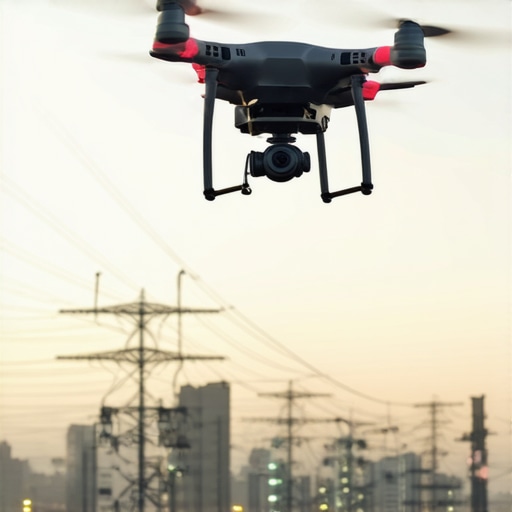
I walked into a ‘fully renovated’ commercial plaza last year where the previous owner had buried live junction boxes behind a new facade to hide where the 1970s aluminum wiring met the new copper home run. I found them with my tick tracer screaming through the metal panels like a banshee. The flipper had used ‘wire nuts and a prayer’ instead of code violation corrections. They had spliced copper directly to aluminum without using AlumiConn or CO/ALR rated devices. This is where the physics of ‘Cold Creep’ turns into a nightmare. Aluminum has a significantly higher coefficient of thermal expansion than copper. Every time the HVAC kicks on or the low voltage lighting draws a load, that aluminum expands. When the load drops, it contracts. Over time, it literally crawls out from under the terminal screw. This creates a high-resistance gap. That gap starts to arc. That arc reaches temperatures hotter than the surface of the sun, and suddenly, your ‘renovated’ investment is an insurance claim. Using a drone with a FLIR camera allows us to perform electrical safety audits from the air, catching those thermal signatures—those glowing hot spots—before the fire alarm system install even has a chance to trigger.
“Aluminum wire connections can overheat and cause a fire without tripping the circuit breaker.” – CPSC Safety Alert 516
The Physics of Failure: Why 2026 Demands Drone Precision
When we talk about tree mounted lights or exterior Christmas light services on a commercial scale, we aren’t just talking about a few bulbs. We are talking about massive inductive loads and thousands of feet of conductor exposed to the elements. I’ve seen installers use dikes to notch out weather-stripping just to run a cord, creating a direct path for water to enter the grounding electrode install zone. In mid-century commercial builds, you often find Federal Pacific or Zinsco panels. These aren’t just old; they are dangerous. The bus bars corrode, and the breakers jam. They don’t trip—they weld themselves shut. A drone inspection can spot the heat radiating from a jammed breaker through the enclosure’s ventilation before the metal starts to discolor. This is a critical part of electrical safety audits because it identifies the ‘Widow Maker’ circuits that are energized even when the handle is in the ‘off’ position. We aren’t just looking for light; we are looking for the ΔT—the temperature differential—that signals a loose neutral or a failing smoke detector installation power supply. If you are struggling with your current setup, understanding how electricians tackle troubleshooting for lighting installations can give you a better idea of the complexity involved in these high-altitude fixes.
The Grounding Crisis: More Than Just a Copper Rod
One of the most ignored components in commercial wiring is the grounding electrode install. I’ve seen ‘pros’ drive a five-foot rod into the dirt and call it a day. In the forensic world, we call that a ‘dummy ground.’ If the soil resistivity is too high, or if the home backup generator install isn’t properly bonded to the service entrance, that ground rod is about as useful as a screen door on a submarine. Without a low-impedance path to ground, lightning or a transformer surge will find its own path—usually through your $50,000 server rack or your fire alarm system install control panel. A drone can inspect the bonding ribbons on the roof-mounted equipment, ensuring that galvanic corrosion hasn’t eaten away the connection between the lightning arrestors and the down-conductors. If you’ve ever used a Wiggy to test a circuit and seen the solenoid bounce, you know the difference between ‘voltage’ and ‘potential.’ Proper grounding ensures that potential stays at zero. For those managing modern fleets, this grounding is even more vital, as discussed in ensuring safe and efficient EV charging station setup which requires the same rigorous standards regardless of the site location.
“The grounding electrode conductor shall be installed in one continuous length without splice or joint.” – National Electrical Code (NEC) Article 250.64(C)
The Autopsy of an Arcing Connection
When a drone finds a hot spot in a commercial light string or a rooftop HVAC disconnect, we perform what I call the ‘autopsy.’ I pull the cover and look for the tell-tale signs: the ‘Monkey Shit’ (duct seal) that’s dried out and cracked, allowing moisture into the low voltage lighting transformer; the charred insulation on the Romex; and the pitting on the contactors. Often, the issue is ‘stacking’—where a handyman has put three wires under one lug. This is a direct violation and a recipe for a thermal event. During the rough-in phase of a commercial build, everything looks clean. It’s during the trim-out ten years later when the shortcuts start to kill. A drone inspection allows us to see the degradation of the conduit hangers. If a hanger fails and the conduit sags, it creates a ‘drip loop’ in reverse, funneling rainwater directly into the smoke detector installation junction boxes. We fix these by implementing strict code violation corrections that go beyond just swapping a fuse. We ensure the structural integrity of the entire pathway. If you are integrating more tech, like an EV station, you should review top EV charger maintenance tips for optimal performance to see how we maintain these high-draw systems.
Sleep at Night Knowing It’s Torqued
I don’t care how many Christmas light services you’ve sold or how many tree mounted lights you have glowing; if the underlying infrastructure isn’t torqued to spec, it’s a liability. I’ve seen 100-amp sub-panels that were so hot you could fry an egg on the cover because the installer didn’t use a torque wrench on the lugs. Electricity isn’t a hobby, and it isn’t a ‘set it and forget it’ utility. It is a constant, vibrating force of nature that wants to return to the earth by the shortest path possible—and it doesn’t care if that path is through your building’s framing. Utilizing drone light inspections in 2026 is the only way to stay ahead of the curve. It’s about proactive electrical safety audits that save lives and millions in property damage. Whether it’s a home backup generator install or a massive commercial fire alarm system install, the rules of physics don’t change. Get it checked, get it corrected, and make sure it’s done by someone who knows what a Wiggy is and isn’t afraid to use it. If you need a hand figuring out where to start, looking at a step-by-step electrician guide for lighting can help demystify the process before the drones even take flight.