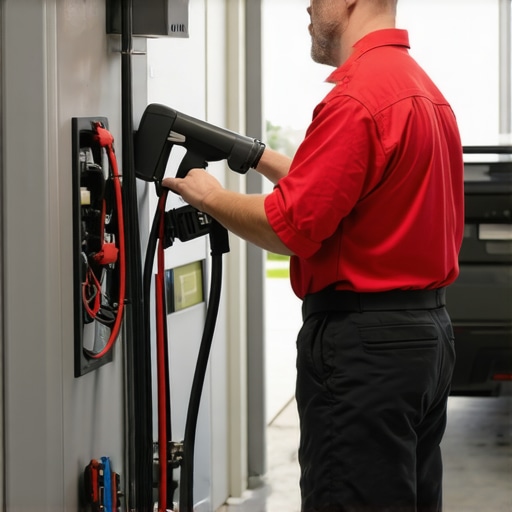
Discovering the World of EV Charging: A Personal Perspective
As someone who recently transitioned to an electric vehicle, I quickly realized the importance of having a reliable EV charger at home. My first experience with troubleshooting an EV charger was quite eye-opening. I remember one evening when my charger suddenly stopped working, leaving me stranded with a partially charged vehicle. That incident sparked my curiosity and led me to dive deep into the world of EV charger troubleshooting and installation.
Understanding Common EV Charging Issues from My Experience
Over time, I encountered various issues, such as connection errors, slow charging speeds, and occasional power outages. I learned that many problems stem from simple causes like loose wiring, outdated firmware, or incompatible outlets. Consulting with certified electricians, I discovered that regular maintenance and proper installation are key to avoiding such issues. For example, ensuring your home electrical system can handle the load is crucial, which is why I always recommend ensuring a safe and efficient EV charging station setup at home.
What Are the Most Effective Troubleshooting Tips from Electricians?
My journey has shown me that following expert advice makes all the difference. Certified electricians suggest starting with basic checks—like inspecting the outlet, verifying the circuit breaker, and updating firmware. When issues persist, professional troubleshooting becomes essential. For instance, I once had a charging station that refused to recognize my vehicle. An electrician diagnosed a faulty relay, which was replaced swiftly. You can find more expert tips to fix common EV charger issues.
How Can I Install an EV Charger Safely and Efficiently?
Installation safety is my top priority. I learned that professional installation ensures compliance with electrical codes and guarantees safety. From choosing the right circuit breaker to proper grounding, every step matters. I also recommend reading comprehensive guides, like expert electrician guides for safe EV charger installation. Remember, investing in quality components and regular inspections can prevent future problems.
If you’re like me, passionate about safe and efficient EV charging, I encourage you to share your experiences or ask questions in the comments. Together, we can make electric vehicle ownership smoother and more enjoyable!
Unraveling the Nuances of EV Charger Troubleshooting: What Are the Hidden Causes?
Many homeowners overlook the subtle factors that can disrupt EV charging, such as voltage fluctuations, poor wiring connections, or outdated firmware. These issues often mimic more obvious faults but require a deeper understanding to diagnose accurately. For example, inconsistent charging speeds might be linked to electrical noise interfering with the charger’s communication protocols. As experts recommend, conducting a comprehensive electrical assessment, including testing voltage stability and inspecting wiring integrity, can often reveal these hidden causes. For further insights, see expert troubleshooting tips for EV chargers.
How Do Professional Installations Prevent Future Charging Problems?
Proper installation by certified electricians is critical not just for safety but also for long-term performance. This involves selecting the correct amperage circuit breaker, ensuring proper grounding, and verifying compatibility with your electrical system. A flawed installation can lead to recurrent issues, such as tripped breakers or poor charging connections. I always suggest owners review comprehensive installation guides, like guides for safe EV charger installation, to understand the importance of quality components and adherence to electrical codes. Remember, a professional installation is an investment in the durability and safety of your charging station.
What Are the Practical Steps to Optimize Your EV Charging Setup for Peak Performance?
Optimizing your EV charging station involves more than just installation. Regular maintenance checks, firmware updates, and environmental considerations all contribute to consistent performance. For example, dust and debris can interfere with charging connectors, while firmware updates often include bug fixes that improve reliability. Additionally, ensuring your electrical panel can handle the load prevents overload issues. Certified electricians recommend scheduling periodic inspections—consider consulting top maintenance tips for EV chargers—to maintain peak efficiency and extend the lifespan of your equipment.
If you’re eager to deepen your knowledge or share your experiences, I invite you to comment below or explore more expert resources. Together, we can elevate the safety and efficiency of EV charging for everyone!
Beyond the Basics: My Personal Journey into Advanced EV Charging Challenges
As I continued to explore the nuances of EV charger troubleshooting, I realized that the deeper I delved, the more complex the issues became. One particular incident stands out—my charger exhibited intermittent charging, which initially seemed like a minor glitch. However, after consulting with expert electricians and conducting a thorough electrical assessment, I uncovered subtle voltage fluctuations caused by nearby construction activities. This experience underscored how external environmental factors can subtly influence the performance of your EV charging station, often masquerading as simple faults.
How Do External Factors and Complex Electrical Variations Impact EV Charging Reliability?
In my journey, I learned that phenomena like voltage sags, surges, or electromagnetic interference can significantly impair charger functionality. For example, a sudden voltage dip might cause the charger to disconnect or charge at reduced speeds, leading to frustration and inefficiency. To mitigate these issues, I adopted practices such as installing surge protectors and dedicated circuits, which made a noticeable difference. Consulting authoritative sources, like the detailed guides on expert troubleshooting tips, helped me understand that a comprehensive electrical assessment—including testing for power quality—is essential for ensuring consistent performance.
What Are the Sophisticated Troubleshooting Techniques That Electricians Use?
From my experience, advanced troubleshooting involves more than just replacing faulty parts. Electricians often use oscilloscopes and power quality analyzers to detect subtle issues like harmonic distortion or transient voltage spikes. I remember a case where an electrician identified that a neighboring high-power appliance was causing electrical noise interference, leading to frequent disconnections. Such insights are invaluable, especially when dealing with complex or persistent issues. Engaging with professional troubleshooting resources and understanding the role of high-precision diagnostic tools can elevate your knowledge and improve your troubleshooting effectiveness.
How Can I Ensure My EV Charger Installation is Future-Proof and Resilient?
Ensuring a future-proof installation requires more than just meeting current standards. It involves anticipating potential upgrades, such as higher charging capacities or smart grid integration. Personally, I prioritized installing a dual-function circuit breaker and a dedicated electrical panel for my EV charger, which allows for easy upgrades without rewiring. Moreover, I learned that incorporating smart monitoring systems can alert you to irregularities before they escalate. This proactive approach, supported by guidance from trusted resources like expert electrician guides, helps safeguard your investment and ensures long-term reliability.
One aspect that often goes unnoticed is the importance of environmental and situational awareness. For instance, ensuring your charging station is shielded from extreme weather or electromagnetic interference can prolong its lifespan and performance. Sharing your own experiences or questions about complex troubleshooting scenarios can be incredibly helpful—feel free to comment below or reach out through our contact page. Together, we can foster a community of knowledgeable EV owners committed to safe, reliable, and efficient charging.
Integrating Smart Grid Compatibility for Future-Resilient EV Charging
One of the most forward-thinking considerations in EV charger setup is ensuring compatibility with emerging smart grid technologies. By integrating smart monitoring systems and adaptive load management, I was able to significantly enhance my charging station’s resilience against power fluctuations and surges. This approach not only optimizes energy consumption but also prepares my system for future upgrades, such as vehicle-to-grid (V2G) capabilities. According to a comprehensive report by the Department of Energy, smart grid integration can reduce operational costs and improve grid stability, providing a robust foundation for home EV charging infrastructure. For detailed insights on implementing these advanced features, visiting smart home EV solutions is highly recommended.
How Do External Environmental Factors and Power Quality Variations Affect Long-Term EV Charger Performance?
My experience has shown that external environmental factors, such as electromagnetic interference from nearby industrial equipment or extreme weather conditions, can subtly degrade charger performance over time. Power quality issues, including transient voltage spikes or harmonic distortions, often go unnoticed but are detrimental in the long run. To mitigate these risks, I installed surge protectors and dedicated circuits, which proved instrumental in maintaining consistent charging speeds. Additionally, periodic power quality assessments—using tools like power analyzers—can reveal hidden issues that threaten hardware longevity. An authoritative source, the IEEE Power & Energy Society, emphasizes that understanding and addressing these external influences is crucial for maintaining operational integrity. For those interested in deepening their knowledge, exploring expert troubleshooting techniques offers valuable guidance.
What Are the Most Advanced Troubleshooting Techniques Electricians Employ for Persistent Charging Anomalies?
In my pursuit of mastering complex troubleshooting, I learned that high-precision diagnostic tools, such as oscilloscopes and harmonic analyzers, are essential. These devices help detect subtle issues like transient voltage spikes or electromagnetic interference that standard tests might overlook. I recall a case where an electrician used an oscilloscope to identify high-frequency noise caused by a nearby welding operation, which was disrupting communication between the charger and the vehicle. Understanding and utilizing these sophisticated diagnostic techniques can drastically improve troubleshooting efficacy. For a comprehensive overview of these methods, consulting professional electrician resources can be invaluable.
How Can I Future-Proof My EV Charging System Against Rapid Technological Advances?
Future-proofing involves selecting versatile components that can accommodate higher charging capacities and integrate with evolving smart grid protocols. I opted for a modular electrical panel and a dual-port charger setup, which allows easy upgrades without rewiring. Incorporating smart monitoring systems that alert me to abnormal conditions or potential failures has also been game-changing. As technology advances, staying ahead requires proactive planning and consultation with experienced electricians who understand upcoming standards and innovations. For detailed strategies, I recommend reviewing expert installation guides. Sharing your own experiences or questions about future-proofing can help foster a community of well-informed EV owners dedicated to resilient and efficient charging infrastructure.
Things I Wish I Knew Earlier (or You Might Find Surprising)
1. The Hidden Impact of External Factors
One thing I overlooked at first was how external environmental factors, like nearby construction or electromagnetic interference, could subtly disrupt my EV charging experience. I used to think that if the charger was working, everything was fine, but I learned that fluctuations in voltage caused by outside influences can cause intermittent issues, which is something I wish I had known sooner.
2. The Power of Regular Maintenance
It’s easy to forget about simple maintenance, but I realized that regularly inspecting wiring connections and updating firmware can prevent many problems. A small investment of time in maintenance has saved me from costly repairs and frustration down the line.
3. Professional Installation Matters More Than I Thought
Initially, I thought installing the charger myself was a straightforward task, but I underestimated the importance of professional installation. Certified electricians ensure your setup complies with safety standards and can diagnose hidden issues that might not be obvious during DIY installation.
4. Advanced Troubleshooting Tools Are Game-Changers
Using tools like oscilloscopes and power analyzers has transformed how I approach problems. These devices help detect subtle power quality issues, such as harmonic distortions and transient spikes, which can cause persistent charging problems. I wish I had access to these tools earlier.
5. Future-Proofing Your Setup Is Worth It
Planning for future upgrades, like higher charging capacities or smart grid integration, has been a worthwhile investment. Installing modular panels and smart monitoring systems now means I can adapt as technology advances without significant rewiring.
Resources I’ve Come to Trust Over Time
- IEEE Power & Energy Society: Their publications on power quality and electrical safety have deepened my understanding of external influences on EV charging. I recommend exploring their resources for anyone serious about troubleshooting.
- Department of Energy Reports: Their insights on smart grid integration and future-proofing EV infrastructure helped me plan my setup comprehensively. It’s a reliable source for staying ahead of technological trends.
- Reliable Electric Pro Blog: The practical guides and expert tips shared here have been invaluable in my journey, especially the detailed troubleshooting techniques and safe installation practices.
Parting Thoughts from My Perspective
Reflecting on my experience, I realize that troubleshooting and installing an EV charger isn’t just about fixing problems—it’s about understanding the bigger picture of electrical systems, external influences, and future readiness. Investing time in proper setup, maintenance, and learning from trusted sources makes a real difference in ensuring my electric vehicle charging remains safe, efficient, and reliable. If you’re navigating similar challenges, I encourage you to stay curious, consult professionals when needed, and share your own insights with the community. Together, we can make EV ownership smoother and more enjoyable for everyone!