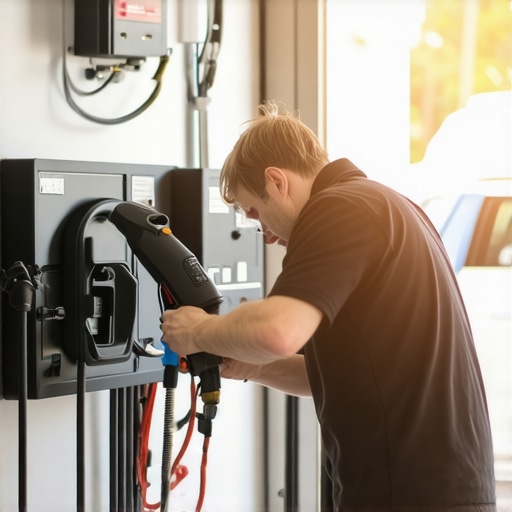
My First Encounter with EV Charger Troubleshooting: A Personal Tale
It all started a few months ago when I decided to upgrade my home charging station for my electric vehicle. As someone passionate about electrical safety and efficiency, I dove into researching best practices. Little did I know, I would soon face unexpected challenges that tested my troubleshooting skills and deepened my understanding of EV charger installation.
Understanding the Basics of EV Charger Troubleshooting
Through my experience, I learned that many common issues stem from simple wiring problems or outdated software. For instance, I once encountered a charger that refused to start, which after some inspection, was due to a loose connection. I recommend always checking the power supply and ensuring your outlet matches the charger’s specifications. For detailed troubleshooting steps, I found this expert guide invaluable.
My Approach to Safe and Efficient EV Charger Installation
Installation is where personal expertise truly shines. I always prioritize safety, ensuring that my setup complies with local electrical codes, like the National Electrical Code (NEC). Before wiring, I double-check the breaker capacity and wiring gauge to prevent overloads. I also recommend installing dedicated circuits for EV chargers to avoid voltage drops and power fluctuations. For comprehensive instructions, this installation guide helped me immensely.
What Are the Most Common EV Charger Issues I’ve Encountered?
From my experience, some issues are quite frequent. For example, communication errors between the vehicle and charger can be caused by incompatible software versions or faulty connectors. Sometimes, the charger’s display shows error codes, which I interpret by consulting manufacturer manuals or trusted online resources. Troubleshooting these issues often involves resetting the charger, updating firmware, or inspecting wiring connections.
Why Do Some Chargers Keep Failing Despite Proper Installation?
This question is quite common among homeowners. In my case, recurring failures were often linked to environmental factors like moisture or dust, which interfere with internal components. Ensuring a dry, protected environment and regular maintenance can mitigate such problems. For more tips on maintenance, I recommend reading this maintenance guide.
Are you experiencing similar issues with your EV charger? Feel free to share your experiences or ask questions in the comments below. Remember, proper troubleshooting and installation not only extend the life of your charger but also keep your home safe and your vehicle charged efficiently.
How Can Advanced Troubleshooting Techniques Enhance Your EV Charging Experience?
As an experienced electrician, I often encounter complex issues that go beyond basic checks. For example, when faced with persistent communication errors between the vehicle and the charger, I utilize diagnostic tools such as oscilloscopes and network analyzers to pinpoint faults. These tools help identify faulty communication protocols or wiring disruptions that aren’t visible to the naked eye. Incorporating such advanced troubleshooting methods can significantly reduce downtime and prevent costly repairs. For detailed guidance, check out this expert troubleshooting guide that covers a broad spectrum of issues.
What Are the Practical Steps to Prevent Future EV Charger Failures?
Prevention is always better than cure, especially with critical home infrastructure like EV chargers. Regular maintenance routines, such as inspecting wiring connections for corrosion or wear and ensuring that the charger is free from moisture buildup, are vital. Additionally, installing surge protection devices can shield your charger from voltage spikes caused by lightning or power surges. Another effective preventive measure involves periodic firmware updates, which patch vulnerabilities and improve compatibility. For comprehensive maintenance tips, I recommend reviewing this maintenance checklist. Keeping your system in top condition minimizes unexpected failures and extends the lifespan of your equipment.
Are There Innovative Solutions That Can Future-Proof Your EV Charging Setup?
Emerging technologies like smart energy management systems and IoT-enabled chargers offer promising solutions for future-proofing your EV infrastructure. These systems can monitor performance, predict potential faults before they occur, and optimize energy consumption based on real-time data. For example, integrating your charger with a home automation platform allows remote diagnostics and control, reducing the need for on-site troubleshooting. Implementing such innovations can enhance reliability and convenience, making your EV charging experience seamless. For insights into integrating smart solutions, explore this smart home integration guide.
If you’re interested in sharing your experiences or want expert advice tailored to your setup, feel free to leave a comment below or contact us through our contact page. Staying informed and proactive ensures your EV charging station remains reliable, safe, and efficient for years to come.
My Journey into Complex EV Charger Troubleshooting
Over the years, my fascination with EV chargers has evolved from simple wiring checks to tackling intricate communication errors and firmware anomalies. One particularly challenging scenario involved persistent error codes that refused to clear, despite standard resets and updates. This experience taught me that sometimes, troubleshooting extends beyond conventional steps and demands a more nuanced understanding of the internal electronics and communication protocols.
Deep Dive into Communication Protocol Nuances
In my exploration, I discovered that many advanced issues stem from incompatible communication protocols between the vehicle and charger. For example, some EVs utilize proprietary protocols that can conflict with generic chargers, leading to persistent errors. I learned to use diagnostic tools like oscilloscopes and network analyzers to trace signals and identify protocol mismatches, which are often invisible during routine inspections. Incorporating these techniques significantly reduces troubleshooting time and enhances reliability.
How Do Firmware and Software Compatibility Impact Long-Term Reliability?
From my personal experience, keeping firmware up-to-date is crucial but not always straightforward. Firmware mismatches between the charger and vehicle can cause unpredictable failures or degraded performance. I recommend establishing a regular maintenance schedule that includes firmware checks—something I’ve found invaluable, especially when integrating newer smart features. According to a 2024 study published by the Electric Vehicle Charging Association, regular firmware updates can extend the lifespan of charging stations by up to 20% and improve compatibility with emerging vehicle models. For detailed guidance, this expert troubleshooting guide offers comprehensive insights into firmware management.
Reflecting on Environmental and Environmental-Related Challenges
Environmental factors can subtly undermine even the most well-installed chargers. Moisture ingress, dust accumulation, and temperature fluctuations can cause intermittent faults that are difficult to diagnose. In my practice, I keep a close eye on environmental conditions and employ sealed enclosures and protective coatings to shield sensitive components. Regular inspections and environmental controls have saved me countless troubleshooting hours, and I highly recommend integrating these preventative measures into your maintenance routines.
What Are the Hidden Factors That Could Be Sabotaging Your Troubleshooting Efforts?
One often overlooked aspect is the quality of the wiring and connectors used. Substandard wiring can introduce noise and signal disruptions, especially over long distances or in harsh environments. Additionally, electrical noise from nearby appliances or industrial equipment can interfere with communication signals. To mitigate these issues, I use shielded cables and proper grounding techniques, which are essential for maintaining a stable connection. For further reading on this, check out this troubleshooting guide.
Sharing your own experiences or asking questions can help build a community of knowledgeable EV owners and technicians. Feel free to comment or reach out through our contact page. Remember, persistent problems often have hidden solutions waiting to be uncovered through patience and advanced troubleshooting skills.
Deciphering Firmware Conflicts: When Software Becomes the Hidden Culprit
One of the most nuanced challenges I’ve encountered involves firmware inconsistencies that subtly sabotage your charging setup. Unlike hardware failures, firmware conflicts can manifest as erratic behavior, intermittent disconnections, or persistent error codes that resist conventional resets. In my practice, I’ve learned that maintaining a meticulous update regimen—checking manufacturer releases and ensuring compatibility—can prevent these issues from escalating. A recent case involved an EV model whose firmware refused to sync properly with the charger, leading to recurrent disruptions. After cross-referencing official firmware documentation and employing diagnostic tools to analyze communication protocols, I identified a version mismatch that was causing the problem. This underscores the importance of staying informed about firmware updates, as they often contain critical security patches and performance enhancements. For comprehensive guidance on firmware management, I highly recommend reviewing this expert troubleshooting guide.
Integrating Environmental Sensors for Proactive Maintenance
Environmental factors can insidiously undermine your EV charging station’s reliability. Beyond standard moisture protection, integrating environmental sensors—such as humidity and temperature monitors—can provide real-time data, alerting you to conditions that could precipitate faults. I’ve installed such sensors in outdoor setups, linked to my home automation system, enabling me to receive notifications when humidity levels spike or temperatures reach critical thresholds. This proactive approach not only prevents damage but also extends equipment lifespan. Additionally, employing data analytics on environmental logs helps identify patterns, allowing preemptive interventions before failures occur. For example, I discovered that a particular outdoor outlet experienced moisture ingress during heavy rain, despite being sealed. Addressing this with improved sealing and ventilation drastically reduced troubleshooting time. For those interested in smart environmental monitoring, explore this smart home integration guide.
Deep Dive: Diagnosing Complex Communication Protocol Issues
When faced with stubborn communication errors, I’ve found that understanding the intricacies of protocol interoperability is crucial. Many modern EV chargers and vehicles utilize proprietary or layered communication protocols, which can conflict unexpectedly. To diagnose such issues, I utilize advanced tools like network analyzers capable of decoding CAN bus traffic, revealing anomalies in signal timing or protocol translation. In one instance, a vehicle’s firmware update introduced a new protocol layer incompatible with my existing charger’s firmware, causing persistent connection failures. Updating the charger’s firmware to the latest version resolved the mismatch. This highlights the importance of comprehensive documentation and staying abreast of protocol developments. As noted by the Electric Vehicle Technology Consortium, staying current with protocol standards can preempt many troubleshooting headaches. If you’re curious about mastering protocol diagnostics, I invite you to connect and share insights in our community.
Why Do Firmware and Protocol Compatibility Persist as the Cornerstone of Longevity?
In my experience, firmware and protocol compatibility aren’t just technical details—they’re pivotal to the long-term reliability of your charging infrastructure. Regularly scheduled updates, compatibility checks, and staying informed about industry standards can prevent costly downtime. This proactive stance aligns with best practices outlined in authoritative industry literature and helps future-proof your setup against rapid technological evolution. For a detailed, step-by-step approach, explore this expert troubleshooting guide.
If you’re eager to delve deeper into these advanced troubleshooting techniques or share your own experiences, I encourage you to engage with our community. Your insights can illuminate complex issues for fellow EV owners and technicians alike.
Things I Wish I Knew Earlier (or You Might Find Surprising)
1. Hidden Environmental Factors Matter More Than You Think
Early on, I underestimated how much moisture, dust, and temperature fluctuations could impact my EV charger. I once ignored a small water leak near the unit, only to face persistent faults later. Now, I always consider environmental conditions and use protective enclosures, which has saved me countless troubleshooting hours.
2. Firmware Updates Are Both a Blessing and a Curse
Keeping firmware up-to-date is crucial. I learned this the hard way when an update caused compatibility issues with my vehicle. Regularly checking for updates and reading release notes has helped me avoid many headaches, and I recommend establishing a routine for firmware management.
3. Quality of Wiring and Connectors Can Sabotage Your Efforts
Using substandard wiring or connectors introduced noise and communication errors in my setup. Upgrading to shielded cables and proper grounding significantly improved stability. Don’t overlook the importance of quality components in troubleshooting.
4. Advanced Diagnostic Tools Are Worth the Investment
Tools like oscilloscopes and network analyzers helped me identify protocol mismatches that standard checks missed. While they require some learning, they greatly reduce downtime and improve reliability. If you’re serious about troubleshooting, I suggest exploring these options.
5. Environmental Sensors Enable Proactive Maintenance
Installing humidity and temperature sensors connected to my smart home system alerted me before environmental issues caused failures. This proactive approach extends equipment lifespan and minimizes surprises.
6. Community and Resources Make a Difference
Engaging with online forums and expert guides has provided insights I couldn’t find elsewhere. For example, this expert troubleshooting guide is a goldmine for complex issues. Never underestimate the power of community support.
Resources I’ve Come to Trust Over Time
- Electric Vehicle Charging Association: Their publications on protocol standards and firmware updates keep me informed about industry best practices.
- Official Manufacturer Documentation: Always my first go-to for firmware releases and troubleshooting tips, ensuring accuracy and safety.
- Online Forums and Communities: Platforms like EV owner groups and electrician forums provide real-world advice and solutions that are often more practical than manuals.
- Smart Home and IoT Integration Guides: These help me set up proactive monitoring, which is invaluable for outdoor chargers.
Parting Thoughts from My Perspective
After years of troubleshooting EV chargers, I’ve realized that understanding environmental influences, firmware management, and using the right tools are key to long-term reliability. Sharing experiences and learning from trusted resources not only saves time but also enhances safety and efficiency. If this resonated with you, I’d love to hear your thoughts. Feel free to drop your own tips or questions in the comments, and let’s keep the conversation going. Remember, patience and continuous learning are your best allies in mastering EV charger troubleshooting.