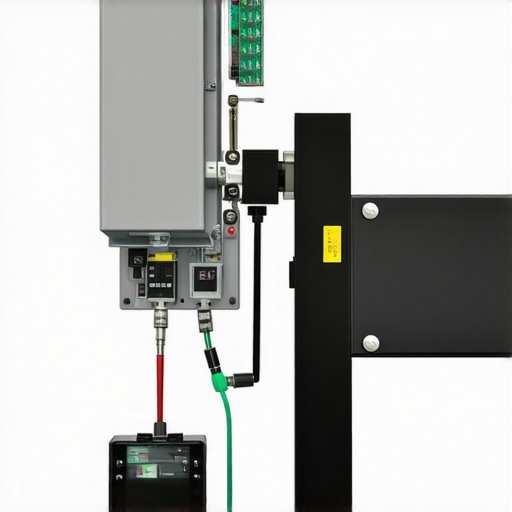
The Frustrating Click: Why Your Gate Is Dead in the Water
You press the remote, you wait for the familiar hum of the motor, and… nothing. Maybe there is a faint click, or maybe the gate shudders for an inch before giving up. As a forensic electrical inspector, I see this every week. Most homeowners think the motor is shot, but 90% of the time, the ghost in the machine is tucked away in the dirt or inside a poorly executed rough-in. It is the smell of burnt silicone and the sight of green copper corrosion that tells the real story. In 2026, as we move toward microgrid integration and smarter homes, the complexity of gate systems has tripled, yet the basic physics of electricity remains as unforgiving as ever.
I remember a ‘renovated’ estate where the owner complained the gate only worked when it hadn’t rained for three days. I grabbed my tick tracer and started sniffing the ground. The previous contractor—likely a ‘handyman’ with a shovel and a dream—had buried a live, un-sleeved splice right under the gravel driveway. No junction box, just some electrical tape and hope. When the soil got damp, the current leaked into the earth, creating a resistive path that stole the voltage needed to kick the motor over. I found it when my tracer started screaming three feet from the actual gate. That is the ‘Flipper Special’ in the wild: buried secrets that wait for the first storm to turn your driveway into a grounded circuit.
1. The Forensic Breakdown of Voltage Drop and Resistance
The biggest enemy of an electric gate is not the motor; it is the distance from the home run. When you are pulling power from an electrical panel upgrade 200 feet away, you are fighting Ohm’s Law every inch of the way. Component Zooming reveals the culprit: Voltage Drop. If you run 14-gauge Romex through a trenching electrical conduit for a high-torque motor, the resistance increases as the wire heats up. By the time the electrons reach the gate controller, the 120V has sagged to 105V. This causes the motor windings to overheat, the insulation to become brittle, and eventually, the whole system to fail. For 2026, we are seeing more systems requiring 60 amp panel upgrade specs to handle the cumulative load of home automation setup and perimeter security.
“Wiring for outdoor power equipment must be rated for wet locations and protected from physical damage by conduit or depth, as specified in the National Electrical Code (NEC) Article 300.5.” – NFPA 70: National Electrical Code
If your gate is sluggish, the first thing I check is the thermal imaging inspections of the terminal blocks. If I see a white-hot spot on the infrared, I know we have high resistance. Usually, it is a loose lug or a ‘nick’ in the copper. My old journeyman used to say that if you nick the copper while stripping it, you’ve just built a fuse that will blow in five years. He was right. That tiny notch creates a bottleneck for current, leading to localized heating that eventually melts the plastic housing. This is why lighting installations made easy isn’t just a slogan; it’s a warning that shortcuts lead to fires.
2. Trenching Troubles: The Anatomy of Conduit Failure
When we talk about trenching electrical conduit, we aren’t just digging a hole. We are creating a protective envelope for the lifeblood of your gate. I’ve seen PVC conduits crushed by tree roots because they weren’t buried at the proper depth. In 2026, we are also integrating ethernet wiring services into these same trenches for gate cameras. If you don’t use shielded cable or separate the high-voltage power from the low-voltage data, the electromagnetic interference (EMI) will turn your 4K camera feed into a snowy mess. This is where how electricians tackle troubleshooting for lighting installations comes into play—it’s all about isolation and protection.
Moisture is the other silent killer. I always use Monkey Shit (duct seal) at the ends of the conduit where they enter the gate operator box. Without it, the conduit acts like a straw, sucking humid air from the ground directly into the sensitive electronics. This leads to condensation on the circuit board, which causes ‘trace jumping.’ You’ll see tiny black carbon tracks on the board where the electricity literally jumped the gap between components. If you’ve ever smelled that ‘fishy’ scent near your gate, that’s the smell of a phenolic board burning. It’s a sign that your pathway lighting install or gate power is arcing.
3. Grounding, Bonding, and the ‘Widow Maker’
Gate openers are giant metal antennas sitting in the middle of a field. Without proper spa grounding services (which use similar equipotential bonding principles), a nearby lightning strike doesn’t even have to hit the gate to fry the logic board. It just needs to induce a massive surge in the ground. I’ve seen gates where the grounding rod was just a piece of rebar driven six inches into the dirt. That is a ‘Widow Maker’ setup. In 2026, we are seeing more integration with home microgrid integration, meaning your gate might be powered by a local battery backup or solar array. This makes proper grounding even more critical to prevent back-feeding issues during a grid failure.
“Unprotected electrical equipment in outdoor environments accounts for a significant percentage of residential fires and electrocution hazards annually.” – CPSC Safety Alert
To ensure a safe and efficient ev charging station setup at home, you need a solid ground; the same applies to your gate. If the gate isn’t bonded correctly, a fault in the motor could energize the entire metal frame. Imagine touching your gate and becoming the path to ground. That is why we use a Wiggy (solenoid voltmeter) to test for stray voltage. If that tester vibrates in my hand, I know the ‘ground’ is actually ‘hot,’ and we have a life-threatening situation on our hands.
4. Modern Integration: From Home Automation to Deck Lighting
Finally, we have to look at how the gate fits into the larger ecosystem. Modern home automation setup allows you to control your gate from your phone, but this adds another layer of wiring complexity. We are now installing deck lighting services and pathway lighting install that sync with the gate opening. If your electrical panel upgrade didn’t account for these extra ‘small’ loads, you’ll find that turning on the patio lights drops the voltage just enough to prevent the gate from opening. It is all connected. Just like top ev charger maintenance tips for optimal performance, your gate needs periodic inspections of the contactors and limit switches.
When I perform thermal imaging inspections, I’m looking for the ‘ghosts’—the invisible heat that precedes a failure. If your gate controller is running 20 degrees hotter than the ambient air while at rest, you have a transformer or a capacitor that is about to give up the ghost. Catching this early is the difference between a $50 part and a $2,000 motor replacement. Don’t wait until you’re stuck behind your own fence in a rainstorm. If you have questions about your setup, contact us to get a real pro out there with a Wiggy and some common sense. Electricity isn’t a hobby, and it doesn’t give second chances.