The Hum of an Overloaded Future
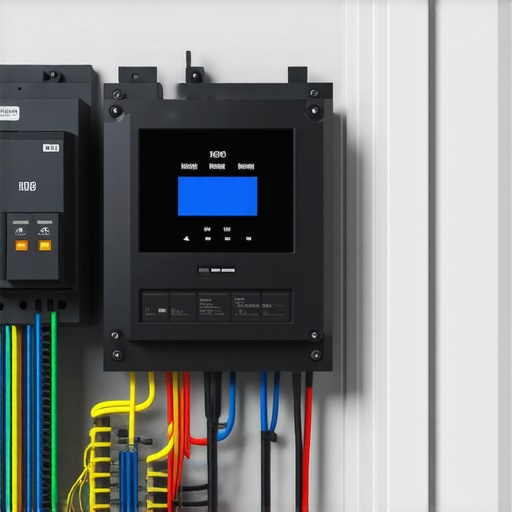
I’ve spent thirty-five years tracing the scent of scorched ozone back to its source, and more often than not, it leads me to a 100-amp panel screaming for mercy. You might think your home is ‘modern’ because you’ve got a fancy smart fridge and some voice-controlled blinds, but if you’re running that 2026 tech on a 1970s electrical backbone, you’re not living in a smart home; you’re living in a tinderbox. I walked into a ‘fully renovated’ kitchen last month where the flipper had buried live junction boxes behind a designer marble backsplash. I found them with my tracer only after the homeowner complained that their smart lighting installation kept flickering. That’s the ‘Flipper Special’—making things look pretty while the infrastructure rots. When we’re talking about a 100-amp service in the era of EV chargers and high-efficiency heat pumps, we aren’t just talking about convenience. We are talking about the physics of thermal runaway and the limits of copper.
The Anatomy of the 100-Amp Bottleneck
In the mid-century era—the 1960s through the late 70s—a 100-amp panel was the gold standard. Back then, your biggest loads were a clothes dryer and maybe a single-stage air conditioner. Today, we are asking those same bus bars to handle a camper electrical panel out back, a Level 2 charger in the garage, and a suite of high-draw appliances. The problem isn’t just the total amperage; it’s the continuous load.
“Aluminum wire connections can overheat and cause a fire without tripping the circuit breaker.” – CPSC Safety Alert 516
During a rough-in, I see the bones of these systems. In mid-century homes, we often run into aluminum branch wiring. This stuff is notorious for ‘Cold Creep.’ Because aluminum expands and contracts at a different rate than the brass or steel screws in your outlets, the connections literally crawl out of their terminals over time. This creates a high-resistance gap. Resistance creates heat. Heat creates fire. If you’re planning a recessed lighting installation in an older home, you can’t just daisy-chain off an existing circuit and hope for the best. You need to verify the integrity of every home run back to that panel.
The Physics of Arcing and Resistance
When you pull 80 amps through a 100-amp main breaker for six hours straight—say, while charging your car and running the oven—the bi-metallic strip inside that breaker starts to fatigue. It’s a mechanical device, and like any mechanical device, it has a lifespan. I’ve pulled out old Federal Pacific and Zinsco breakers where the plastic housing had charred into a brittle husk because the internal contact points had pitted so badly they were essentially welding themselves shut. That is a widow maker scenario. If that breaker fails to trip during a fault, the wire becomes the fuse. It glows cherry red inside your walls, igniting the dust and spiderwebs that have been sitting there since 1974. This is why NEC code updates are so aggressive regarding AFCI (Arc-Fault Circuit Interrupter) protection. These breakers use digital signal processing to detect the specific ‘signature’ of an arc—that chaotic jumping of electrons across a gap—and shut it down before the wood reaches its ignition temperature. It’s also why I always reach for my Wiggy or a high-quality multimeter before I touch anything; you never trust a circuit is dead just because a label says so.
Smart Homes and the Digital Load
A 2026 smart home isn’t just about high-voltage power; it’s about data integrity. When we perform a network cable installation, we have to consider the EMI (Electromagnetic Interference) generated by those heavy power lines. If your 100-amp service is struggling, the ‘noise’ generated by the strained transformers and motors in your home can wreck your data speeds. Moreover, a smart meter installation is now the standard for utilities. These meters are snitches—they record your peak demand. If you are constantly redlining a 100-amp service, the utility knows, and your equipment is taking the hit. For anyone looking into ensuring safe and efficient EV charging station setup at home, the math usually dictates a 200-amp upgrade. A single Level 2 charger can pull 48 amps. That’s nearly half your house’s total capacity on one wire. Add a water heater and a toaster, and you’re dancing on the edge of a total blackout.
Why “Bonded and Insured” Isn’t Just a Slogan
I’ve seen ‘handymen’ use dikes to snip off the ground wire because it wouldn’t fit in an old box, or use monkey shit (duct seal) to hide a gap in a rotting meter can. This is why you hire a bonded insured electrical professional. We don’t just ‘make it work’; we make it safe. When we do a panel changeout, we aren’t just swapping boxes. We are establishing a high-quality grounding electrode system. We are ensuring the neutral is bonded correctly so that if a short occurs, the current has a low-impedance path back to the source, tripping the breaker instantly. If you find yourself needing after hours electrical repair because your lights are dimming when the fridge kicks on, that’s not a ‘quirk’ of an old house. That’s a symptom of a failing neutral or an overloaded bus bar. You can find more about how we handle these issues in our guide on how electricians tackle troubleshooting for lighting installations.
The Verdict for 2026
Is 100 amps enough? For a small condo with gas appliances? Maybe. For a modern, tech-integrated home with an EV, smart lighting, and a fire alarm system install that meets modern life-safety codes? Absolutely not. You’re asking a mule to pull a freight train. Upgrading to a 200-amp service gives you the ‘headroom’ to run your home without worrying about the thermal stress on your conductors. It allows for a proper trim-out where every circuit is balanced across the phases, preventing one leg of your power from being cooked while the other sits idle.
“The total load shall not exceed the rating of the service-entrance conductors.” – NEC 220.40
When I go in for a smart lighting installation, I’m looking at the panel first, not the fixtures. If that panel is a rust-bucket or a fire-hazard brand, the smartest light in the world won’t save you from a structural fire. If you’re struggling with charging issues, check out these EV charger troubleshooting tips, but remember: no amount of software can fix an undersized wire. Electricity isn’t a hobby, and your home isn’t a laboratory for ‘good enough’ wiring. Torque those lugs to spec, use the right gauge of Romex, and for heaven’s sake, stop burying junction boxes.