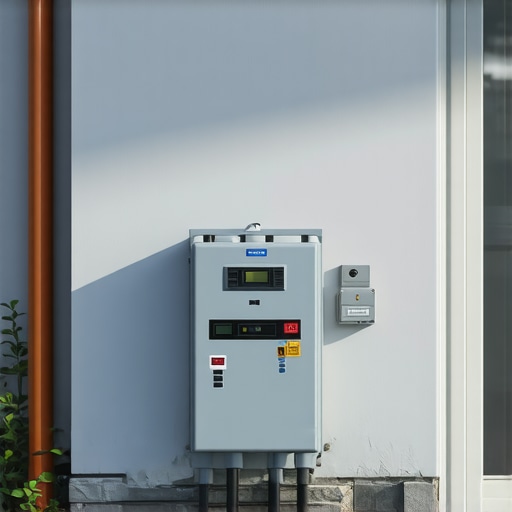
The Sound of a Dying Grid
Listen closely to your electrical panel when the AC kicks on at the same time the EV starts its high-speed draw. That subtle, low-frequency hum isn’t the sound of ‘power’; it’s the sound of resistance. As we head toward 2026, the average American home is no longer just a dwelling; it’s a high-consumption node on an aging grid. Most of you are trying to run a 21st-century life through a 20th-century straw. If you’re smelling something like burnt plastic or fish near your utility closet, or if your lights do a little dip every time the refrigerator compressor engages, you’re already flirting with a localized meltdown.
My journeyman used to smack my hand if I stripped a wire with a knife. ‘You nick the copper, you create a hot spot,’ he’d scream. He was right. That tiny nick reduces the cross-sectional area of the conductor, forcing the same amount of electrons through a smaller space. That creates heat. Now, scale that logic up to your entire house. When you overload a 200-amp service with dual EV chargers, an induction range, and a sprawling 400-square-foot suite of architectural lighting, you aren’t just ‘using’ electricity. You are stressing every lug, every bus bar, and every wire nut in the system to its breaking point.
The Load Calculation: Why 200 Amps is the New 60
In the 1950s, a 60-amp fuse box was plenty. By the 80s, 100 amps was the standard. Today, most builders slap in a 200-amp panel and call it a day. But for a 2026 home, that’s becoming the bare minimum. Why? Because the ‘electrification of everything’ isn’t just a buzzword; it’s a physical reality that hits your 400 amp service entrance. Between heat pumps, electric water heaters, and high-performance computing setups, the math simply doesn’t add up anymore for smaller services. If you’re planning on deck lighting services that involve high-lumen output or integrated heating elements for year-round outdoor use, you’re pushing the envelope.
“Aluminum wire connections can overheat and cause a fire without tripping the circuit breaker.” – CPSC Safety Alert 516
This warning from the CPSC is particularly relevant for those in mid-century homes built between 1960 and 1980. Many of these structures utilize aluminum branch circuit wiring or, more commonly, aluminum service entrance cables. Aluminum is a tricky beast. Due to its coefficient of thermal expansion, it expands and contracts significantly more than copper when it carries current. This is called ‘Cold Creep.’ Over time, the wire literally crawls out from under the terminal screws of your meter base replacement or main breaker. The result? A loose connection. A loose connection creates resistance. Resistance creates heat. Heat creates fire. This is why a main disconnect services upgrade is often the first thing I look at when a homeowner complains of flickering under load.
The Forensic Breakdown: The Anatomy of a Heavy-Up
When we talk about upgrading to a 400-amp service, we aren’t just swapping a box on the wall. We’re talking about a full ‘Heavy-Up.’ This involves a total meter base replacement to a Class 320 meter socket, which is rated for 320 amps continuous and 400 amps maximum. We have to look at the service mast—that pipe sticking out of your roof. Is it 2-inch or 2.5-inch? Is the guy wire anchored properly to resist the tension of the utility drop? If we’re pulling new 400kcmil aluminum conductors, that’s a lot of weight and a lot of potential torque on your structure.
I’ve seen ‘handymen’ try to bypass permit pulling services to save a buck. They’ll try to ‘parallel’ two 200-amp panels off a single-rated 200-amp meter. That’s a death trap. Without proper load side tap rules being followed, you’re asking for a catastrophic failure. A legitimate 400-amp install requires rigorous electrical inspections and a deep understanding of the NEC. We aren’t just making it work; we’re making it safe. For those looking at ensuring safe and efficient EV charging station setup at home, the 400-amp upgrade provides the headroom necessary so you aren’t tripping the main breaker while your car is charging and your dryer is running.
Predictive Maintenance: Drone Thermography and Beyond
One of the biggest shifts in the industry is how we find problems before they find us. I don’t just rely on my Wiggy or a Tick Tracer anymore. We are now using drone thermography scans for high-end residential estates. By flying a thermal camera over the service drop and the roofline, we can see heat signatures that the human eye—and even most handheld tools—miss. A hot spot on a weather head or a transformer tap is a clear indicator of an impending outage. This level of diagnostics is why I always recommend annual maintenance contracts for large-scale homes. It’s better to find a glowing lug during a scheduled scan than to find it when the fire department is on your lawn.
“The authority having jurisdiction shall have the responsibility for making interpretations of the rules, for deciding on the approval of equipment and materials, and for granting the special permission contemplated in a number of the rules.” – National Electrical Code (NEC) Article 90.4
This is why permit pulling services are non-negotiable. The Inspector isn’t your enemy; they are the second set of eyes that ensures the Master Electrician didn’t have a bad day. In my 35 years, I’ve seen ‘professionals’ forget to torque a lug to the manufacturer’s spec. If you don’t use a torque wrench, you’re guessing. And in the world of 400-amp service, guessing is how you get people killed.
The Hidden Vulnerabilities of Mid-Century Infrastructure
If your home was built when disco was king, you likely have a Federal Pacific or Zinsco panel. These are ‘The Time Bombs.’ The internal bus bars in these panels are notorious for corrosion and for breakers that ‘jam’—meaning they stay in the ‘on’ position even when a massive short circuit occurs. When you add modern loads like high-demand architectural lighting or a tankless water heater, these old bus bars can’t dissipate the heat. They warp, the contact tension fails, and you get a ‘Widow Maker’ scenario where the exterior of the panel might be energized without you knowing it.
When we perform electrical inspections on these properties, we often find what I call ‘Monkey Shit’ (duct seal) used to hide gaps in the conduit where water has been seeping into the panel for a decade. This moisture leads to galvanic reaction between the copper breaker clips and the aluminum bus bars. If you haven’t had a pro look at your system in the last five years, you’re overdue. A priority service membership can often be the difference between getting a repair on a Tuesday morning or waiting three days in the dark after a transformer pop.
The Path Forward: Upgrading for the 2026 Reality
So, do you need it? If you have more than 3,500 square feet, two electric vehicles, an electric heat pump, and a desire for high-end lighting installations, the answer is a resounding yes. You don’t want to live at 80% of your system’s capacity. That’s where components fatigue and insulation becomes brittle. You want a system that breathes. You want the peace of mind that comes from knowing your main disconnect services are robust enough to handle the surge of a modern life.
Don’t let a ‘handyman’ with a pair of dikes and some Romex tell you that you can just ‘add a sub-panel.’ That’s like putting a bigger gas tank on a car with a lawnmower engine. You need the raw horsepower of a 400-amp service entrance. If you’re seeing signs of trouble, or if you’re planning a major renovation, it’s time to contact us for a real load calculation. Electricity isn’t a hobby, and your home isn’t a laboratory for ‘creative’ wiring. Get it torqued, get it inspected, and sleep at night knowing your house isn’t trying to burn itself down from the inside out. “