The Scent of Impending Disaster
If you walk into your shop in 2026 and the air smells like a combination of ozone and regret, you’re already behind the 8-ball. Most shop owners treat their electrical system like a toaster—plug it in and hope for the best. But when you’re dealing with three-phase power, ‘hoping’ is just another word for waiting for the fire department. As a licensed master electrician who’s spent decades chasing ‘ghosts’ in industrial panels, I can tell you that electricity doesn’t just fail; it stages a slow, agonizing protest before it finally gives up the ghost. Whether you’re running a restaurant kitchen electrical setup or a precision CNC shop, the physics remain the same: resistance creates heat, and heat creates work for guys like me—and usually at 2:00 AM on a Sunday.
I recently walked into a ‘fully renovated’ restaurant kitchen where a flipper had tried to save a few bucks by burying live junction boxes behind a new subway tile backsplash. They didn’t think anyone would notice the flickering on the walk-in cooler circuit. I pulled out my tracer and found four hidden splices, all of them charred to a crisp because they weren’t properly torqued. It was a ticking time bomb, masked by pretty tiles. That’s the reality of modern electrical work; the danger is rarely on the surface. It’s buried in the walls, under the slab, or deep inside a panel that hasn’t been serviced since the Bush administration.
1. The Harmonic Hum: When Your Panel Sings
A healthy three-phase panel has a very specific, low-frequency vibration. It’s a hum, not a buzz. When you start hearing a high-pitched ‘singing’ or a rhythmic thrumming, you’re likely dealing with harmonic distortion. In 2026, we’re seeing this more than ever due to the sheer volume of Variable Frequency Drives (VFDs) and LED drivers. These devices are ‘non-linear loads.’ They don’t pull current in a smooth sine wave; they chop it up. This creates ‘triplen harmonics’ that build up on the neutral wire. In a perfectly balanced three-phase system, the neutral should carry zero current. But with harmonics, that neutral can actually get hotter than the hot legs. I’ve seen neutrals in shed wiring install projects literally melt out of the lug because the DIYer didn’t account for the load of modern shop equipment.
“Aluminum wire connections can overheat and cause a fire without tripping the circuit breaker.” – CPSC Safety Alert 516
If you’re noticing that your bollard light installation or your PA system installation is causing interference with your machinery, you’re looking at a noisy system. This isn’t just an annoyance; it’s a sign that your transformers are overworking. Excessive heat in the transformer core leads to insulation breakdown, and that’s when you get a ‘phase-to-ground’ fault that can blow the doors off your main switchgear. Using a Wiggy (a solenoid voltmeter) instead of a digital multimeter can sometimes help identify these phantom voltages that confuse cheaper testers.
2. The Ghost in the Machine: Nuisance Tripping
If your GFCI outlet installation keeps tripping for no apparent reason, don’t just swap the outlet. That’s the classic rookie mistake. A GFCI is a balance scale. It measures the current going out on the hot and coming back on the neutral. If there’s a difference of more than 5 milliamperes, it trips. In a commercial shop or a restaurant kitchen electrical environment, grease and moisture can create ‘tracking’ across insulators. This is why flood water electrical safety is so critical; even after the water is gone, the conductive silt remains. This silt creates a microscopic path for electricity to leak to ground.
For those managing dock electrical services, this is a daily battle. Salt air is a conductor. It bridges the gap between the brass screw and the metal box, creating a high-resistance ground fault. When I’m doing a rough-in near the coast, I use ‘monkey shit’ (duct seal) to plug the conduits and prevent that salt-laden air from migrating into the panels. If you don’t, the salt will cause ‘crevice corrosion’ on your breakers, jamming the internal trip mechanism. A jammed breaker is a ‘widow maker’—it won’t trip even if the wire is glowing cherry red.
3. The Physics of Cold Creep and Loose Lugs
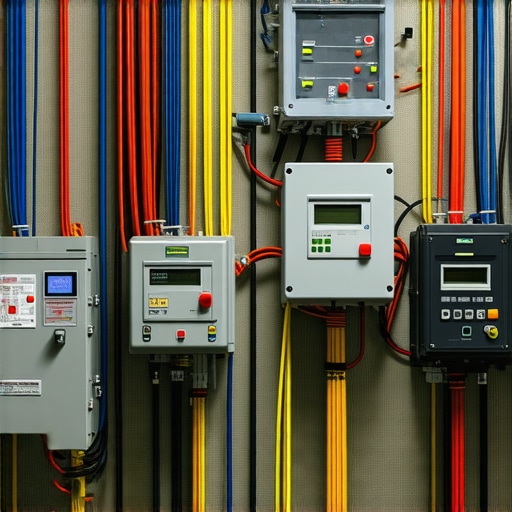
Every time you turn on a heavy motor, the wire heats up and expands. When you turn it off, it cools and contracts. This is called thermal cycling. Over time, this movement actually pushes the wire out from under the lug screw. This is especially true with aluminum conductors, a phenomenon known as ‘cold creep.’ As the connection loosens, the surface area contact decreases. This increases resistance, which increases heat, which causes more expansion. It’s a death spiral. I’ve seen lugs that were so loose they were literally arcing inside the lug, creating a layer of non-conductive oxidation. [image_placeholder_1] By the time you see the lights flicker, the bus bar is already pitted and ruined. This is why a licensed master electrician doesn’t just ‘tighten’ screws; we use a calibrated torque wrench. Every lug has a specific inch-pound rating stamped on the side of the breaker or the panel. If you don’t hit that number, you’re just guessing with people’s lives.
“Safety-related work practices shall be used to safeguard employees from injury while they are working on or near exposed electrical conductors or circuit parts that are or can become energized.” – NFPA 70E
When you’re dealing with high-draw items like patio cover outlets for heaters or heavy industrial tools, that torque is the only thing standing between a productive day and a structural fire. If you’re unsure about your current setup, you might want to look into how electricians tackle troubleshooting for lighting installations to see the level of detail required for even ‘simple’ circuits.
4. Phase Imbalance: The Silent Motor Killer
Three-phase power is designed to be balanced. Phase A, B, and C should all carry roughly the same amperage. If one phase is overloaded—say, you’ve put all your single-phase shed wiring install loads on Phase A—the voltage on that phase will drop. Motors hate this. A 5% voltage imbalance can cause a 50% increase in temperature in a three-phase motor. You’re literally cooking your expensive equipment from the inside out. I always tell clients that if they are adding new circuits, like for EV charger maintenance or additional shop tools, they need to do a full load calculation first. You can’t just ‘tap’ into the nearest circuit and hope for the best. You need to balance the home run cables across the bus bars to ensure the transformer isn’t straining. For more on high-load installs, check out ensuring safe and efficient EV charging station setup at home.
5. The Visual Warning: Discoloration and ‘Skin Effect’
Take a look at your main breaker. Is the plastic around the lugs slightly discolored? Does it look ‘toasted’? That’s not just age; that’s heat damage. In high-frequency or high-amperage systems, we also deal with the ‘skin effect,’ where electricity tends to flow on the outer surface of the conductor rather than through the center. This effectively reduces the wire’s gauge, leading to even more heat. If you see ‘rainbowing’ on the copper bus bars, that’s a sign that the metal has reached temperatures high enough to change its molecular structure. At that point, the metal becomes brittle and its conductivity drops. It’s time for a trim-out or a full panel replacement. If your shop lighting is failing, don’t ignore it; it could be a symptom of a larger issue. You can read more about lighting installations made easy to understand the basics before calling in the pros.
The Bottom Line: Don’t Be the ‘Handyman’
Electricity is a lazy, invisible force that is constantly looking for a way to get back to the earth, and it doesn’t care if it has to go through your heart or your shop’s foundation to do it. Using a tick tracer (non-contact voltage detector) is fine for a quick check, but it won’t tell you if your neutral is floating or if your ground is ‘bootlegged.’ If you suspect your 2026 shop is overloading, stop adding loads. Don’t add that extra PA system installation or bollard light installation until you’ve had a pro check the load balance. It’s much cheaper to pay for a few hours of an electrician’s time than to pay a deductible on a fire insurance claim. If you have questions or need a forensic inspection of your system, feel free to contact us today. We’ll bring the dikes and the Wiggy; you just bring the coffee.