The Ghost in the Walls: Why Your Old Wiring is a Liability
The air in a 1950s attic doesn’t just smell like dust and rodent droppings; it smells like a century of thermal degradation. When I walk into a house that hasn’t seen a licensed sparky since the Nixon administration, I don’t see a charming fixer-upper. I see a series of thermal events waiting for an invitation. Most homeowners think electricity is like water in a pipe, but it’s more like a pressurized gas that’s constantly trying to escape. If your wiring is outdated, those escape attempts manifest as arcing, heat, and eventually, a structural fire that the fire department won’t be able to stop.
My journeyman used to smack my hand if I stripped a 14-gauge Romex wire with a standard pocket knife. ‘You nick that copper, you’re building a fuse that never blows,’ he’d growl, his voice like gravel in a blender. He was right. That tiny notch in the conductor reduces the cross-sectional area, creating a localized point of high resistance. In the trade, we call that a ‘hot spot.’ Under a heavy load—like when you’re running a modern HVAC system and a microwave simultaneously—that nicked wire starts to glow. It doesn’t trip the breaker because the current hasn’t exceeded the limit; it just converts your wall cavity into a toaster oven. This is the reality of DIY electrical work and why the 2026 National Electrical Code (NEC) is tightening the screws on residential and commercial infrastructure.
“Aluminum wire connections can overheat and cause a fire without tripping the circuit breaker.” – CPSC Safety Alert 516
1. Mandatory Whole-House Surge Protection for Renovations
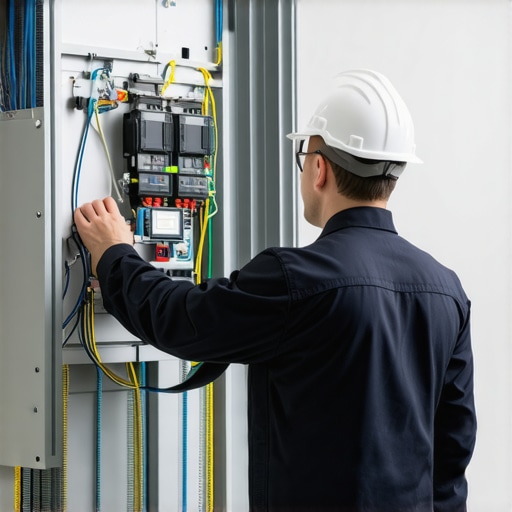
The 2026 NEC is expected to expand the requirement for Type 1 or Type 2 surge protective devices (SPDs). In the past, this was mostly for new construction. Now, if you’re doing a significant electrical panel upgrade or even a major retail store wiring overhaul, the code is going to demand internal surge protection. Why? Because modern houses are essentially giant computers. From your smart lighting installation to your high-end refrigerator, everything has a microprocessor. A single transient voltage spike—caused by a utility switch or a nearby lightning strike—can fry the logic boards across your entire home. [IMAGE_PLACEHOLDER_1]
We aren’t talking about those cheap power strips you buy at the big-box store. Those are fire hazards in disguise. We’re talking about a hard-wired SPD at the service entrance. This device acts as a sacrificial lamb, shunting excess voltage to the ground before it reaches your sensitive electronics. If you’re planning a chandelier installation with expensive LED drivers, or setting up smart home wiring, this isn’t just a code requirement; it’s an insurance policy. Without it, you’re playing Russian Roulette with your hardware. When we perform lighting installations made easy, we always check the surge status of the main bus bar because an unprotected LED driver is a dead LED driver.
2. The 400 Amp Service Entrance: The New Standard for the EV Era
The second major shift in the 2026 cycle involves load calculations and the move toward the 400 amp service entrance as a standard for larger residential properties. Ten years ago, a 200-amp service was the gold standard. But today, between two electric vehicles in the garage, an electric heat pump, and an electric gate opener that pulls a heavy inductive load every time you come home, 200 amps is the bare minimum. We are seeing ‘service fatigue’ where the main breaker is constantly operating at 80% of its rated capacity. This creates heat soak, which weakens the internal spring tension of the breaker over time.
When you’re ensuring safe and efficient EV charging station setup at home, you have to look at the ‘Diversified Load.’ The 2026 code is pushing for more robust ‘heavy-ups.’ This involves thicker lateral lines from the utility transformer and double-barreled lug sets in your meter can. If you’ve ever heard a humming sound coming from your panel, that’s the sound of 60Hz magnetic fields vibrating loose components because the system is over-leveraged. A 400-amp upgrade isn’t just about ‘more power’; it’s about lower impedance and cooler operating temperatures across your entire distribution network.
3. Augmented Reality Troubleshooting and ‘Visible’ Code Compliance
One of the most radical changes isn’t a physical wire requirement, but a diagnostic one. The 2026 NEC is beginning to recognize augmented reality troubleshooting (AR) as a valid method for complex commercial inspections. In a retail store wiring environment, where cables are buried 30 feet up in a dark plenum ceiling, AR allows inspectors to see ‘digital twins’ of the electrical layout. This ensures that every home run is accounted for and that the rough-in was done according to the blueprint.
For the residential side, this means your electrician might use AR to map out your ceiling fan installation or smart meter installation. By using thermal imaging overlays, we can see heat signatures through the drywall. This is forensic electrical work at its finest. If I see a 15-degree temperature differential at a junction box behind your kitchen backsplash, I know there’s a loose neutral or a ‘bootleg ground’ before I even pull my dikes out of my pouch. This technology is becoming a requirement for verifying ‘Safe State’ conditions in high-density smart homes. If you’re having issues, EV charger troubleshooting often relies on these high-tech diagnostic tools to find high-resistance connections in the charging cable itself.
4. Mandatory AFCI Protection for ‘Legacy’ Circuits
Arc-Fault Circuit Interrupters (AFCIs) have been around, but the 2026 code is closing the loopholes. In older homes with mid-century wiring, we often find ‘monkey shit’ (duct seal) used to plug holes where air leaks into panels, but that doesn’t stop the physics of ‘Cold Creep.’ Aluminum wiring, common in the 60s and 70s, expands and contracts at a different rate than the brass screws on a standard outlet. This creates a gap. That gap allows a plasma arc to jump. These arcs can reach 10,000 degrees Fahrenheit, which is more than enough to ignite the timber studs in your walls.
“AFCIs are necessary because standard breakers only protect against overloads and short circuits, not the low-level arcing that causes the majority of home electrical fires.” – NFPA 70 Electrical Safety Standard
The new code requirements will likely mandate AFCI protection for any circuit that is extended or modified by more than 6 feet. This means if you’re moving an outlet for a new smart lighting installation, you have to upgrade that entire circuit to AFCI. It’s a bitter pill for some homeowners to swallow because AFCIs are notorious for ‘nuisance tripping’ on old, leaky circuits. But as a forensic inspector, I’d rather have a breaker trip ten times for no reason than fail to trip once when your ceiling fan installation develops a carbonized path in the motor windings. If you’re having trouble with trip-outs, check out our guide on how electricians tackle troubleshooting for lighting installations.
The Cost of Ignorance: Why Your Insurance Company Cares
We are entering an era where insurance companies are using ‘Tick Tracers’ and ‘Wiggys’ (solenoid voltage testers) of their own—or at least, they are hiring guys like me to do it for them. If your home still has a Federal Pacific or Zinsco panel, you are likely already uninsurable. These panels are ‘The Time Bomb’ of the electrical world. The breakers are known to jam, meaning they stay ‘on’ even when the wire is melting. In a 2026-compliant world, the electrical panel upgrade is the first thing an inspector looks for. They want to see those AFCI/GFCI dual-function breakers and a properly bonded 400 amp service entrance.
Electricity is the only utility that can kill you and burn your house down simultaneously without any warning. You won’t smell the gas leak; you’ll smell the ozone and the acrid stench of burning PVC insulation. By the time you see the smoke, the ‘thermal runaway’ is already in progress. Keeping your home up to code isn’t about satisfying a bureaucrat; it’s about ensuring the physical integrity of your copper and aluminum conductors. Whether it’s maintaining your EV charger maintenance or ensuring your smart meter installation is grounded with a copper-clad rod driven 8 feet into the earth, the goal is the same: safety. If you have questions about your system, don’t hesitate to contact us before the sparks start flying.