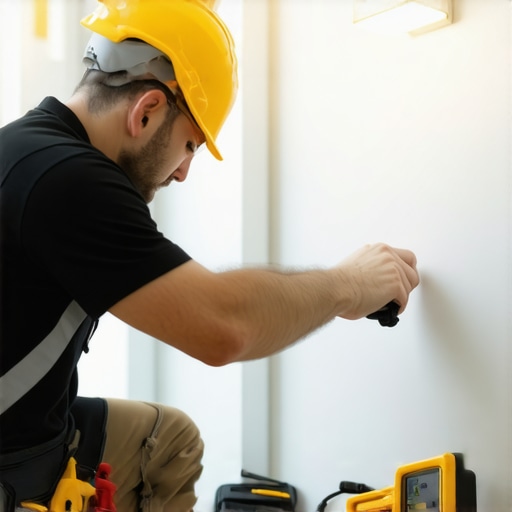
Have you ever flipped a switch and felt that tiny jolt of doubt—wondering if this time, it’s going to be your alarm moment? I know I have. One evening, attempting to troubleshoot my kitchen’s flickering lights, I unknowingly juggled wires without turning off the power first. That shock was a stark reminder of how easily a simple task can turn risky, especially when we overlook critical safety precautions.
Why Electrical Safety Can’t Be Taken Lightly in Your Home
Ensuring your home’s lighting and EV charging stations are installed correctly isn’t just about convenience—it’s a matter of safety. The electrical system in your house is the nervous system that keeps everything running smoothly. When misused or mishandled, it can lead to dangerous situations like short circuits, fires, or worse. A survey from the National Fire Protection Association indicates that electrical failures or malfunctions are responsible for approximately 45,000 home fires annually, causing injuries and property loss. That’s a staggering number that underscores how vital proper troubleshooting and installation are.
But here’s the thing: many folks, even those who consider themselves handy, make crucial mistakes. For example, early in my own journey, I attempted to install a new light fixture without turning off the circuit breaker. I thought I was being careful, but one slip and I nearly zapped myself. That mistake is far too common, and it’s one that electric professionals learn to avoid early on. Learning these lessons the hard way compelled me to get better at recognizing potential hazards and respecting the power flowing through my home.
Today, I’ll walk you through practical tips rooted in real-world experience—steps that will help you troubleshoot safely and prevent accidents before they happen. Whether you’re installing new lighting fixtures or tackling the complexities of EV charger setup, knowing what to watch out for is crucial. If you’ve ever experienced a sudden electrical issue or felt unsure about a wiring job, you’re not alone. My goal is to share insights that make your electrical projects safer and more successful.
Let’s start with the fundamentals that every homeowner should know before touching a single wire. Ready to become your home’s electrical safety champion? Let’s dive into how you can avoid common pitfalls and ensure every part of your electrical system is reliable and secure.
Turn Off Power First and Verify
Before touching any wires, switch off the main breaker or dedicated circuit breaker for the area you’re working on. Use a non-contact voltage tester to confirm the power is indeed off—think of it as a security guard checking IDs before entry. I learned this the hard way when I skipped this step and accidentally received a small shock while replacing a light switch. That initial jolt reminded me why safety always comes first.
Plan Your Wiring Path and Gather Tools
Visualize the wiring route as a blueprint—know where each wire should go and gather all necessary tools beforehand: wire strippers, screwdrivers, electrical tape, and a flashlight. During my first lighting install, I failed to prepare adequately; I scrambled for tools mid-project, leading to mistakes. Proper planning streamlines the process and prevents unnecessary risks.
Identify and Label Circuit Wires
Use a circuit tester to identify wires—hot, neutral, and ground—and label them with tape. Think of this step as tagging different supplies in a warehouse for easy access later. During an EV charger troubleshooting session, tagging wires helped me quickly pinpoint a miswired connection that was causing charging issues. Proper identification simplifies troubleshooting and reduces errors.
Secure and Connect Wires Correctly
Make connections firmly using the appropriate wire connectors and screw terminals. Avoid over-tightening, which can damage wires—like tightening a bolt too much, risking breakage. I once tried to save time by loosening connections, but loose wires caused intermittent faults that took hours to diagnose. Secure connections are the backbone of safe installations.
Test Continuity and Proper Voltage
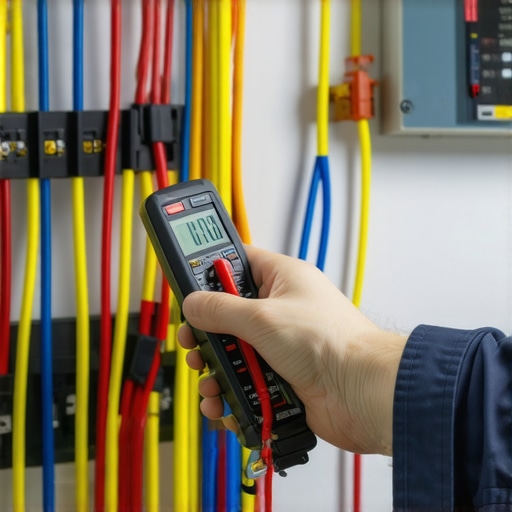
Use a multimeter to test continuity and voltage, ensuring wiring is correct before restoring power. This acts like a final safety checkpoint—think of it as the pre-flight check before takeoff. I missed this step once when installing an outdoor light, resulting in flickering due to a loose wire. Testing prevents such issues and affirms safe setup.
Restore Power and Observe
Turn the circuit breaker back on and observe the operation—lights should work, and chargers should power without issues. If problems arise, revisit the previous steps or consult professional guidance at contact us. During my last lighting upgrade, quick observation after restoring power revealed a faulty switch, saving a trip back to the store.
Regular Maintenance Helps Catch Issues Early
Schedule periodic inspections of your wiring and devices to detect early signs of wear or damage—much like routine health checkups. For ongoing EV charger maintenance tips, visit this guide. Early detection safeguards against costly repairs or hazards down the line.
Consult Professionals When in Doubt
If any step feels uncertain or complicated, don’t hesitate to call a licensed electrician—think of them as your home’s safety experts. I once attempted to rewire a circuit myself and ended up with an overload; after that, I realized that complex electrical work is best left to the pros. Proper troubleshooting and installation are crucial for safety and peace of mind.
Many homeowners believe that installing an EV charger or upgrading lighting is a straightforward DIY task. However, in my experience, there’s more to it than meets the eye. A common myth is that following basic wiring principles ensures safety—while true at a surface level, the real pitfalls often lie in nuanced, advanced mistakes that can cause serious hazards. For example, overloading circuits by miscalculating amperage demands can lead to tripped breakers or, worse, fires, especially with high-current devices like fast chargers. These subtle misjudgments are not obvious but detrimental, highlighting why professional expertise matters.
Installing outdoor lighting or EV charging stations involves understanding the electrical load and ensuring your home’s wiring can handle it safely. A frequent oversight is neglecting to account for future expansions, which can result in undersized wiring and the need for costly rewiring later. Advanced troubleshooting requires knowledge of how different components interact under varying loads—using multimeters to perform detailed analysis rather than just checking for voltage. This approach prevents common issues like flickering lights or slow-charging setups.
One advanced mistake I see often relates to grounding. Proper grounding is crucial to prevent electric shock and equipment damage, especially when dealing with outdoor installations exposed to moisture. Many assume that a basic ground connection suffices, but failure to verify the grounding path’s integrity, especially in older homes, can be dangerous. Consulting a professional ensures grounding systems comply with updated safety standards, such as those outlined in the National Electrical Code (NEC).
So, what’s a savvy homeowner to do? First, understand that superficial fixes won’t solve underlying problems. Regular inspections, as recommended in top EV charger maintenance tips, are vital. Second, investing in professional troubleshooting, like the steps detailed in expert troubleshooting guides, can save money and prevent hazards. Often, what appears to be a simple wiring issue might be rooted in a misjudged load calculation or faulty grounding.
A critical nuance many overlook involves harmonics and power quality. High-powered EV chargers can generate electrical noise that affects other appliances. Understanding how to mitigate these effects with devices like line filters or surge protectors prevents damage and ensures consistent performance. According to electrical expert analysis, neglecting such details can shorten the lifespan of your wiring and devices significantly.
In essence, engaging with a licensed electrician isn’t just about compliance—it’s about safeguarding your home from advanced electrical faults that aren’t immediately visible. Remember, electrical safety doesn’t end with flipping a switch; it requires understanding the complex interactions within your home’s electrical system. For comprehensive guidance, reviewing lighting troubleshooting tips can be invaluable.
Have you ever fallen into this trap? Let me know in the comments, and stay vigilant about the nuanced aspects of electrical work—because a small oversight today can lead to serious problems tomorrow.
Why Investing in the Right Tools Matters More Than Ever
Keeping your electrical systems running smoothly requires more than just basic tools; it demands precision and quality equipment that can handle the complexities of today’s home wiring and devices. Over years of troubleshooting lighting and EV chargers, I’ve found that having the right tools doesn’t just save time—it enhances safety and ensures long-term performance. For example, a high-quality multimeter with true RMS capability helps me accurately diagnose voltage irregularities, especially with sensitive smart systems.
Multimeters and Voltage Testers
Choosing a digital multimeter that offers auto-ranging, True RMS measurement, and data hold features is crucial. I personally prefer the Fluke 117, as it provides reliable readings and is well-built for frequent use. This allows me to verify circuits during troubleshooting or maintenance, preventing misdiagnoses that could lead to hazards. For quick voltage checks, a non-contact voltage tester like the Klein Tools NCVT-3 adds an extra layer of safety by alerting me to live wires without contact.
Insulated Screwdrivers and Pliers
Using insulated tools from reputable brands like Klein or Knipex helps protect against accidental electric shocks. I rely on a set of insulated Phillips and flat-head screwdrivers for installing switches and outlets, ensuring I don’t bridge live wires inadvertently. Quality pliers with cushioned grips make wire stripping and crimping tasks more precise, which is essential when preparing wiring connections correctly.
Specialized Testing Equipment
For EV charger troubleshooting, a clamp meter with a milliamp clamp can detect leakage currents or ground faults that standard meters might miss. I suggest the Fluke 323 for its ability to measure AC currents up to 400A safely. Additionally, an infrared thermal camera, like the FLIR E8, allows me to detect hotspots in wiring or connections that could indicate impending failures. Including these tools in your toolkit helps catch issues early, preserving safety and device longevity.
Leveraging Software and Planning for Future Growth
Beyond physical tools, software plays a growing role in maintenance planning. Using apps like Home Assistant or dedicated electrical management software helps me document inspections, wiring diagrams, and maintenance schedules. This proactive approach aligns with the trend toward smart homes, where continuous monitoring can flag irregularities in electrical consumption or device performance.
How do I maintain my electrical systems over time? Check out these maintenance tips regularly, including testing, cleaning, and professional inspections, to ensure everything stays safe and efficient. These practices extend the lifespan of your wiring, prevent costly repairs, and maintain safety.
Remember, technological advancements mean new tools and techniques will continue to emerge. Staying updated through trusted sources and investing in quality equipment can future-proof your maintenance routines. For an extra layer of security, try incorporating a smart monitoring system that tracks your EV charger and lighting circuits—it’s a game-changer for long-term reliability. Ready to upgrade your toolkit? Start with a high-quality multimeter and a reliable clamp meter, then explore the new possibilities in electrical maintenance. For tailored advice, don’t hesitate to reach out to experienced electricians.
Lessons Only Experience Can Teach
The most profound lesson I learned from troubleshooting home electrical systems is that complacency can be dangerous. I once assumed that a quick fix didn’t require turning off the main breaker—only to be met with a painful shock. That moment immediately reshaped my approach, reminding me that safety is a non-negotiable priority. Additionally, I realized that underestimating the complexity of circuits, especially when upgrading lighting or installing EV chargers, can lead to costly mistakes. Patience and thorough planning are essential—rushing always increases risk. Lastly, I discovered that the most subtle issues, like a loose ground connection or an overloaded circuit, can cause major hazards if overlooked. Paying attention to detail and continuously learning from each project ensures long-term safety and reliability.
Tools That Elevate Your Electrical Game
To truly troubleshoot and install safely, investing in quality tools makes all the difference. For starters, a reliable multimeter—like the Fluke 117—provides accurate readings crucial for diagnosing problems accurately. A non-contact voltage tester is invaluable for quick safety checks without risking a shock. I personally trust insulated screwdrivers from Klein for secure connections and protective handling when working with live wires. When dealing with EV chargers, a clamp meter with high current capacity helps identify leakage currents or ground faults. An infrared thermal camera can reveal hotspots that indicate wiring issues before they become serious threats. These tools don’t just improve accuracy—they bolster confidence and safety during every step of your electrical projects.
Take the Next Step with Confidence
Embarking on electrical projects—be it upgrading lighting or installing an EV charger—requires not just the right tools but also the right mindset. Remember, safety isn’t a one-time check; it’s an ongoing practice that protects your home and loved ones. So, start small, educate yourself continuously, and don’t hesitate to reach out to trusted professionals when needed. The more you learn about your system, the better equipped you’ll be to handle issues swiftly and safely. Your home’s electrical health depends on thoughtful action, and every careful step you take contributes to a safer, more reliable environment. Be proactive today—your future self will thank you.