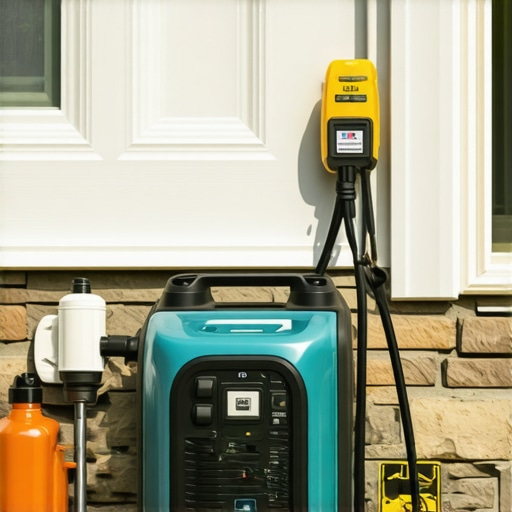
The Anatomy of a Power Failure and the Risks We Ignore
I’ve spent 35 years dragging my knees through the damp crawlspaces of homes built when Eisenhower was in office, and I’ve learned one thing: electricity is a patient killer. It doesn’t scream; it just waits for you to make a mistake. I walked into a ‘fully renovated’ basement last winter where the previous owner had buried a DIY generator transfer setup behind a decorative cedar panel. They thought it looked ‘clean.’ I found it with my tracer because the wall was radiating 115 degrees. The flipper had used undersized 12-gauge Romex for a 50-amp circuit, essentially turning the wall into a toaster element. These are the kinds of ‘handyman specials’ that turn a simple power outage into a structure fire. When the grid goes down in 2026, you don’t need a miracle; you need physics-based safety and a healthy respect for Ohm’s Law. If you think a ‘suicide cord’ is a shortcut, you’re just volunteering for a Darwin award.
“Connection of a generator to a building electrical system shall be made by means of a transfer switch or other equipment listed for the purpose.” – NEC 702.5
1. The Interlock or Transfer Switch: No Negotiable Shortcuts
The biggest threat during an outage isn’t the dark; it’s backfeeding. If you plug a male-to-male cord into a dryer outlet, you are sending 240 volts back through your panel and out into the utility lines. You’re not just powering your fridge; you’re stepping that voltage up through the transformer on the pole, potentially hitting a line worker with 7,000 volts. I always check connections with my Wiggy to ensure there’s zero voltage on the line side before I even think about flipping a generator breaker. You need a mechanical interlock or a dedicated subpanel installation. A mechanical interlock is a simple sliding piece of metal that prevents the main breaker and the generator breaker from being on at the same time. It’s a physical ‘break-before-make’ system. Without it, you’re playing Russian Roulette with the grid. If your home still has an old Federal Pacific or Zinsco panel, these interlocks often won’t fit or, worse, the bus bars are already corroded to the point of failure. In those mid-century homes, you’re looking at a home rewiring services situation before you even touch a generator. The physics of Cold Creep in old aluminum wiring means those lugs are already loose; adding the high-draw load of a generator will cause that connection to arc and oxidize instantly.
2. The Grounding Riddle: Bonded vs. Floating Neutrals
This is where most DIYers lose the plot. Most portable generators come from the factory with a ‘bonded neutral,’ meaning the neutral wire is connected to the generator’s frame. If you connect that to your home’s electrical system—which already has a bonded neutral at the main service entrance—you’ve created a parallel path for the return current. This leads to ‘objectionable current’ on your ground wires, which can trip AFCI breaker services and fry sensitive electronics. I’ve seen data center power setup rigs destroyed because someone didn’t understand the ground-fault path. If your transfer switch switches the neutral (a three-pole switch), you need a bonded generator. If it doesn’t switch the neutral, you need a floating neutral generator. I’ve spent hours with my Tick Tracer and a multimeter diagnosing why a homeowner’s smoke detector installation kept chirping during a storm; it was stray current on the ground because of a neutral-bond conflict. It’s not just a nuisance; it’s a fire hazard. Using temporary power services requires the same precision as a permanent install.
“Improperly connecting a portable generator to a home’s electrical system can backfeed power into utility lines, creating a lethal hazard for utility workers.” – CPSC Document #5123
3. Managing the Harmonic Distortion and Modern Electronics
Your 1970s fridge didn’t care about ‘dirty’ power, but your 2026 smart home does. Most cheap portable generators produce power with high Total Harmonic Distortion (THD). When the sine wave is jagged rather than smooth, it causes micro-heating in the capacitors of your devices. This is why you’ll hear your doorbell camera install buzzing or see your LED lights flickering. To protect your equipment, you should look for an inverter generator or install a line conditioner. Just as ensuring safe and efficient EV charging station setup at home requires clean, consistent current, your home’s internal circuitry depends on stable frequency. If you’re running a phone line installation or a home server, that ‘dirty’ power will eventually lead to component failure. I’ve seen circuit boards in high-end HVAC units charred black because the homeowner ran them on a contractor-grade generator for three days. It’s cheaper to buy a quality generator than to replace every control board in your house. Check into rebate assistance programs; sometimes they cover high-efficiency backup systems that meet these cleaner standards.
4. Placement and the Silent Killer
I don’t care how hard it’s raining; if you run that generator in your garage or near an open window, you’re asking for a body bag. Carbon monoxide (CO) is tasteless, colorless, and it will fill your living room faster than you can realize you’re tired. I’ve seen folks tuck them under an eave to keep them dry, only for the exhaust to pull right into the attic vents. You need at least 20 feet of clearance. If you’re worried about theft or the elements, build a proper ventilated enclosure with a non-combustible base. This isn’t just about CO; it’s about heat. A generator at full load generates immense thermal energy. If you’ve got cloth insulated wiring replacement needs in your house, you already know how heat makes old insulation brittle. Don’t add to the problem by placing a heat source near your home’s exterior envelope. Proper lighting installations made easy doesn’t matter if the house is full of gas. Always have fresh batteries in your CO detectors before the storm hits.
5. The Load Calculation: Don’t Redline Your System
People see ‘10,000 Watts’ on the box and think they can run the whole neighborhood. You have to account for ‘starting watts’ vs. ‘running watts.’ An AC compressor might need three times its running amperage just to kick over. This is basic Ohm’s Law: Power (Watts) = Voltage (Volts) x Current (Amps). If you overload that generator, the engine RPM drops, the frequency sags, and the voltage dips. Low voltage is just as dangerous as a surge; it causes motors to pull more current, which leads to overheating. I’ve seen subpanel installation lugs melted into a single lump of copper because someone tried to run two heat pumps on a 5-kW generator. Use a load management strategy. Turn off the water heater before you turn on the microwave. If you need help figuring out your home’s capacity, check out how electricians tackle troubleshooting to understand the balance of a residential circuit. Don’t be the person who burns out their temporary power services because they couldn’t live without the toaster oven. Use dikes to clip back any frayed cords and always use 10-gauge or 8-gauge SOOW cord for your main home run from the generator to the inlet. Anything thinner is just a fuse waiting to blow.