The Ghost in the Copper: Why Your House is Trying to Talk to You
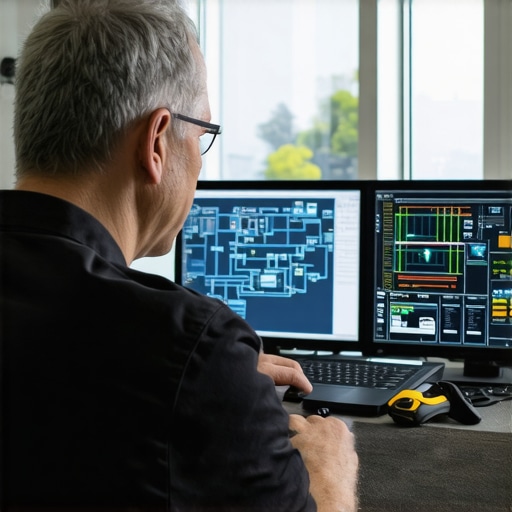
I’ve spent thirty-five years pulling dead rodents out of disconnects and smelling the sickly-sweet aroma of melting PVC. If there’s one thing I’ve learned, it’s that electricity doesn’t just ‘fail’ out of spite. It gives you warnings. It hums, it flickers, and it off-gasses. But most homeowners wait until the smoke detectors are screaming to pick up the phone. By then, you aren’t paying for a repair; you’re paying for a forensic investigation. Remote electrical diagnostics isn’t some Silicon Valley gimmick—it’s a tactical strike. It’s about using a master’s eyes to spot a ‘Widow Maker’ before I even put the truck in gear. When you call me for a workshop electrical setup or a flickering recessed lighting installation, you’re usually paying for my travel time just to tell you that a neutral is loose. That’s a $200 handshake you don’t need to give me.
The Old Timer’s Lesson: Reading the Heat
My first journeyman was a man who could identify a loose ground by the way the air felt in a basement. I remember one humid July afternoon, we were looking at a 1970s split-level. He stopped me before I even opened the panel. ‘Listen,’ he said. I didn’t hear anything but the cicadas. He slapped my hand when I reached for my dikes to snip a zip-tie. ‘You don’t touch until you understand the heat signature,’ he growled. He showed me how a microscopic nick in the copper—caused by a careless strip job—creates a localized hot spot. That tiny gouge reduces the cross-sectional area of the conductor, increasing resistance. Resistance generates heat. Heat causes the metal to expand, then contract when the load drops. This is the cycle of thermal fatigue. That lesson stuck. Whether I’m diagnosing a sauna heater installation or a faulty doorbell camera install, I’m looking for the physical story the electrons are telling.
“Thermal expansion and contraction can loosen even the most carefully tightened terminal screws over time, leading to high-resistance connections and potential fire hazards.” – NFPA 70E Standard for Electrical Safety
Component Zooming: The Physics of the ‘Cold Creep’
To understand why a remote diagnostic works, you have to understand Cold Creep. This is particularly lethal in mid-century homes with aluminum branch wiring. Aluminum is a different beast than copper; it has a much higher coefficient of thermal expansion. When you run a heavy load—say, for a workshop electrical setup—the wire heats up and expands. Because it’s trapped under a steel terminal screw, it has nowhere to go, so it deforms. When it cools down, it doesn’t snap back to its original shape. It stays compressed. Now you have a gap. That gap is where the arcing starts. In a remote electrical diagnostics session, I’m looking for the tell-tale signs: the discolored terminal screw, the slight deformation of the Romex jacket, or the ‘fishy’ smell of phenol formaldehyde resin out-gassing from a 1970s breaker. By identifying these through a high-definition video feed, we can determine if you need a simple trim-out or a full-blown panel replacement.
The Load Calculation: Why Your 100-Amp Panel is Gasping
Modern life is an electrical glutton. We’re adding fence line lighting, sign lighting installation, and high-draw appliances without ever looking at the electrical load calculations. I’ve seen homeowners try to DIY a sauna heater installation onto a circuit that’s already sharing a home run with a refrigerator. When that compressor kicks over, the voltage drop is massive. If you’re experiencing flickering, it’s often because your system is physically incapable of maintaining the pressure—yes, think of voltage as pressure—required to move those electrons. During a remote call, we walk through your service entrance. I’ll have you read me the numbers on your main breaker and tally your high-draw devices. If you’re pushing 80% of your rated capacity, you’re in the ‘danger zone’ for nuisance tripping and equipment failure. This is especially critical for ensuring safe and efficient EV charging station setup at home, where the continuous load can bake a sub-par connection in hours.
Vibration Analysis and Mechanical Stress
Most people think electrical systems are static. They aren’t. They’re mechanical. If you have a large workshop, vibration analysis services might seem like overkill, but vibration is the silent killer of the rough-in. Constant oscillation from heavy machinery can back out a terminal screw just as effectively as thermal expansion. If I see a panel mounted directly to a vibrating bulkhead without isolation pads during a remote walkthrough, I know exactly why your recessed lighting installation is failing prematurely. The vibration is causing intermittent contact, which leads to micro-arcing. Micro-arcing carbonizes the surrounding insulation, and carbon, unlike plastic, is conductive. You’re literally building a bridge for a fire to cross.
“Connections of conductors to terminal parts shall ensure a thoroughly good connection without damaging the conductors and shall be made by means of pressure connectors, solder lugs, or splices to flexible leads.” – NEC Article 110.14
The Diagnostic Process: Tools of the Trade
When we do a remote session, I might ask you to use a tick tracer (non-contact voltage tester). While I don’t trust them for life-safety—I’m a Wiggy (solenoid tester) man myself because it actually puts a load on the circuit—a tick tracer is a great diagnostic tool for a homeowner. If we’re troubleshooting fence line lighting that went dark after a storm, I can guide you to find where the break in the line is. We can also discuss how electricians tackle troubleshooting for lighting installations to see if the issue is a failed driver or a compromised underground feed. For flood water electrical safety, a remote diagnostic is a literal lifesaver. If your basement took on six inches, DO NOT touch the panel. I can use your phone’s camera to see if the water reached the bottom of the Romex loops. If the wicking action has pulled water up into the insulation, that wire is toast. It will rot from the inside out due to capillary action, and no amount of ‘drying it out’ will fix the corrosion inside the jacket.
Saving the $200: Preparation is Everything
The reason service calls are expensive is because I spend the first hour acting like a detective. If you want to save money, do the legwork. Before our call, locate every junction box. If a previous owner buried one behind drywall—a classic ‘Handyman Special’—try to find it. Map your breakers. If ‘Breaker 4’ controls the doorbell camera install, the sign lighting installation, and the guest bathroom, tell me. That’s a red flag for an overloaded circuit. For those needing temporary power services for a renovation, knowing your electrical load calculations beforehand means I don’t have to spend time recalculating your entire house’s demand. If you’ve noticed ev-charger-troubleshooting-expert-tips-to-fix-common-issues didn’t solve your problem, a remote master can often spot a ‘bootleg ground’ or a reversed polarity that a DIYer would miss. We can cover lighting installations made easy by identifying the structural hurdles of your ceiling before you even buy the fixtures.
Sleep at Night: The Value of a Tight Screw
At the end of the day, electricity is just lazier than you are. It wants to find the shortest path to the ground, and it doesn’t care if that path is through your floorboards or your skin. Remote diagnostics allow us to triage your home’s health. We can decide if you need an emergency trim-out or if your workshop electrical setup is just suffering from a bad capacitor in a motor. Stop paying for ‘look-sees.’ Use the tech in your pocket to get a master’s eyes on the problem. Because in this business, the only thing more expensive than a master electrician is a cheap one who didn’t see the oxidation on the bus bar. For more information on maintaining your high-draw systems, check out top EV charger maintenance tips. If you’re ready to stop the flickering, contact us to schedule a diagnostic. Your house is talking; it’s time you started listening.