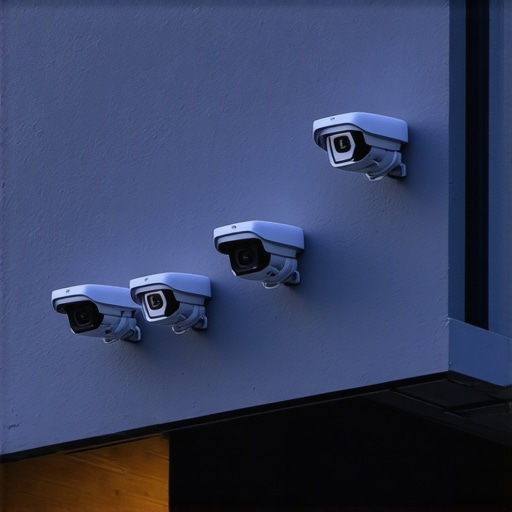
The Autopsy of a ‘Smart Home’ Disaster
I recently stood in a crawlspace in a coastal neighborhood, my headlamp cutting through a haze of attic dust and the unmistakable, acrid stench of vaporized PVC. The homeowner had spent five figures on a 2026-spec AI security system, but his ‘pro’ installer had committed a cardinal sin: he’d run unshielded CAT6 alongside 240-volt lines feeding a boat lift. The result? Induction heating so intense it didn’t just scramble the data—it began to fuse the jackets together. This is the reality of modern security: if your infrastructure is a mess, your high-tech AI is nothing more than a paperweight that might burn your house down. I’ve spent 35 years tracking down these ‘ghosts’ in the wires, and I’m here to tell you that the difference between a secure home and a forensic investigation often comes down to a few thousandths of an inch of copper.
The Old Timer’s Lesson: The Nick That Kills
My journeyman used to smack my hand with his dikes if he caught me stripping a wire with a folding knife. ‘You nick that copper, you create a hot spot,’ he’d scream over the hum of the job site. He was right. When you’re installing 2026 security tech, you’re often dealing with Power over Ethernet (PoE). People think low voltage is ‘safe,’ but physics doesn’t care about your feelings. A nick in a 24-gauge wire under constant PoE load creates a bottleneck. Electrons crowd into that smaller cross-sectional area, generating localized thermal energy. Over time, this leads to Cold Creep, where the metal expands and contracts until the connection fails—or worse, starts an arc. In my decades as an inspector, I’ve seen more fires started by ‘harmless’ low-voltage shorts than by main service drops because nobody respects the low-voltage heat signature.
Secret 1: The ‘Home Run’ or the Widow Maker?
The biggest mess in modern camera installs is the ‘daisy chain’ mentality. For 2026 homes, every camera must be a dedicated Home Run to the central switch. I’ve walked into multi-million dollar properties where installers used junction boxes buried behind drywall to split power. That’s a ‘widow maker’ waiting to happen. When a fault occurs—and it will—you can’t find it without a Tick Tracer and a sledgehammer. By running dedicated lines, you isolate potential points of failure. This is especially critical when integrating AI fault detection. These systems can tell you that a line is failing, but they can’t tell you where if you’ve buried your splices in a wall like a coward. If you’re struggling with existing issues, how electricians tackle troubleshooting provides a glimpse into the diagnostic rigor required to fix these amateur mistakes.
“Wiring of circuits shall be such that there will be no significant interference between the communication and power circuits.” – NEC Section 800.133
Secret 2: Trenching for the Long Haul
If you’re installing perimeter cameras near a dock or parking lot, the burial depth isn’t a suggestion; it’s a survival metric. In coastal environments, I see trenching electrical conduit done with Schedule 40 PVC that’s barely six inches deep. Then the ground settles, the salt air migrates through the soil, and the conduit becomes a saltwater straw. You need to be using Schedule 80 at any point where the conduit emerges from the ground to prevent physical damage. For boat lift wiring and dock electrical services, I always use Monkey Shit (duct seal) at every transition point. Without it, the ‘chimney effect’ pulls moist, salty air from the dock straight into your sensitive AI camera housing. I’ve opened camera domes that were half-full of saltwater because of a missing dollop of putty. It’s not just about the camera; it’s about preventing that corrosion from traveling back up the wire to your main panel.
Secret 3: The Ghost of Knob and Tube
You want 2026 security in a 1920s house? You can’t just slap a camera on a knob and tube circuit. I’ve seen forensic reports where a ‘smart’ doorbell was the final straw for a brittle, ungrounded circuit. The insulation on old knob and tube is often so dry it flakes off if you look at it wrong. Adding modern electronics—which are sensitive to voltage sags and surges—to a system with no ground is a recipe for an emergency electrician visit at 3 AM. Before you think about AI-driven surveillance, you need to address knob and tube removal. Modern systems require a solid reference to ground to bleed off static and surge energy. If you’re still running on cloth-covered wires, your ‘smart’ home is built on a foundation of sand.
Secret 4: OSHA Compliance and Overhead Hazards
When we talk about overhead service drops and parking lot lighting cameras, people forget about OSHA compliance wiring. I’ve seen ‘pros’ zip-tie camera cables to the service entrance mast. That’s a death trap. If that mast becomes energized due to a failed neutral or a storm-damaged transformer, your entire security network becomes a 120-volt heater. Always maintain the required 12-inch separation from power lines. In my forensic work, I’ve seen ‘tick tracers’ light up on a camera housing because of induction from a nearby service drop. It’ll fry the AI chip in a heartbeat and potentially send high voltage back to your NVR. If you’re upgrading your exterior, lighting installations made easy can help you understand the structural requirements for mounting tech safely.
“Employees shall not work in such proximity to any part of an electric power circuit that the employee could contact the electric power circuit in the course of work.” – OSHA 1926.416(a)(1)
Secret 5: Hardening the Core for 2026
The final secret isn’t a wire—it’s the power source. A 2026 home security system is useless during a blackout unless you have a home backup generator install. But here’s the kicker: many cheap generators produce ‘dirty’ power with high total harmonic distortion (THD). AI-enabled cameras and NVRs are basically specialized computers; dirty power will cook their capacitors in months. I’ve done forensic autopsies on dozens of ‘failed’ cameras where the internal power supply was charred from voltage spikes. You need a line conditioner or a high-quality UPS between your panel and your security rack. When you’re ensuring safe and efficient EV charging, you’re already thinking about high-draw stability; apply that same logic to your security. Don’t let a $50,000 system be taken down by a $0.50 surge because you didn’t torque the lugs in your panel to the proper inch-pounds.
Forensic Conclusion: Torque it or Torch it
I don’t care how many megapixels your cameras have or how ‘smart’ your AI fault detection claims to be. If your Rough-in was sloppy and your Trim-out was rushed, you’re just waiting for a failure. Electricity is lazy; it’s always looking for the easiest path to ground, and if that path is through your expensive security processor, it will take it. Use your Wiggy to check for phantom voltages, keep your low-voltage separated from your Romex, and for the love of everything holy, stop burying junction boxes. When I go to sleep at night, I don’t trust my home to a piece of software. I trust it to the fact that every screw in my panel is torqued to spec and every wire is stripped without a nick. If you can’t say the same, you’re not secure; you’re just lucky—for now. For any concerns or to get a professional look at your system, contact us before the ‘fishy smell’ starts coming from your walls.