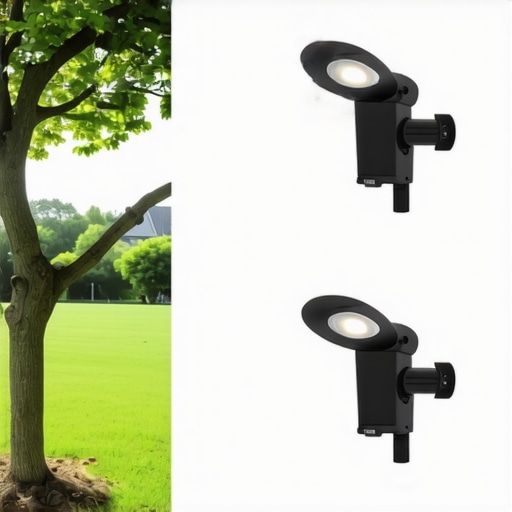
The Autopsy of a Dead Heritage Oak: Why Your Tree Lights Are a Fire Trap
I can usually smell a bad installation before I even get my Wiggy out of the truck. It is the scent of scorched damp mulch mixed with that sharp, metallic ozone bite of an active arc. I recently walked onto a property in a high-end neighborhood where the homeowner was complaining about flickering architectural lighting. What I found was a forensic nightmare. A ‘landscaping pro’ had used 3-inch deck screws to mount tree mounted lights directly into the cambium of a 100-year-old White Oak. The tree had grown, the bark had swallowed the junction box, and the internal pressure had literally crushed the Romex insulation until the conductors phased out against the damp wood.
My old journeyman, a guy who had missing fingertips and more stories than a library, used to smack my hand if I even looked at a wire the wrong way. ‘You nick that copper, you create a hot spot,’ he’d scream over the sound of a hammer drill. ‘Electricity is a lazy beast; it’ll take the shortest path to ground, and if that path is through a wet tree or your chest, it doesn’t care.’ He was right. Tree mounted lights aren’t just about aesthetics; they are a mechanical battle between growing biological tissue and rigid electrical components.
“Where raceways are exposed to different temperatures, and where condensation is known to occur, the raceway shall be filled with an approved material to prevent the circulation of air.” – National Electrical Code (NEC) Section 300.7(A)
When you ignore the physics of tree mounted lights, you aren’t just damaging a tree; you are setting a Time Bomb. In the 2026 landscape, we are seeing more integration with smart home wiring, which means more sensitive electronics sitting in harsh outdoor environments. If your meter base replacement didn’t account for the added load of a massive outdoor lighting array, or if your ADU electrical services are tied into a shaky branch circuit, you’re asking for a total system failure.
Rule 1: The ‘Floating’ Standoff vs. Girdling
The biggest mistake in sign lighting installation or tree lighting is rigidity. A tree is a living, expanding hydraulic machine. If you wrap a wire around a limb, you are girdling it. As the tree grows, the wire restricts the flow of nutrients in the phloem. Eventually, the tree grows over the wire, creating a hidden short circuit that your Tick Tracer might not even pick up through the thick bark until the tree is literally energized. For 2026, the standard is stainless steel standoffs with spring-loaded bolts. This allows the tree to push the fixture outward as it grows, preventing the ‘choke-hold’ that leads to outlet switch repair calls when the circuit finally fries.
Rule 2: The Expansion Loop (The ‘Growth Loop’)
I’ve seen home theater wiring guys try to do landscape lighting, and they always pull the wire too tight. In a tree, that’s a death sentence. You need what we call a ‘Growth Loop’—extra slack coiled at the base of each fixture. Without it, the wind sways the branch, the wire tenses, and you get Cold Creep at the terminal screw. This is the same physics that makes aluminum wiring so dangerous in mid-century homes. The metal expands and contracts, the screw stays still, and eventually, the connection becomes loose and high-resistance. High resistance equals heat. Heat equals fire.
“Aluminum wire connections can overheat and cause a fire without tripping the circuit breaker.” – CPSC Safety Alert 516
If you’re dealing with a kitchen range hood wiring project or a sign lighting installation, you know the importance of secure connections. In a tree, those connections must be housed in a monkey shit (duct seal) packed junction box to prevent moisture from creating a salt-bridge between phases. This is especially critical if you are near the coast where salt air corrosion rots meter base replacement units from the inside out.
Rule 3: Conduit Integrity and the ‘Widow Maker’
When we do a rough-in for tree lights, the transition from the ground to the trunk is the failure point. You can’t just run bare wire up the side. You need heavy-duty UV-rated flexible conduit. But here is the forensic secret: don’t bury the conduit directly against the trunk. Leave a gap. Insects and moisture love the space between conduit and bark. I’ve opened attic fan installation housings that looked better than some tree-mounted LBs I’ve seen. If you don’t seal the top of that conduit, it acts as a straw, sucking rainwater directly into your electrical system. This is why lighting installations made easy isn’t a real thing—it requires understanding fluid dynamics as much as voltage.
Rule 4: Load Calc and Integrated Systems
Don’t think you can just tap into an existing ADU electrical services line and call it a day. Every LED driver has an inrush current. If you have fifty architectural lighting fixtures hitting a single circuit, you’ll nuisance-trip the breaker every time the sun goes down. We see this often with troubleshooting for lighting installations. The homeowner wants smart home wiring control, but the old 15-amp circuit is already crying for mercy because it’s shared with an attic fan installation. Before adding tree lights, you need a full load calculation. If your panel is a ‘Zinsco’ or ‘Federal Pacific,’ don’t even think about it—get a panel changeout before you add more load to a bus bar that’s already arcing.
The Forensic Conclusion: Torque Matters
I don’t care if it’s home theater wiring or a meter base replacement, the most important tool in an electrician’s bag is a torque screwdriver. Most ‘handymen’ just tighten until it feels ‘snug.’ That’s how you get outlet switch repair calls three months later. In a tree, where vibration from the wind is constant, those connections must be torqued to the manufacturer’s spec. If you are unsure about your current setup, especially if you have a high-demand device like an EV charger, check out ensuring safe and efficient EV charging station setup to see how we handle high-amperage safety. Then, contact us to get those tree lights inspected before they turn your backyard into a forensic crime scene. For more on maintaining high-performance electrical systems, see our EV charger maintenance tips or read up on troubleshooting expert tips. Protecting your home—and your trees—starts with respecting the wire. Don’t let a ‘trim-out’ turned disaster be the reason I have to visit your house with a forensic kit. Your privacy and safety are our priority, as outlined in our privacy policy.