The Autopsy of a ‘Sleek’ Failure
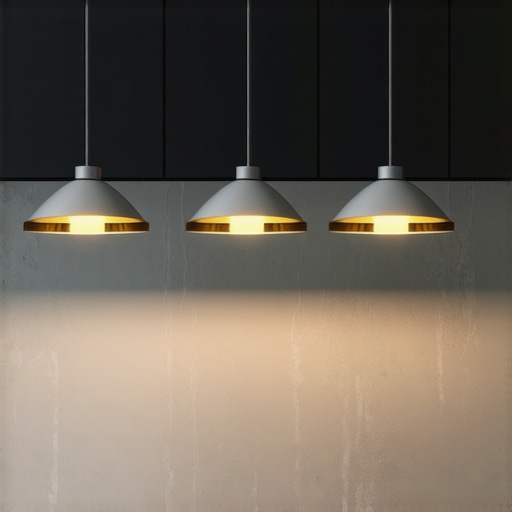
I recently walked into a high-end kitchen remodel that looked like a million dollars but smelled like a burning tire factory. The owner was baffled. They had just installed three ultra-modern, ‘2026-style’ oversized pendants over a quartz island. Within forty-eight hours, the lights flickered, the dimmers hummed like a disturbed hornet’s nest, and a faint wisp of acrid smoke began drifting from the canopy of the center fixture. I pulled my Wiggy out of my bag, and even before I touched the leads, my Tick Tracer was screaming from six inches away. The culprit wasn’t the beautiful glass; it was a fundamental failure of infrastructure hidden behind the plaster. My old journeyman used to smack my hand if I stripped a wire with a knife. ‘You nick the copper, you create a hot spot,’ he’d scream. He was right. In that ‘modern’ kitchen, a DIYer had nicked the feeder wire during the rough-in, and the resulting resistance was slowly cooking the insulation from the inside out. If you want a kitchen that survives until 2026 and beyond, you stop looking at the aesthetics and start looking at the physics of the install. This is the forensic reality of high-end lighting.
Secret 1: The Foundation of the 400 Amp Service Entrance
Everyone wants a sleek kitchen, but few realize that a 2026-ready kitchen often draws more peak power than a small mid-century machine shop. We are seeing a massive shift toward total home electrification—induction cooktops that pull 50 amps, steam ovens, and high-wattage smart lighting arrays. If you are hanging pendants in an older home (circa 1900-1950), your first secret isn’t a bracket; it’s a load center upgrade. You cannot expect a tired 100-amp service to handle the harmonic distortion and continuous loads of modern life. I often recommend a 400 amp service entrance for these comprehensive renovations. Why? Because it allows for a dedicated subpanel installation specifically for the kitchen and nearby workshop electrical setup. This segregation of circuits prevents the voltage drop that causes your expensive LED pendants to flicker when the refrigerator compressor kicks on. When you’re dealing with old cloth-bound wiring or early Romex, the insulation is often so brittle that any movement—like hanging a heavy pendant—causes it to flake off, leading to a direct short.
“The total connected load shall be calculated in accordance with Section 220.40 and shall not be less than the sum of the loads on the branch circuits.” – NEC Section 220.10
By upgrading the service, you’re not just ‘elevating’ (to use a word I hate) the home; you’re ensuring the grounding electrode install is actually capable of dissipating a surge before it fries your smart-home bridge. If you’re tackling this yourself, check out this lighting installations made easy guide to understand the basics before you open your panel.
Secret 2: Thermal Expansion and the Physics of the ‘Cold Creep’
The second secret to a sleek, long-lasting pendant installation is understanding Power Factor Correction and the mechanical reality of heat. People think LEDs stay cool. While the ‘bulb’ might not burn your hand, the driver tucked inside the 2026-model pendant canopy gets hot. In these high-tech fixtures, electronic components convert AC to DC, and that process generates heat. If you’ve ever looked at a failed wire nut and seen it’s turned brown or purple, you’re looking at the result of thermal expansion and contraction—what we call Cold Creep in the trade. Over time, the cycle of heating and cooling causes the terminal screws to loosen. A loose connection increases resistance, which increases heat, which further loosens the connection. It’s a death spiral for your electrical system. To prevent this, a professional trim-out involves more than just twisting wires. We use torque-rated screwdrivers to ensure every connection in the load center upgrades and at the fixture is exact. In older homes, I’ve seen restaurant kitchen electrical standards applied to residential settings because the loads are becoming comparable. If your pendants are flickering, it’s often a sign that the driver is struggling with poor power quality or a loose neutral. I’ve spent hours troubleshooting for lighting installations where the only ‘fix’ was re-terminating every single junction because the original installer didn’t understand the physics of copper-to-aluminum transitions or the necessity of using the right terminal blocks.
Secret 3: The Integrated Infrastructure—Beyond the Ceiling
A sleeker 2026 kitchen doesn’t exist in a vacuum. The third secret is the integration of the lighting into the broader home ecosystem, which includes everything from driveway sensor lights to portable generator hookups. When we design a restaurant kitchen electrical layout, we think about ‘zones.’ Your pendant lights should be on a clean zone, isolated from ‘dirty’ motors like your dishwasher or disposal. This is where trenching electrical conduit for a dedicated kitchen subpanel comes into play, especially if you’re running lines from a detached garage or utility room.
“Aluminum wire connections can overheat and cause a fire without tripping the circuit breaker.” – CPSC Safety Alert 516
While most modern homes use copper, many 1960s-1970s renovations have hidden aluminum branch circuits. If you’re hanging a new pendant on an old aluminum circuit without using AlumiConn connectors or a CO/ALR rated device, you are essentially building a time bomb. During the rough-in, I also insist on grounding electrode install verification. If your house grounding is just a wire clamped to a rusty water pipe that was replaced with PEX ten years ago, your lighting has no path to ground. Your pendants become the path. Finally, always seal your exterior-facing boxes with Monkey Shit (duct seal) to prevent moisture from traveling through the conduit and hitting your indoor fixtures. It’s the small, visceral details—the torque on a screw, the smell of the insulation, the solid ‘thunk’ of a well-seated breaker—that make a kitchen sleek. It’s not about the glass; it’s about the current. Ensure your system is stable, your loads are calculated, and your grounding is verified, or you’ll be calling me for a forensic inspection while you’re standing in the ashes of your ‘sleek’ 2026 dream.