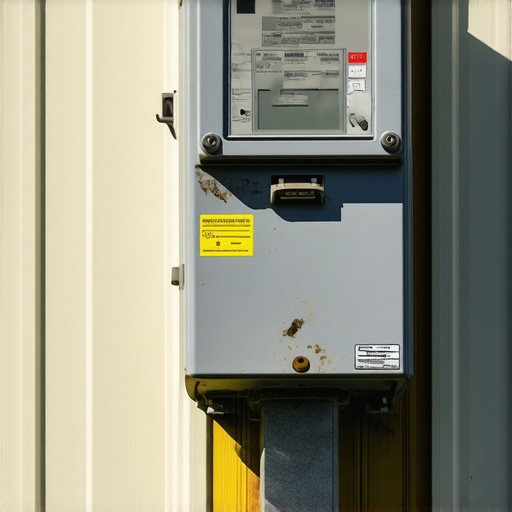
The Silent Sentinel: Your Meter Base Is Rotting From the Inside Out
I remember my journeyman back in 1988; he used to smack my hand if I even thought about using a knife to strip back insulation on a service entrance cable. ‘You nick that aluminum, kid, and you’ve just built a fuse that’s going to pop in twenty years,’ he’d growl. He wasn’t just being a mean old-timer; he understood the physics of Cold Creep and thermal expansion better than most engineers today. Most homeowners look at that gray box on the side of their house—the meter base—and see a permanent fixture. I see a ticking clock. By 2026, the mid-century infrastructure in this country will hit a breaking point. We are pushing more current through 50-year-old metal jaws than they were ever designed to handle. If you’re adding modern EV charging stations or heavy-load appliances, that old tin-plated copper is screaming for mercy.
“Aluminum wire connections can overheat and cause a fire without tripping the circuit breaker.” – CPSC Safety Alert 516
1. The Visual Autopsy: Corrosion and the ‘Monkey Shit’ Failure
The first sign isn’t electrical; it’s chemical. If you walk outside and see rust streaks bleeding down the side of your meter enclosure, you’re already in the danger zone. In the trade, we use ‘monkey shit’—duct seal—to plug the service mast, but over thirty years, that stuff dries out, cracks, and turns into a funnel for rainwater. When water enters the meter base, it doesn’t just sit there. It initiates a galvanic reaction between the steel enclosure and the aluminum conductors. I’ve opened cans where the bottom was nothing but a pile of orange flakes and a prayer. This isn’t just about a messy box; it’s about the integrity of your 400 amp service entrance. If the lugs are submerged in a slurry of oxidation, the resistance skyrockets. Resistance creates heat. Heat creates fire. You don’t need a Tick Tracer to know something is wrong when you can smell the ozone from five feet away.
2. The Thermal Ghost: Why Your Lights Flickered When the AC Kicked In
If you’ve noticed your pendant light hanging in the kitchen dimming for a split second when the compressor starts, don’t blame the bulb. The problem is likely at the meter jaws. Inside that box, the utility meter is held in place by four or five spring-loaded brass jaws. Over decades, the constant heating and cooling of the metal causes it to lose its ‘temper’—the springiness that keeps a tight grip on the meter’s stabs. Once that grip loosens, you get micro-arcing. We’re talking about thousands of tiny lightning bolts firing every second inside that can. This is why we perform arc flash studies for commercial clients, but the physics is the same for your bungalow. That arcing creates a layer of carbonization—a literal wall of burnt material that electricity has to jump over. Eventually, the voltage drop becomes so severe that your sensitive electronics start fried-circuiting. If you don’t address it, that arcing can weld the meter to the base, making it impossible to pull without a catastrophic failure.
“Service-entrance conductors shall be installed in accordance with 230.6 and shall be insulated to prevent a short circuit to ground.” – NEC Article 230
3. The Load Limit: Transitioning to 400 Amp Service
In the 1970s, a 100-amp service was plenty for a few lights and a toaster. In 2026, between hot tub wiring services, whole house fan wiring, and high-speed chargers, you are likely redlining your infrastructure. A major warning sign that your meter base needs a replacement is that it simply wasn’t built for the continuous load of modern life. When we do a rough-in for a new home today, we’re looking at 200 amps as the bare minimum, with many moving to a 400 amp service entrance. If your current meter can is a small ’round base’ or an old square-style with 1-inch conduit, you are bottlenecking your entire home. Trying to run a modern household through a 1960s meter base is like trying to put out a forest fire with a garden hose. The heat generated by the continuous draw can melt the plastic insulators inside the base, leading to a direct short to the grounded enclosure. This is where we see the ‘Widow Maker’ scenarios—where the box itself becomes energized because the insulation has turned to charcoal.
4. Physical Deformation and the Drip Loop Disaster
Take a Wiggy or a voltmeter to your panel, and if you see leg-to-leg imbalances (e.g., 110V on one side and 132V on the other), your neutral is dying. Often, the failure point is the neutral lug in the meter base. Because the neutral is the return path for all unbalanced loads, it works the hardest. If the ‘drip loop’ on your service mast was installed poorly by a handyman decades ago, water follows the wire directly into the neutral lug. I’ve seen lugs so corroded they snapped off when I touched them with my dikes. Furthermore, if you see the meter tilting or the box pulling away from the siding, the structural integrity is gone. This is often the result of the ground shifting or the heavy service lateral pulling down. You need a professional who understands lockout tagout training to safely de-energize that line before it rips the service right off your house. We provide a lifetime workmanship guarantee because we know that when we torque those lugs to the proper inch-pounds, they stay put for another forty years. Whether you need smoke detector installation or PA system installation, none of it matters if the heart of your electrical system—the meter base—is flatlining. Don’t wait for the sparks; check for driveway sensor lights that flicker or the faint smell of burning plastic near your service entrance. If you see these signs, contact us immediately. Electricity isn’t a hobby; it’s a force of nature that needs to be contained in high-grade, modern equipment. For more technical insights, you can review our guide on troubleshooting lighting installations or learn about EV charger maintenance to keep your total load in check.
Reading through this detailed breakdown really opened my eyes to how much wear and tear these electrical components endure over the years. I live in an older neighborhood where some homes still have the original meter bases, and it’s not uncommon to see signs of corrosion or loosened connections. Personally, I had a close call last year when my lights flickered during early morning laundry loads, which I now realize could have been a sign of micro-arcing at the meter. It makes me wonder how many homeowners are unaware of the risks until a major failure occurs. What are some proactive steps homeowners can take to inspect or assess their meter bases without immediately calling an electrician? I think regular visual inspections and possibly using a multimeter to check voltage consistency might be a good start. Has anyone here experienced a sudden failure with their meter base or had a near-miss incident that could have been prevented with early detection? Would love to hear more about how others manage this aspect of home safety.
This article really highlights how crucial it is for homeowners to pay attention to their meter bases, especially in older homes. I’ve personally seen instances where corrosion around the meter enclosure was overlooked until a failure caused power loss or even sparks. The point about micro-arcing and the loss of tension in the meter jaws resonated with me, as I experienced flickering lights during peak loads times, which now I realize was probably micro-arcing going unnoticed. Regular visual inspections are helpful, but I wonder if there are non-intrusive tools or portable testers that homeowners can use safely to get a better sense of their meter’s health without risking accidental contact with high voltage? Also, what’s the best way to document and track signs of deterioration over time, so we know when it’s time for a professional assessment? It seems like proactive maintenance could save a lot of trouble—what are your thoughts on developing a home inspection routine for these critical components?