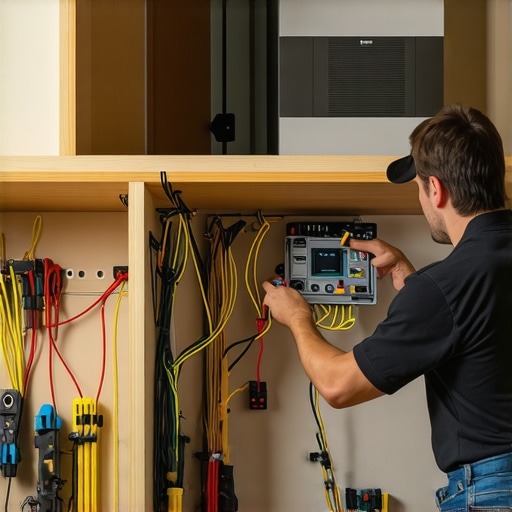
The Attic Inferno and the Scent of Toasted Insulation
I stepped into a kitchen last July where the thermometer on the wall hit 98 degrees, but the ceiling was radiating heat like a pizza oven. The homeowner had just finished a ‘renovated’ master suite, but the flipper who did the work had a nasty secret. I pulled out my tick tracer and started waving it near the attic access. The chirping was constant, even though the switches were off. When I climbed up there, I found a whole house fan powered by a series of daisy-chained orange extension cords buried under three feet of blown-in fiberglass. The copper was so hot it had started to melt the jacket of the cord, creating a slow-motion fire hazard. That’s the reality of ‘handyman specials’ in mid-century homes. If you want to slash your 2026 cooling bills without burning your house to the waterline, you need to understand the forensic physics of attic ventilation and the high-stakes world of inductive motor loads.
The Physics of Inrush Current: Why Your Lights Flicker
When you flip the switch on a massive whole house fan, you aren’t just turning on a light bulb. You are energizing a heavy inductive load. The moment that motor tries to spin, it demands what we call Locked Rotor Amps (LRA). This is a massive spike in current, often five to six times the running amperage. In a mid-century home with an old Federal Pacific or Zinsco panel, that spike can cause the bus bars to vibrate or even arc if the connections have suffered from ‘cold creep.’ This is where the metal expands and contracts under load, eventually loosening the screw at the breaker. A loose connection creates resistance; resistance creates heat; heat creates fire. This is why we insist on a dedicated home run for these units.
“Aluminum wire connections can overheat and cause a fire without tripping the circuit breaker.” – CPSC Safety Alert 516
Hack 1: The Dedicated Home Run and AFCI Integration
The first hack to a safe, efficient 2026 cooling season is abandoning the idea of tapping into the nearest bedroom lighting circuit. Modern NEC code updates require Arc-Fault Circuit Interrupter (AFCI) protection for most residential branch circuits. If you try to run a high-draw fan on an old circuit, the electrical noise from the motor brushes will trip that AFCI breaker constantly. You need a dedicated 20-amp circuit using 12/2 Romex. When we perform electrical inspections, the first thing I look for is whether the fan is sharing a neutral with a sensitive electronics circuit. Sharing neutrals can lead to harmonic distortion, which kills your LED bulbs and computer power supplies. If you’re tackling lighting installations simultaneously, keep the fan wiring physically separated to avoid induced voltage on your dimming leads.
Hack 2: Mastering the Overhead Service Drop and Panel Capacity
Your overhead service drop is the bottleneck of your home’s energy potential. Before you install a fan that pulls 800 watts, you need to do a load calculation. Many homes built between 1960 and 1980 only have a 100-amp service. Between the modern AC, the new EV charger, and that old electric range, you are redlining your panel. During a surge protector installation, I often find that the main lugs are pitted from years of running at near-maximum capacity. If you’re adding more load, you might need a heavy-up to 200 amps. This ensures the voltage stays stable when the fan kicks in. Stable voltage means the motor runs cooler and lasts longer, saving you from a mid-summer replacement bill. For those in specialized environments, like a detached shop or a camper electrical panel, the grounding requirements are even stricter to prevent ‘stray voltage’ from becoming a safety issue.
Hack 3: The Equipotential Grid and Grounding Integrity
People think the green wire is just a ‘safety’ wire that does nothing. In reality, the ground is the return path for fault current. In a whole house fan setup, the metal housing of the fan must be bonded to the house’s equipotential grid. This isn’t just about preventing shocks; it’s about lightning protection and noise reduction. If your attic fan is at the highest point of your roof, it becomes a target for atmospheric static. Without a solid ground path back to your service entrance, a nearby strike will use your security camera wiring or your thermostat wires as a path to ground, frying everything in the house. Ensure your ground rods are not corroded and that the connections are torqued to spec using a calibrated torque screwdriver—not just ‘hand tight’ with a pair of dikes.
“All mechanical equipment, including fans and HVAC units, shall be bonded to the grounding electrode system to ensure a low-impedance path for fault current.” – NEC Article 250
Hack 4: Mitigation of Thermal Transfer and Proper Rough-in
The efficiency of a fan depends entirely on the seal. During the rough-in phase of an attic fan installation, most guys just cut a hole and screw it down. I’ve seen ‘pro’ installs where they left gaps big enough for a squirrel to crawl through. This creates a vacuum that sucks conditioned air from your living space and dumps it right back into the attic, or worse, sucks hot attic air back down through your recessed lights. You must use fire-rated ‘monkey shit’ (duct seal) and proper gasketing to isolate the fan housing from the ceiling joists. This also reduces the vibration hum that makes the whole house feel like a turboprop plane. If you are a veteran or active duty, ask about military discount wiring services to get this done by a master who respects the precision required.
The Forensic Inspector’s Final Warning
Electricity is lazy; it always takes the path of least resistance. If that path is through a nicked wire you stripped with a pocket knife, or a loose wire nut in a junction box hidden under insulation, the house will pay the price. Before you invest in 2026 cooling upgrades, get a real professional to look at your panel. Whether it’s a standard residential setup or complex three phase power services for a commercial workshop, the principles of resistance and heat never change. Don’t let a $500 fan turn into a $50,000 insurance claim. If you’re noticing flickering lights or that tell-tale fishy smell of melting plastic, it’s time to stop DIYing and start calling. You can learn more about how we handle these issues by checking our guide on troubleshooting for lighting installations or reach out to us directly through our contact page to schedule a safety audit. Sleep better knowing your home is torqued to code and your family is safe from the invisible fire in the attic.