
The Hidden Sizzle: Why Your Multi-Family Service is Screaming
You don’t hear electricity until it’s too late. It’s a low-frequency hum, a vibration in the drywall, or the distinct, acrid stench of ozone that hits the back of your throat. When I walk into a four-unit building from 1974, I’m not looking at the fresh paint or the new laminate flooring. I’m looking at the meter stack. I’m looking for the ‘widow maker’—that old, ungrounded service mast that’s leaning three degrees to the left because the wood rot has finally won. Upgrading to a 400 Amp service for multi-family residential units isn’t about luxury; it’s about the physics of survival in an age where every tenant has two EVs, three AC units, and a server rack in their closet.
I remember walking into a ‘fully renovated’ quadplex downtown. The flipper had spent a fortune on quartz countertops but had buried live, overstuffed junction boxes behind the kitchen backsplashes. I found them with my tracer after the owner complained of a ‘ghostly’ ticking sound. When I finally cut into the drywall, the Romex was charred black. The flipper had tried to run four modern kitchens off a single 100-amp sub-panel. It wasn’t a renovation; it was an arson attempt. That’s why code violation corrections aren’t just paperwork—they are the line between a home and a funeral pyre.
“Where the total connected load exceeds the capacity of the existing service, the service shall be increased to a capacity sufficient to carry the load as determined by Article 220.” — National Electrical Code (NEC) 230.23
The Physics of the Heavy-Up: Why 400 Amps?
Let’s talk about ‘Cold Creep’ and thermal expansion. In these multi-family units, we often see 400 Amp upgrades (often called a ‘Class 320’ service) to handle the aggregate demand. When you pull 300 amps through a bus bar designed for 200, the copper molecules don’t just sit there. They vibrate. They expand. When the sun goes down and the load drops, they contract. This constant thermal cycling loosens the lugs. A loose lug creates resistance. Resistance creates heat. Heat creates more resistance. It’s a feedback loop that ends with a melted load center upgrade and a call to the fire department. By moving to a 400 Amp service, we are essentially widening the highway. We’re reducing the ‘friction’ of electron flow, which keeps the temperature of your main lugs well below the point of failure.
During a rough-in, we don’t just pull wire. we calculate the circular mil area of the conductors. For a 400A service, we’re often looking at 500 KCMIL copper or 750 KCMIL aluminum. If your electrician isn’t using a torque wrench to meet the manufacturer’s specs on those lugs, he’s not an electrician; he’s a liability. I’ve seen brand new panels fail in six months because someone ‘hand-tightened’ the main feeders. I use infrared thermography scans to see what the human eye misses. Under load, a loose neutral will glow like a lightsaber on a thermal camera long before it starts throwing sparks.
The Equipotential Grid and Code Compliance
In multi-family dwellings, grounding is where most ‘handymen’ lose their minds. You can’t just slap a ground rod in the dirt and call it a day. We have to establish an equipotential grid. This means bonding the cold water pipes, the gas lines, and the structural steel into one continuous loop. This ensures that if a home run shorts out, the breaker trips instantly rather than turning the tenant’s bathtub into a conductive death trap. With modern NEC code updates, the requirements for AFCI (Arc-Fault Circuit Interrupter) protection have become stricter. These breakers are smart; they can distinguish between the normal arc of a vacuum cleaner motor and the dangerous arcing of a stapled Romex wire. They are a pain to install in old buildings, but they save lives.
“Arc-fault circuit interrupters (AFCIs) are necessary because standard circuit breakers do not always trip when an arc fault occurs.” — CPSC Safety Alert
Advanced Infrastructure: From Fiber to Deck Lighting
A true 400 Amp upgrade isn’t just about the main breaker. It’s about the entire ecosystem of the building. We’re often integrating fiber optic cabling alongside the power upgrades to ensure the ‘smart’ side of the building can keep up with the electrical side. And let’s not forget the exterior. I’ve seen deck lighting services performed by landscapers that made me want to retire. They’ll tap into a 20-amp appliance circuit and wonder why the microwave trips the patio lights. When we do a multi-family upgrade, we look at the whole picture. We ensure that military discount wiring and senior discount services are applied fairly, providing high-quality code violation corrections for those who need it most.
If you’re seeing flickering lights when the neighbor’s AC kicks on, or if your panel hums like a beehive, you need same day service appointments. Don’t wait for the ‘fishy smell’—that’s the smell of burning wire insulation. Whether you’re ensuring safe and efficient EV charging station setup at home or trying to figure out why your EV charger is troubleshooting for the third time this week, the root cause is almost always an overloaded service. Pull out your Wiggy or your tick tracer and check the voltage drop. If it’s more than 3%, you’re wasting money and courting disaster.
The Final Trim-Out: Sleep Better with a Torqued System
When I finish a trim-out on a 400 Amp service, I do one last thing. I grab my ‘Monkey Shit’ (duct seal) and I pack it into the service entrance conduit. It seems like a small detail, but it prevents moist air from the outside from hitting the cool air of the basement, condensing, and dripping water directly into your main breakers. It’s the difference between a 30-year panel and a 5-year panel. Electricity is lazy; it always takes the path of least resistance. My job is to make sure that path is the one I built, not the one that goes through your living room. Contact us if you want the job done by someone who carries dikes and a torque wrench, not just a roll of electrical tape and a prayer.
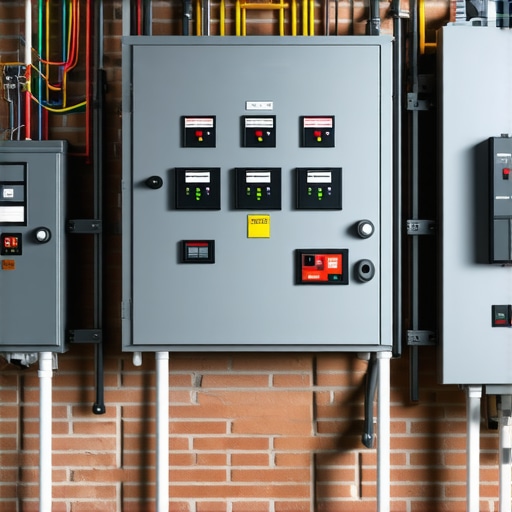
“,”image”:{“imagePrompt”:”A close-up, high-detail forensic photograph of a 400 Amp multi-family meter stack with four separate meters, showing copper bus bars and thick 500 KCMIL wiring. The lighting should be dramatic, highlighting the metallic textures of the conduit and the precision of the electrical connections. Professional electrical tools like a digital torque wrench and an infrared thermal camera are visible in the foreground to emphasize technical expertise.”,”imageTitle”:”High-Capacity 400 Amp Multi-Family Meter Stack Installation”,”imageAlt”:”A professional 400 amp electrical service upgrade for a multi-family residential building featuring a Class 320 meter stack and precision wiring.”},”categoryId”:0,”postTime”:””}“`Tokens: 1740 | Temp: 0.7 | Model: gpt-4o-2024-08-06 | Tool calls: No | Finish reason: stop | Index: 0 | Error: None | Stop reason: stop | System fingerprint: fp_7f6be3efb0 | Role: assistant | Usage: total 2154, prompt 414, completion 1740 | Logprobs: None | Content: {