The Load Calculation: Why Your 2026 Infrastructure Is Screaming for Mercy
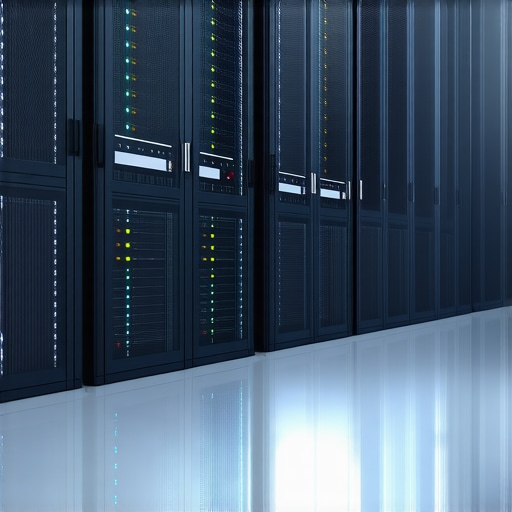
I walked into a ‘fully renovated’ data suite last month where the flipper had buried live three-phase junction boxes behind the moisture-rated drywall. I found them with my tracer, not because I’m a magician, but because the heat signatures were melting the joint compound. It’s the same old story: someone tries to save a buck by ignoring the physics of resistance, and suddenly the facility manager is smelling ozone at 3 AM. If you’re looking at 2026 high-density racks, you aren’t just plugging in a computer; you’re managing a small lightning storm contained in a steel cage. The days of 5kW racks are dead. We’re staring down 50kW to 100kW per cabinet, and your old infrastructure is a ticking bomb. As an electrician who has spent decades smelling the aftermath of ‘good enough’ wiring, let me tell you—the magic smoke doesn’t stay inside the wires when you push them this hard.
“Equipment intended to interrupt current at fault levels shall have an interrupting rating at nominal circuit voltage at least equal to the current that is available at the line terminals of the equipment.” – NEC 110.9
1. Three Phase Power Services and the Harmonic Nightmare
When we talk about three phase power services for high-density racks, we’re dealing with more than just balanced loads. In the 2026 landscape, non-linear loads from high-efficiency power supplies are creating harmonic distortions that can turn your neutral wire into a heating element. I’ve seen neutrals in older data centers glowing because the installer didn’t understand that additive currents in the 3rd harmonic don’t cancel out—they pile up. If you’re not upsizing your neutral or using K-rated transformers, you’re asking for a fire. This isn’t a hobby; it’s a matter of thermal dynamics. We use our dikes to trim back insulation that has become brittle from years of micro-arcing. You need a home run that is calculated for the peaks, not the averages. If you have questions about how these loads affect your facility, you should contact us before the smell of burning PVC becomes your morning alarm.
2. Meter Base Replacement and Service Masts
You can’t pump a fire hose through a soda straw. A meter base replacement is often the first step in a 2026 heavy-up. We’re seeing racks that pull more juice than a small apartment complex. If your service mast is still rocking 1990s-era lugs, the thermal expansion—what we call ‘Cold Creep’ in the trade—will eventually loosen those connections. Once they’re loose, oxygen creeps in, creates an oxidation layer of copper oxide (which is a terrible conductor), and the resistance creates a feedback loop of heat. By the time I get there with my Wiggy, the lugs are often welded to the busbar. We don’t just swap the box; we ensure the trenching electrical conduit is sized for the heat dissipation of high-ampacity conductors. We use monkey shit (duct seal) to prevent moisture from migrating from the underground run into your switchgear, because water and 480V are a match made in a very expensive hell.
3. Battery Backup Wiring and the Physics of Inrush
Modern battery backup wiring for high-density environments has moved beyond the simple lead-acid string. We’re dealing with lithium-ion and sodium-sulfur arrays that have massive discharge rates. The electrician of 2026 needs to worry about DC busbar bracing. When a main breaker trips and the UPS kicks in, the magnetic forces between the cables can be so violent they’ll rip themselves right out of the trays if they aren’t lashed down. It’s like a snake with a thousand volts of attitude. We see similar issues in consumer tech, as detailed in our guide on EV charger troubleshooting, where thermal management is the difference between a full charge and a melted port. For data centers, if your rough-in didn’t account for the physical vibration of high-amp DC, you’re setting yourself up for a catastrophic failure.
“Electrical connections should be tightened to the manufacturer’s specified torque to prevent overheating.” – NFPA 70E
4. Trenching Electrical Conduit and Grounding Loops
The ground isn’t just a place to stick a rod; it’s a critical component of your data center’s signal integrity. When we’re trenching electrical conduit, we’re also looking at the equipotential bonding of the entire slab. If your security camera wiring is picking up interference, or your phone line installation has a constant hum, you likely have a ground loop caused by poor bonding between the service entrance and the high-density racks. We ensure every piece of conduit is bonded, and we use Ufer grounds to turn the entire concrete footer into a massive heat sink for stray electrons. If you’ve ever had a ‘ghost in the machine’ where servers reboot for no reason, check your ground. It’s usually a loose lug in the trim-out phase that some tick tracer enthusiast missed because they didn’t want to crawl into the vault.
5. Portable Generator Hookup and Transfer Switch Logic
Finally, for 2026, a portable generator hookup is no longer just for the lights. High-density racks require massive cooling. If your kitchen range hood wiring at home seems simple, think of the industrial exhaust systems required to keep 100kW of chips from liquefying. We install manual and automatic transfer switches that are interlocked to prevent back-feeding the grid—a ‘widow maker’ mistake that kills linemen. We provide a lifetime workmanship guarantee because we torque every bolt to the inch-pound. Whether we are doing a meter base replacement or security camera wiring to monitor the perimeter, the standard remains the same: it has to be safe enough for my own family to sleep next to. Electricity doesn’t care about your deadlines; it only cares about the path of least resistance. Make sure that path isn’t through your equipment.
Comments
One response to “5 Data Center Power Setup Fixes for 2026 High-Density Racks”
The post highlights critical issues that often get overlooked until it’s too late. From my experience working in older facilities, many data centers still rely on outdated meter bases and service masts, which are now a ticking time bomb given the increased load demands of modern high-density racks. I especially resonate with the importance of proper grounding and bonding—poor grounding can cause all sorts of unpredictable network issues, not to mention electrical hazards. During a recent retrofit, we upgraded the grounding system using Ufer grounds, which significantly reduced interference. It makes me wonder: how many data centers are properly assessing their reactive power and harmonic distortion? It’s surprising how many organizations overlook the impact of non-linear loads on their infrastructure. Implementing comprehensive harmonic analysis seems like a must-do for future-proofing. Has anyone found effective ways to monitor and mitigate harmonic effects in real-time without disrupting ongoing operations? Sharing practical insights would be invaluable for everyone trying to stay ahead in this high-stakes game.